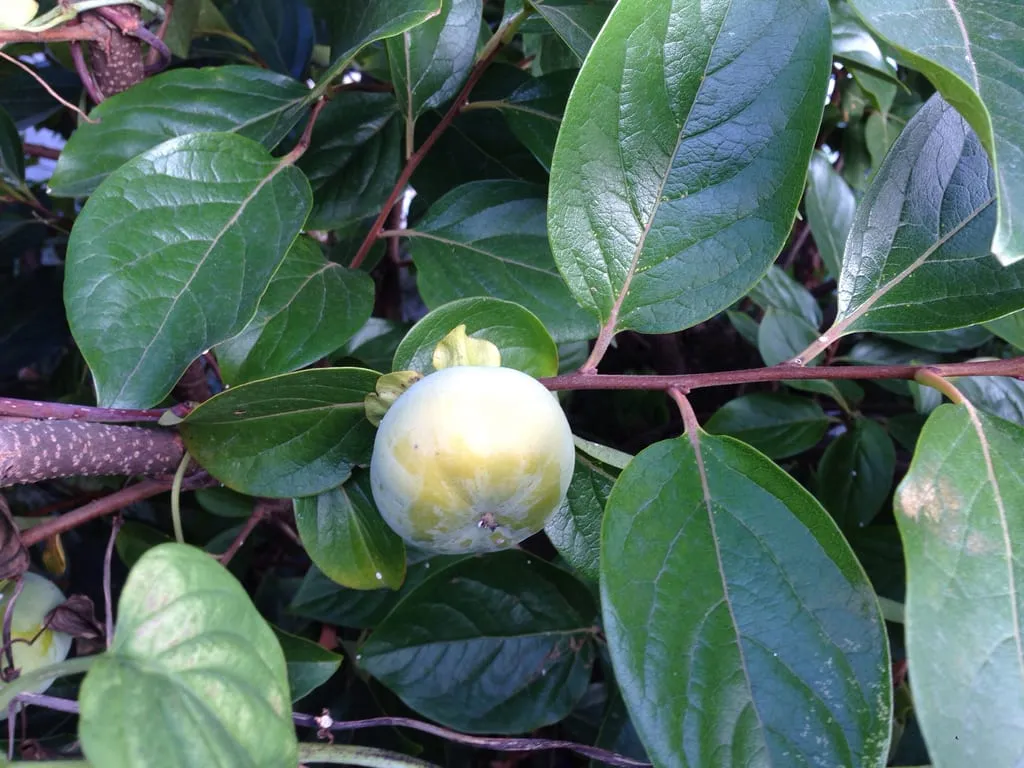
fruit tree in zone 8b
Growing asian persimmon in zone 8b
Diospyros kaki
- Zone
- 8b 15°F to 20°F
- Growing season
- 260 days
- Chill needed
- 100 to 400 below 45°F
- Suitable varieties
- 4
- Days to harvest
- 180 to 240
The verdict
Zone 8b is a genuine sweet spot for Asian persimmon, not a marginal case. The crop requires 100 to 400 chill hours, and zone 8b routinely delivers enough winter cold to satisfy even the higher end of that range without the chill-hour shortfall that limits apple and cherry variety selection in the same zone. Minimum winter temperatures of 15 to 20°F present no meaningful hardiness problem for established trees; most Asian persimmon cultivars tolerate well below that threshold.
The 260-day growing season is more than sufficient for all four compatible varieties. Fuyu and Jiro, both non-astringent types, need adequate heat accumulation from bloom through October harvest, and zone 8b provides it reliably. Hachiya and Saijo, which are astringent and benefit from longer hang time on the tree, also ripen without issue. Growers in zone 8b face fewer constraints with this crop than with stone fruits or high-chill apples.
Recommended varieties for zone 8b
4 cultivars suited to this zone, with disease-resistance and zone-fit annotations.
| Variety | Notes | Zone fit | Disease resistance |
|---|---|---|---|
| Fuyu fits zone 8b | Mild, honey-sweet, crisp like an apple when firm; the friendly entry-level persimmon, no astringency. Slice into salads, eat out of hand. Most popular Asian persimmon in the US. | | none noted |
| Hachiya fits zone 8b | Intensely sweet, custard-soft, complex tropical-honey flavor when fully ripe; astringent and inedible until soft. Classic for baking persimmon pudding, cookies, and bread. | | none noted |
| Saijo fits zone 8b | Extremely sweet (the name means 'best one' in Japanese), soft custard texture when ripe with deep honey flavor; fresh, drying. Cold-hardy astringent. | | none noted |
| Jiro fits zone 8b | Sweet, mild, crisp; non-astringent like Fuyu but with slightly larger fruit. Eats firm or soft. Productive and well-adapted. | | none noted |
Critical timing for zone 8b
Asian persimmon blooms later than most deciduous fruit trees, typically in late April to May in zone 8b. This late bloom window is an asset: last frost in zone 8b falls well before bloom opens, so late-frost damage to flowers is uncommon compared to early-blooming stone fruits.
Harvest timing depends on variety. Fuyu and Jiro are ready from mid-October through November and can be eaten firm off the tree. Hachiya and Saijo are astringent until fully soft, hanging well into November and sometimes December. The 260-day growing season gives both types adequate time to develop full sugar content before meaningful cold sets in.
Common challenges in zone 8b
- ▸ Low chill hours limit apple variety selection
- ▸ Citrus greening risk
- ▸ Nematodes in sandy soils
Modified care for zone 8b
The primary soil concern in sandy parts of zone 8b is nematode pressure. Persimmon is somewhat susceptible depending on rootstock; trees grafted on American persimmon (Diospyros virginiana) show better nematode tolerance than those on D. lotus. When sourcing trees for sandier sites, confirm the rootstock with the nursery before purchasing.
Summer heat can stress young trees in their first two seasons. Deep, infrequent watering encourages the extensive root system persimmons develop at maturity; frequent shallow irrigation works against this. Established trees handle zone 8b summers without supplemental irrigation in most years. Winter protection is not necessary for Fuyu, Hachiya, Saijo, or Jiro; all are hardy well below the zone's minimum of 15°F.
Asian Persimmon in adjacent zones
Image: "Japanese Persimmon", by Kim, via iNaturalist, licensed under CC-BY Source.
Related