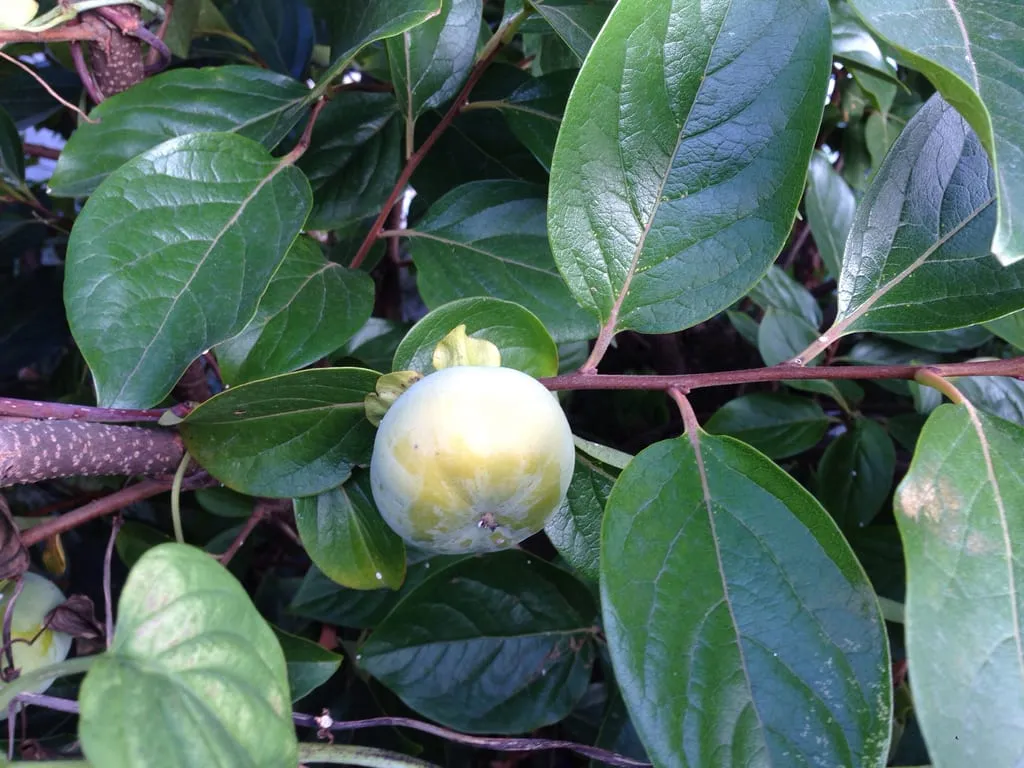
fruit tree
Asian Persimmon
Diospyros kaki
USDA hardiness range
- Zones
- 7a–10a
- Chill hours
- 100 to 400 below 45°F
- Days to harvest
- 180 to 240
- Sun
- Full
- Water
- Moderate
- Lifespan
- 30 to 50 years
Growing asian persimmon
Asian persimmon is one of the most rewarding low-maintenance tree crops you can plant in zones 7 through 10. The trees produce reliably without spraying, ripen ornamental orange fruit on bare branches in late fall, and live 30 to 50 years. Once established, they handle drought, mediocre soil, and benign neglect.
The distinction worth understanding before planting is astringent versus non-astringent. Non-astringent cultivars (Fuyu, Jiro) eat firm and crunchy like an apple. Astringent cultivars (Hachiya, Saijo) must be fully soft to eat or the tannins will pucker your mouth shut. Most beginners plant Fuyu and are happy. Saijo is for growers who want more cold-hardiness and don't mind waiting for soft fruit.
Recommended varieties
See all 4 →4 cultivars for home growers, with notes on flavor, ripening, and disease resistance.
| Variety | Notes | Zone fit | Disease resistance |
|---|---|---|---|
| Fuyu | Mild, honey-sweet, crisp like an apple when firm; the friendly entry-level persimmon, no astringency. Slice into salads, eat out of hand. Most popular Asian persimmon in the US. | | none noted |
| Hachiya | Intensely sweet, custard-soft, complex tropical-honey flavor when fully ripe; astringent and inedible until soft. Classic for baking persimmon pudding, cookies, and bread. | | none noted |
| Saijo | Extremely sweet (the name means 'best one' in Japanese), soft custard texture when ripe with deep honey flavor; fresh, drying. Cold-hardy astringent. | | none noted |
| Jiro | Sweet, mild, crisp; non-astringent like Fuyu but with slightly larger fruit. Eats firm or soft. Productive and well-adapted. | | none noted |
Soil and site requirements
Asian persimmon tolerates most soils including clay, but prefers well-drained loam at pH 6.0 to 7.0. It is more forgiving of soil than apple or peach. Full sun is best; partial sun produces fewer fruit. Spacing 15 to 20 feet for standard trees.
The trees are slow to establish. Container-grown plants transplant better than bare-root because the taproot is brittle. Don't disturb the root ball when planting, and water consistently for the first two summers. After year three, they are essentially drought-tolerant.
Common pests
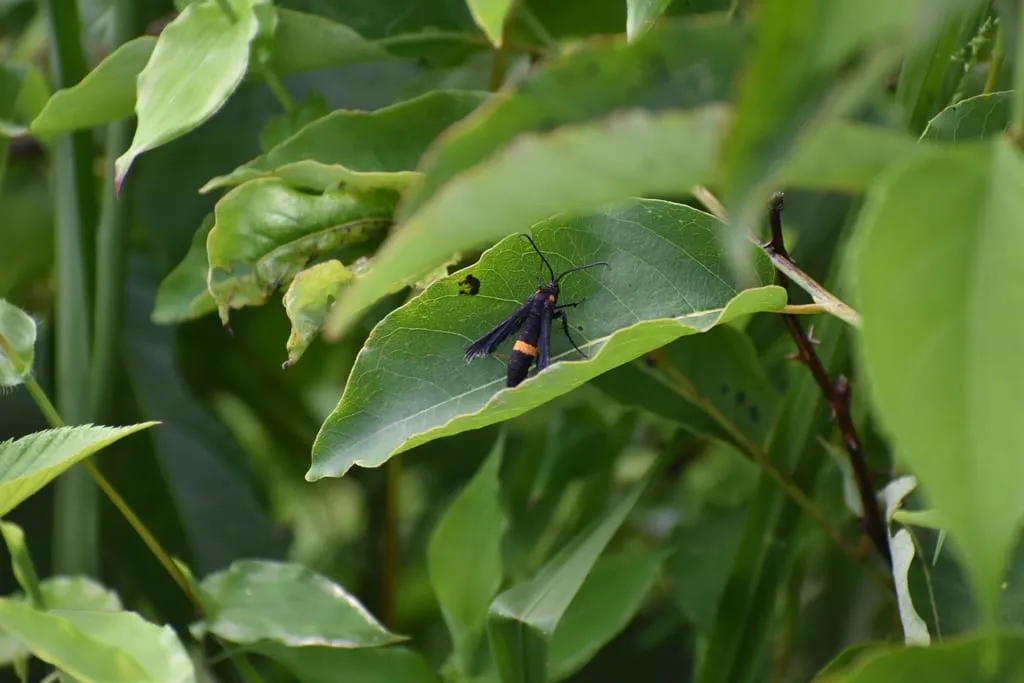
Common challenges
Asian persimmon has remarkably few problems. The main issue for growers is graft compatibility. Asian persimmon scions are typically grafted onto American persimmon (Diospyros virginiana) seedlings as rootstock, and 5 to 10 percent of grafts show delayed incompatibility 5 to 10 years after planting. The tree thrives, then suddenly declines and dies. Buy nursery stock from suppliers who graft carefully and accept some loss.
The second issue is fruit drop in cool wet springs, which reduces yield without harming the tree. Persimmon borer can attack trunks at the soil line; trunk wraps prevent this. Beyond that, persimmon rarely needs spraying or aggressive intervention.
Grafting and rootstocks
Companion plants
Frequently asked questions
- What is the difference between astringent and non-astringent persimmon?
Non-astringent cultivars (Fuyu, Jiro) lack tannins when ripe and can be eaten firm like an apple. Astringent cultivars (Hachiya, Saijo) contain tannins until fully soft, when the tannins polymerize and the fruit becomes sweet.
- Are Asian persimmons self-fertile?
Most cultivars are parthenocarpic and produce seedless fruit without pollination. A pollinator can increase yield slightly. Fuyu, Jiro, and Hachiya all set crops on a single tree.
- When does Asian persimmon ripen?
Late October through November in most zones, depending on variety. Fuyu is mid-season; Saijo and Hachiya are later. Fruit can hang on bare branches well into December in mild climates.
- How cold-hardy is Asian persimmon?
Most cultivars are reliable to zone 7a (winter lows to 0°F). Saijo is hardier and survives zone 6b in protected sites. Below zone 7a, switch to American persimmon, which tolerates much colder winters.
+−
+−
+−
+−
Sources
Image: "Japanese Persimmon", by Kim, via iNaturalist, licensed under CC-BY. Source.
Asian Persimmon by zone
Related