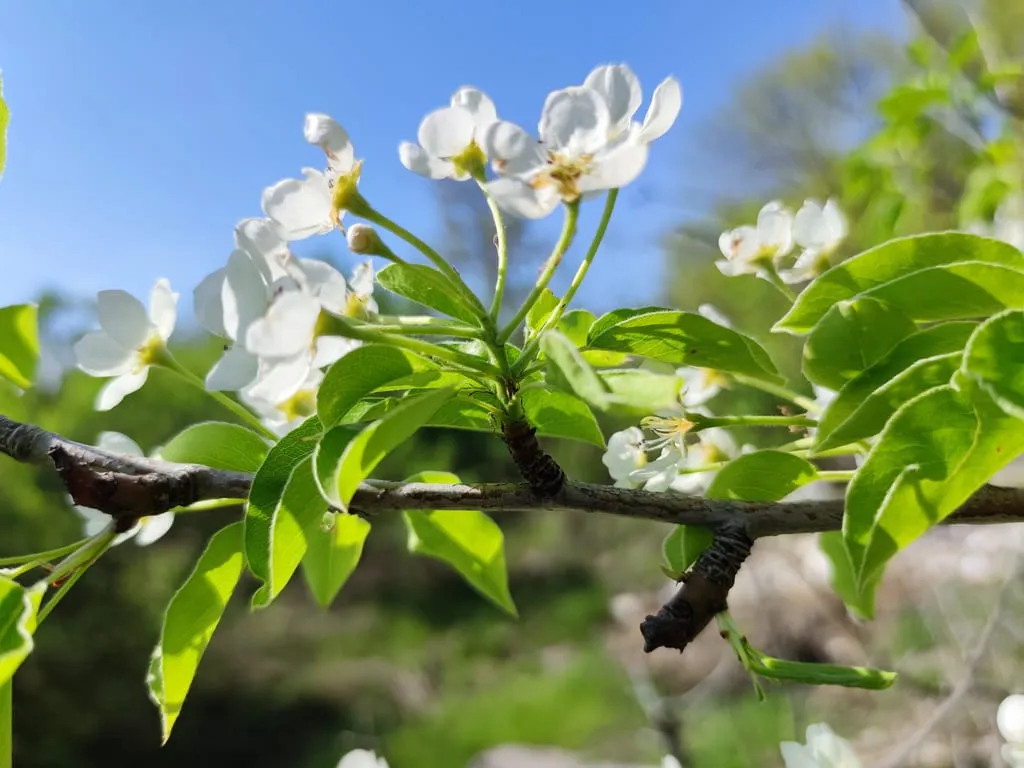
fruit tree in zone 8b
Growing pear in zone 8b
Pyrus communis
- Zone
- 8b 15°F to 20°F
- Growing season
- 260 days
- Chill needed
- 600 to 900 below 45°F
- Suitable varieties
- 1
- Days to harvest
- 115 to 165
The verdict
Zone 8b sits at the lower margin of pear's workable range. Most European pear varieties require 600 to 900 chill hours to break dormancy reliably, and zone 8b typically accumulates 300 to 600 hours depending on how far south or coastal the specific location falls. That gap makes this a marginal zone for pears, not a sweet spot.
Kieffer is the standout exception. Its lower chill requirement and tolerance for heat stress put it within reach for most zone 8b locations, particularly in the northern end of the zone where chill hours are more reliable. Growers in the warmer, coastal portions of zone 8b should expect inconsistent bearing years when chill accumulation falls short.
Asiatic pears (Pyrus pyrifolia) generally outperform European types in warm climates and are worth considering as an alternative where variety selection feels too constrained.
Recommended varieties for zone 8b
1 cultivar suited to this zone, with disease-resistance and zone-fit annotations.
| Variety | Notes | Zone fit | Disease resistance |
|---|---|---|---|
| Kieffer fits zone 8b | Crisp, gritty, mildly sweet, yellow-skinned; a tough cooking and canning pear, not great fresh. Holds shape in preserves and pear butter. Productive in heat. | |
|
Critical timing for zone 8b
In zone 8b, pear bloom typically begins in late January to mid-February, earlier than most of the crop's range. The zone's average last frost falls between late January and mid-February, which means bloom and frost risk overlap. A late cold snap during bloom can reduce fruit set in any given year, though hard freezes after mid-February are uncommon.
Kieffer harvests in late summer to early fall, generally August through October depending on location. The 260-day growing season provides adequate time for fruit development after bloom. Harvest timing shifts earlier in hotter inland locations and later in coastal sites with more moderate summers. Pick Kieffer before full softening on the tree; it ripens best off the tree in storage.
Common challenges in zone 8b
- ▸ Low chill hours limit apple variety selection
- ▸ Citrus greening risk
- ▸ Nematodes in sandy soils
Disease pressure to watch for
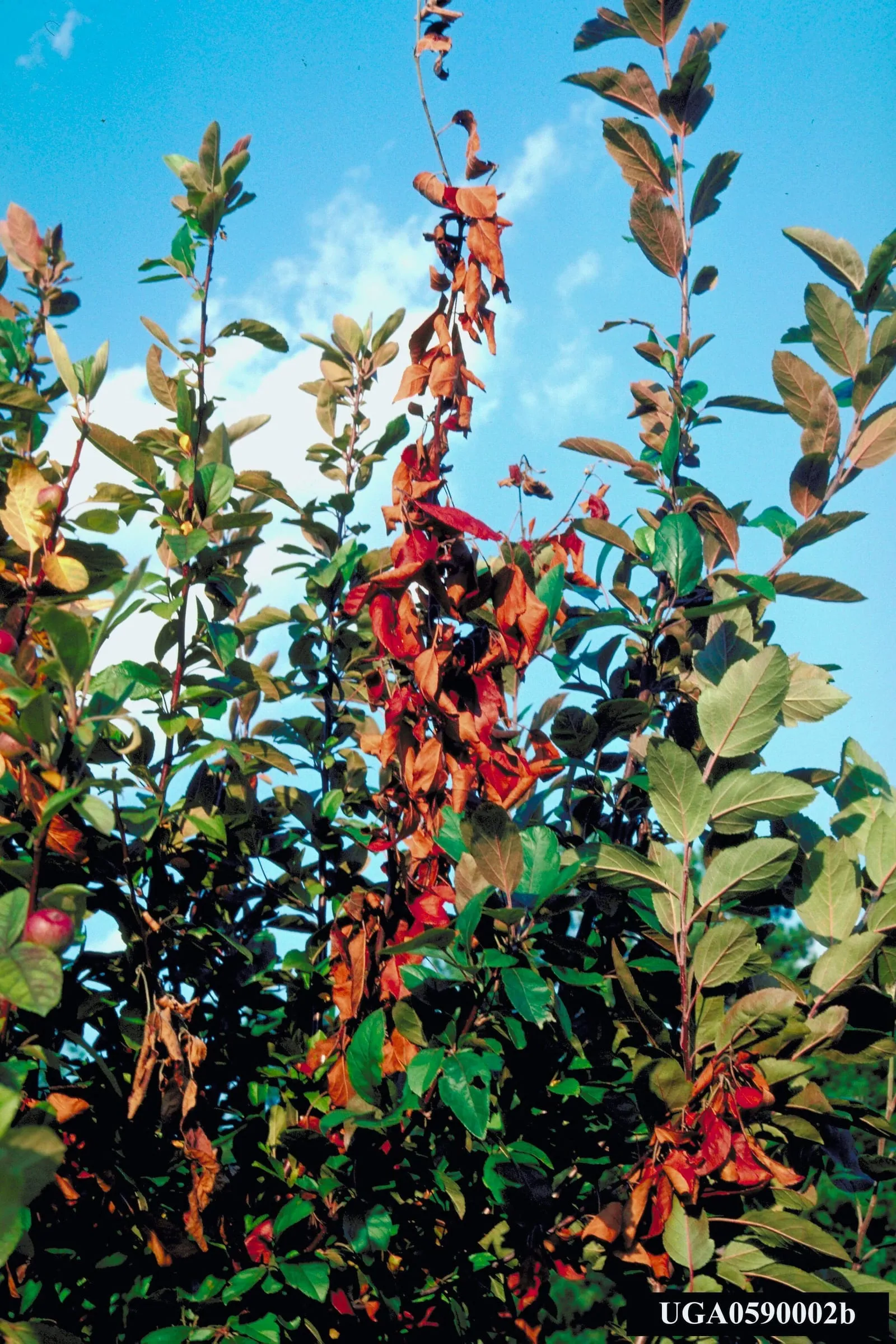
Erwinia amylovora
Devastating bacterial disease that can kill trees rapidly. Most severe in warm wet springs.
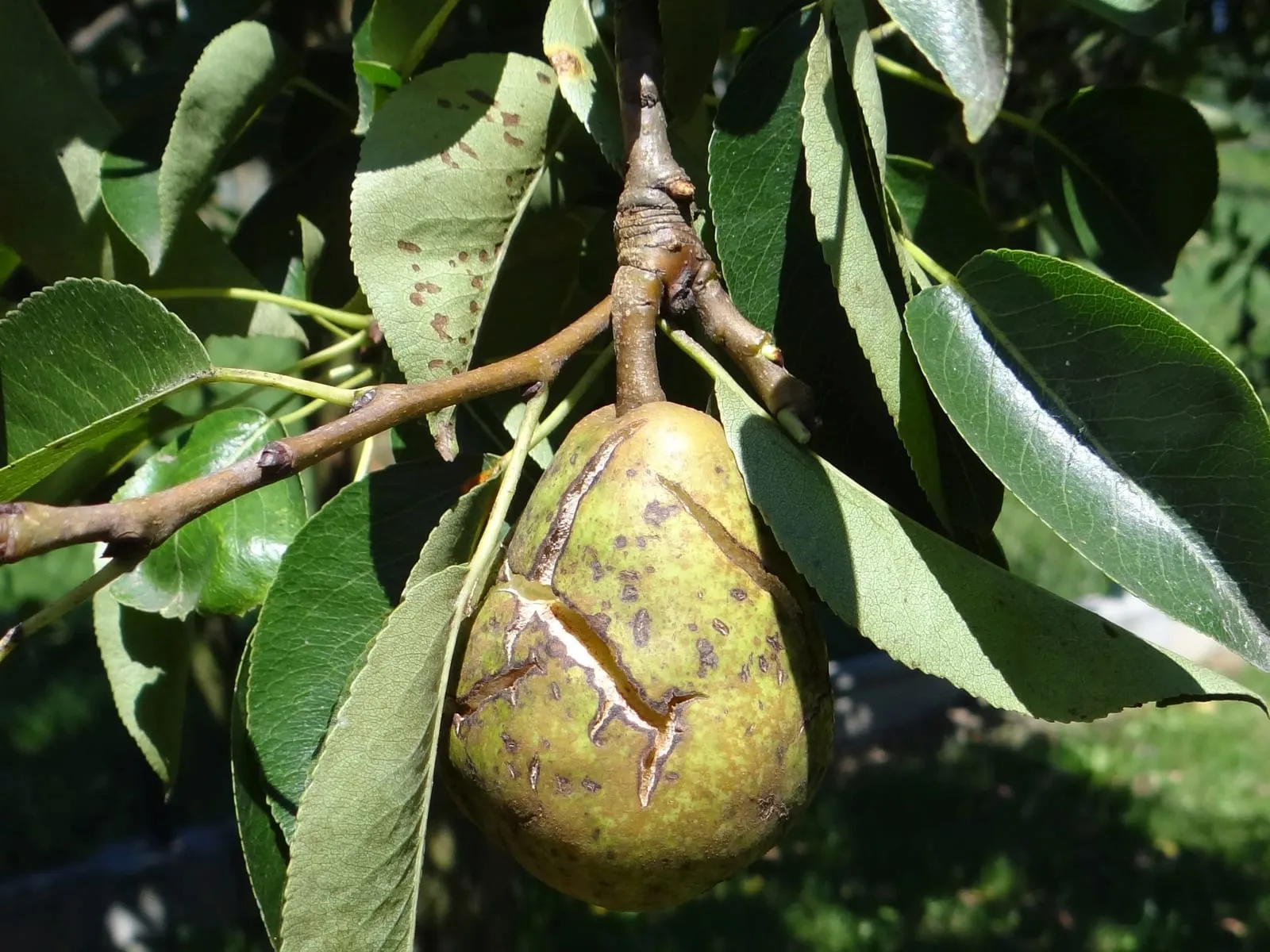
Venturia pyrina
Fungal disease similar to apple scab but specific to pear, causing leaf and fruit lesions.
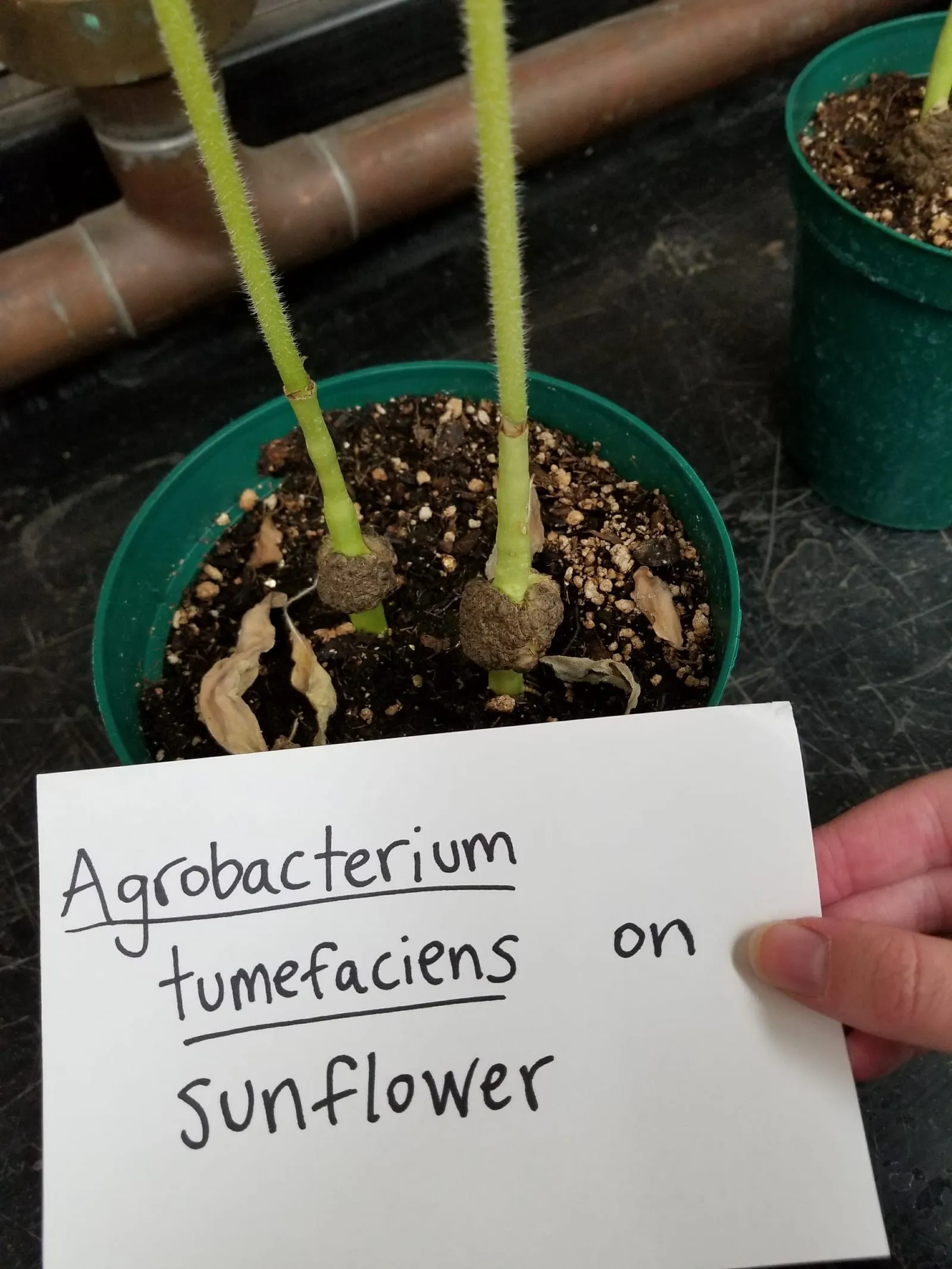
Agrobacterium tumefaciens
Soil-borne bacterium that enters plants through wounds and induces tumor-like galls on roots, crown, and lower stems. Galls reduce vigor and shorten plant lifespan; on Rubus the disease is often fatal.
Modified care for zone 8b
Fire blight pressure is elevated in zone 8b compared to cooler parts of the pear range. Warm, humid springs accelerate Erwinia amylovora spread during bloom. Keep nitrogen applications conservative to avoid the fast, succulent growth most susceptible to infection. Prune out blighted wood immediately and disinfect tools between cuts.
Nematodes in sandy soils can weaken root systems over time. Rootstock selection matters here; ask local extension services about nematode-resistant options before planting. Organic matter amendments and cover crops help reduce nematode pressure over seasons.
Pear scab requires attention in regions with wet springs. Fungicide timing at green tip through petal fall addresses the highest-risk window. Beyond disease management, summer irrigation is important during fruit fill as zone 8b heat can stress trees more than in cooler production regions.
Frequently asked questions
- Can European pear varieties grow in zone 8b?
Most European pears need 600 to 900 chill hours, and zone 8b reliably delivers fewer than that in warmer locations. Kieffer is the most widely grown option in this zone. Growers in the northern or elevated parts of zone 8b may find additional low-chill selections viable, but options remain limited compared to zones 6 and 7.
- Why is fire blight such a concern for pears in zone 8b?
Fire blight thrives when temperatures during bloom hover between 60 and 80 degrees Fahrenheit with moisture present. Zone 8b's warm, often humid springs create those conditions reliably. Kieffer carries moderate fire blight resistance, which is one reason it performs better here than more susceptible European varieties.
- When should pears be harvested in zone 8b?
Kieffer pears in zone 8b typically ripen from August into October. The fruit should be picked firm and allowed to ripen off the tree. Leaving Kieffer on the tree too long results in poor texture. Cooler nights in September and October can improve flavor development in the northern end of the zone.
+−
+−
+−
Pear in adjacent zones
Image: "Груша обыкновенная", by Vasily Moryashkin, via iNaturalist, licensed under CC-BY Source.
Related