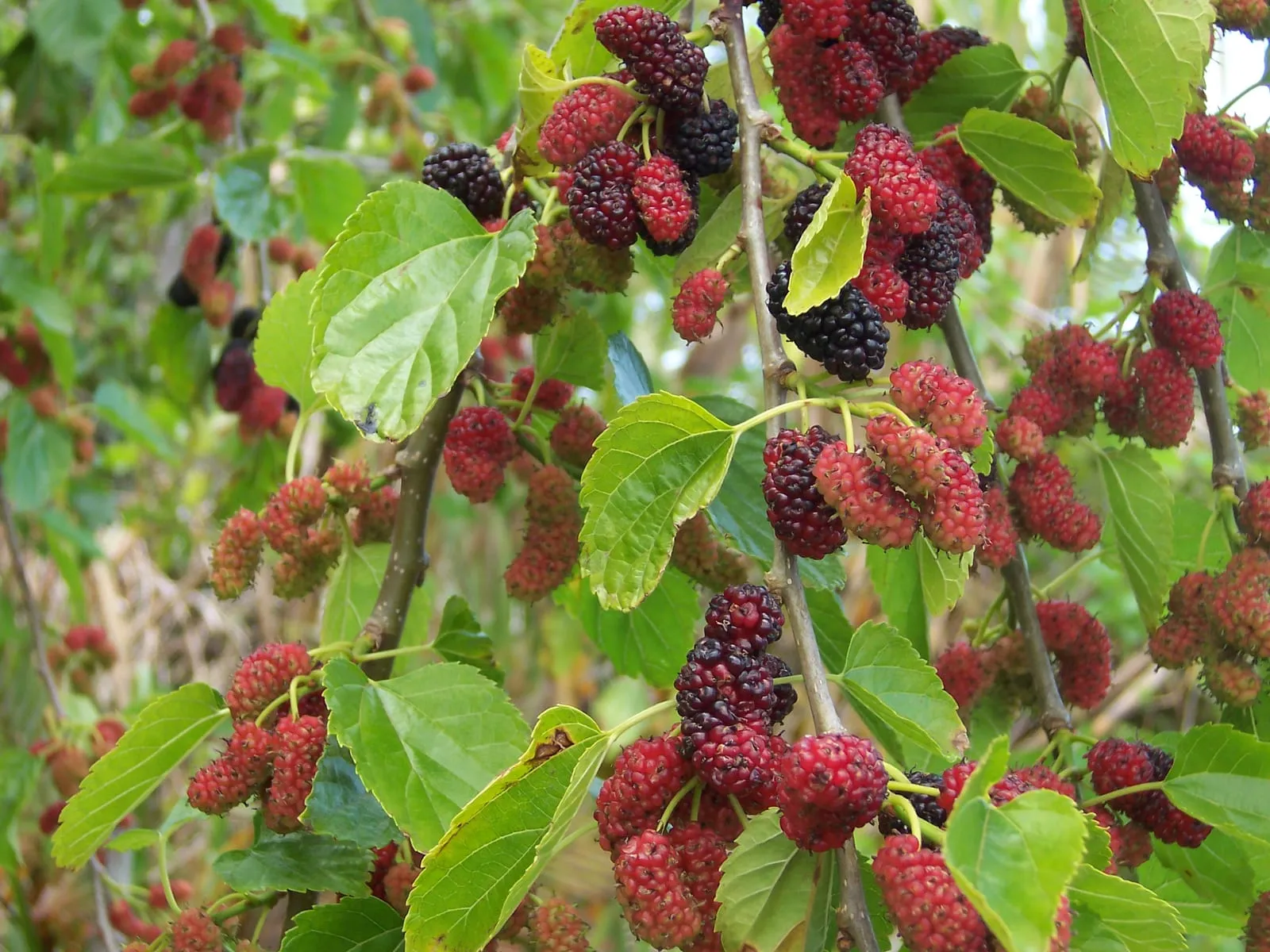
fruit tree in zone 5b
Growing mulberry in zone 5b
Morus species
- Zone
- 5b -15°F to -10°F
- Growing season
- 165 days
- Chill needed
- 400 to 600 below 45°F
- Suitable varieties
- 1
- Days to harvest
- 60 to 90
The verdict
Zone 5b, with winter lows between -15°F and -10°F and a 165-day growing season, sits comfortably within mulberry's productive range. The crop requires 400 to 600 chill hours, and zone 5b winters reliably deliver well over that threshold. This is not a marginal pairing: mulberry is among the more cold-adaptable fruiting trees, and insufficient chilling is not a realistic concern here.
Varietal selection does matter at zone 5b temperatures. Illinois Everbearing is the recommended option for this zone, with a track record of surviving zone 5 winters without significant dieback. Choosing this variety, rather than less cold-adapted cultivars, is the primary factor separating reliable production from winter damage risk. Growers willing to protect young trees through their first two winters generally find mulberry straightforward in zone 5b.
Recommended varieties for zone 5b
1 cultivar suited to this zone, with disease-resistance and zone-fit annotations.
| Variety | Notes | Zone fit | Disease resistance |
|---|---|---|---|
| Illinois Everbearing fits zone 5b | Sweet with a hint of tart, dark purple-black; rich berry flavor. Fresh eating, jam, baking, smoothies. Long fruiting period (6-8 weeks). Productive hybrid. | | none noted |
Critical timing for zone 5b
Zone 5b last frost typically falls between late April and mid-May. Mulberry blooms relatively late in spring, generally after most frost risk has passed, which is one of the reasons it tends to produce reliably in colder zones. Blossoms usually appear in May, and harvest follows from late June through July depending on the season and the site's microclimate.
The 165-day growing season provides ample time for fruit to ripen. Unlike peaches or sweet cherries, mulberry does not have a notoriously frost-sensitive bloom window. Late frosts can damage early blossoms in marginal years, but complete crop loss from spring frost is uncommon in zone 5b under normal conditions.
Common challenges in zone 5b
- ▸ Plum curculio
- ▸ Codling moth
- ▸ Cedar-apple rust
Modified care for zone 5b
Winter temperatures reaching -15°F are within the rated tolerance of Illinois Everbearing, but young trees warrant extra attention during their first two winters. Mulching the root zone before freeze-up reduces soil temperature swings and protects feeder roots. Newly transplanted trees are considerably more vulnerable than established ones; a simple layer of wood chip mulch around the drip line is adequate protection for most zone 5b winters.
The zone's listed pest pressures, plum curculio and codling moth, are primarily associated with apples and stone fruits rather than mulberry. Mulberry generally carries lighter pest pressure than most orchard crops and does not require a comparable spray program. If these pests are active in a mixed orchard, monitor for fruit drop or surface damage on mulberry, but it is rarely a primary host for either.
Mulberry in adjacent zones
Image: "Morus alba fruits", by B.navez, via Wikimedia Commons, licensed under CC-BY Source.

Related