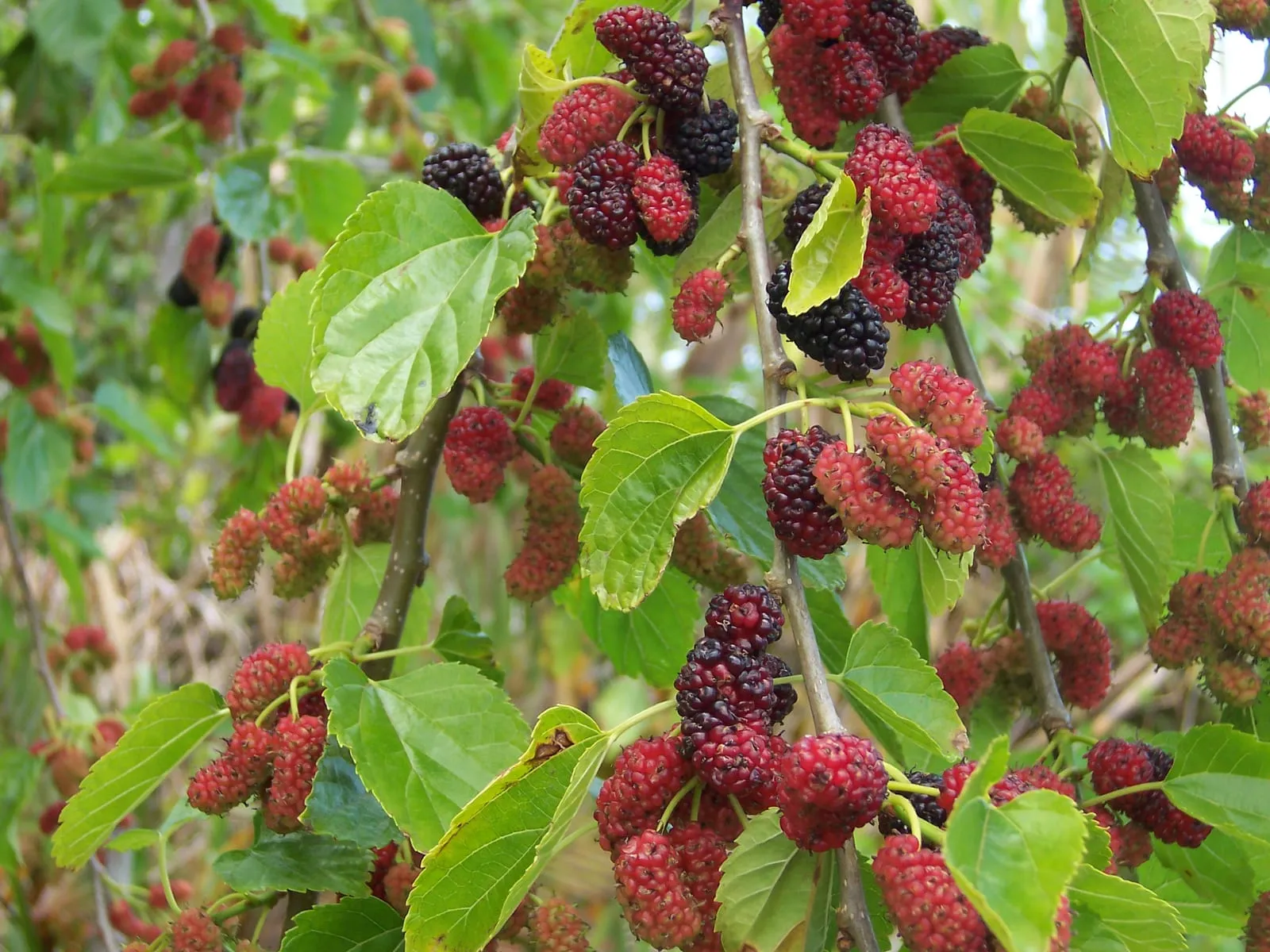
fruit tree in zone 5a
Growing mulberry in zone 5a
Morus species
- Zone
- 5a -20°F to -15°F
- Growing season
- 150 days
- Chill needed
- 400 to 600 below 45°F
- Suitable varieties
- 1
- Days to harvest
- 60 to 90
The verdict
Mulberry is well-suited to zone 5a, though variety selection determines whether the crop thrives or merely survives. Chill-hour requirements of 400 to 600 hours are easily met in zone 5a, which typically accumulates 1,200 or more hours below 45°F during a normal winter. Growers are not working against the calendar here.
The binding question is cold hardiness. Zone 5a minimum temperatures reach -20°F to -15°F, and many mulberry selections from warmer regions are not reliably hardy at those extremes. Illinois Everbearing is the recommended variety precisely because it tolerates zone 5a winters without significant dieback on established wood. Young trees in their first two winters carry more risk.
This is not a marginal zone for mulberry when Illinois Everbearing is the selection, but it sits close to the northern limit where unusual cold events can set back younger plantings.
Recommended varieties for zone 5a
1 cultivar suited to this zone, with disease-resistance and zone-fit annotations.
| Variety | Notes | Zone fit | Disease resistance |
|---|---|---|---|
| Illinois Everbearing fits zone 5a | Sweet with a hint of tart, dark purple-black; rich berry flavor. Fresh eating, jam, baking, smoothies. Long fruiting period (6-8 weeks). Productive hybrid. | | none noted |
Critical timing for zone 5a
In zone 5a, mulberry typically breaks dormancy in late April to early May, with bloom following shortly after. The crop's bloom window overlaps with the zone's late-spring frost risk, and a hard frost after leaf emergence can damage developing flowers or new growth. Established trees tend to recover, but fruit set for that season may be reduced.
Harvest for Illinois Everbearing runs from late June through August, spread across multiple picks rather than a single concentrated window. With a 150-day growing season in zone 5a, fruit ripens well before first fall frost, which typically arrives in late September to mid-October. Growers should expect the first ripe fruit later than in zones 6 and warmer.
Common challenges in zone 5a
- ▸ Fire blight in pears
- ▸ Cedar-apple rust
- ▸ Late spring frosts
Modified care for zone 5a
The main adjustment in zone 5a is protecting young trees through the first two or three winters. Wrapping trunks to prevent frost cracking, planting on a south or southwest-facing slope, and mulching the root zone heavily before freeze-up all reduce winter injury risk. Established Illinois Everbearing trees are generally self-sufficient once the root system is developed.
Site selection matters more here than in warmer zones. Low-lying areas that collect cold air on still nights increase frost exposure during bloom. A site with good air drainage reduces the risk of late-spring frost damage to emerging growth.
Zone 5a's listed disease pressures, fire blight and cedar-apple rust, primarily affect pears and apples. Mulberry has no significant overlap with those pathogens. Standard sanitation practices are sufficient; no additional disease management adjustments are needed for this zone.
Mulberry in adjacent zones
Image: "Morus alba fruits", by B.navez, via Wikimedia Commons, licensed under CC-BY Source.

Related