Grafting pair
good compatibilityMethley
on Marianna 2624 rootstock
- Compatibility
- Good
- Tree size
- Semi Dwarf
- Mature height
- 12–16 ft
- Crop
- Japanese Plum
Compatibility and disease notes
Marianna 2624 tolerates wet soils and resists oak root fungus. Some incompatibility with certain Japanese plum varieties; Methley pairs cleanly.
Overview
Methley on Marianna 2624 is a reliable combination for growers in California, the Pacific Northwest, and the Southeast who need a Japanese plum suited to heavy or seasonally wet soils. Marianna 2624's tolerance for poorly drained conditions and resistance to oak root fungus (Armillaria mellea) make it the preferred rootstock in problem sites where Myrobalan or Lovell would fail. Methley, a self-fertile Japanese plum known for early red-fleshed fruit, pairs cleanly with this rootstock at a time when other Japanese plum varieties can show delayed incompatibility.
The resulting tree reaches 12 to 16 feet at maturity, placing it in the semi-dwarf category and keeping it manageable for home-scale plantings without requiring aggressive annual height reduction. UC Davis Plum Rootstocks identifies Marianna 2624 as a standard selection for wet-site production across California. Growers in the Southeast will find it performs well in clay-heavy soils where drainage is inconsistent. This is not a combination suited to droughty, sandy sites; Marianna 2624 performs best where consistent soil moisture is available.
Best regions
Step-by-step grafting guide
Graft Methley onto Marianna 2624 during late winter dormancy, before the rootstock breaks but after the hardest cold has passed. In the Southeast, late January through mid-February is generally the right window. In California and the Pacific Northwest, late February through mid-March is more typical.
Whip-and-tongue grafting is the standard technique when scion and rootstock are roughly equal in diameter (3/8 to 5/8 inch). For larger rootstock stems, a cleft graft is more practical.
Tools needed: sharp grafting knife, grafting tape or budding rubber, grafting wax or parafilm, scion wood collected while fully dormant.
- Collect Methley scion wood in mid-January while the tree is fully dormant; store it wrapped in a damp paper towel inside a sealed plastic bag in the refrigerator until grafting day.
- Cut a 3- to 4-inch scion piece with 2 to 3 healthy buds.
- Make a long, smooth diagonal cut (roughly 1.5 inches) on both scion and rootstock; add matching tongue cuts for mechanical stability.
- Align cambium layers on at least one side; alignment on both sides improves callus formation and increases success rates.
- Wrap the full union tightly with grafting tape, leaving no gaps.
- Seal the cut scion tip with grafting wax to prevent desiccation.
The graft is taking when the scion buds push into active growth, typically 3 to 6 weeks after grafting. Avoid tug-testing the union until growth is well established and the tape has been removed.
Common failure modes
The most common failure is a union that appears to take and then cracks under cropping stress. Methley pairs cleanly with Marianna 2624, but the graft still needs a full season to callus before significant fruit load is placed on it. Allowing heavy fruit set in the first year after grafting risks splitting a union that looks solid from the outside. Thin aggressively in year one.
Suckering from Marianna 2624 is a persistent management issue. The rootstock produces vigorous root suckers that, if left unchecked, can outcompete the Methley scion within a season or two. Inspect the base and root zone two to three times per growing season and remove suckers at their origin point, not at the soil surface.
Wet-site tolerance is a genuine strength of this rootstock, but prolonged standing water is not the same as seasonal moisture. Waterlogging during dormancy creates conditions for phytophthora crown rot even on a rootstock marketed for difficult drainage. Site preparation still matters.
Sources
Related
Related grafts
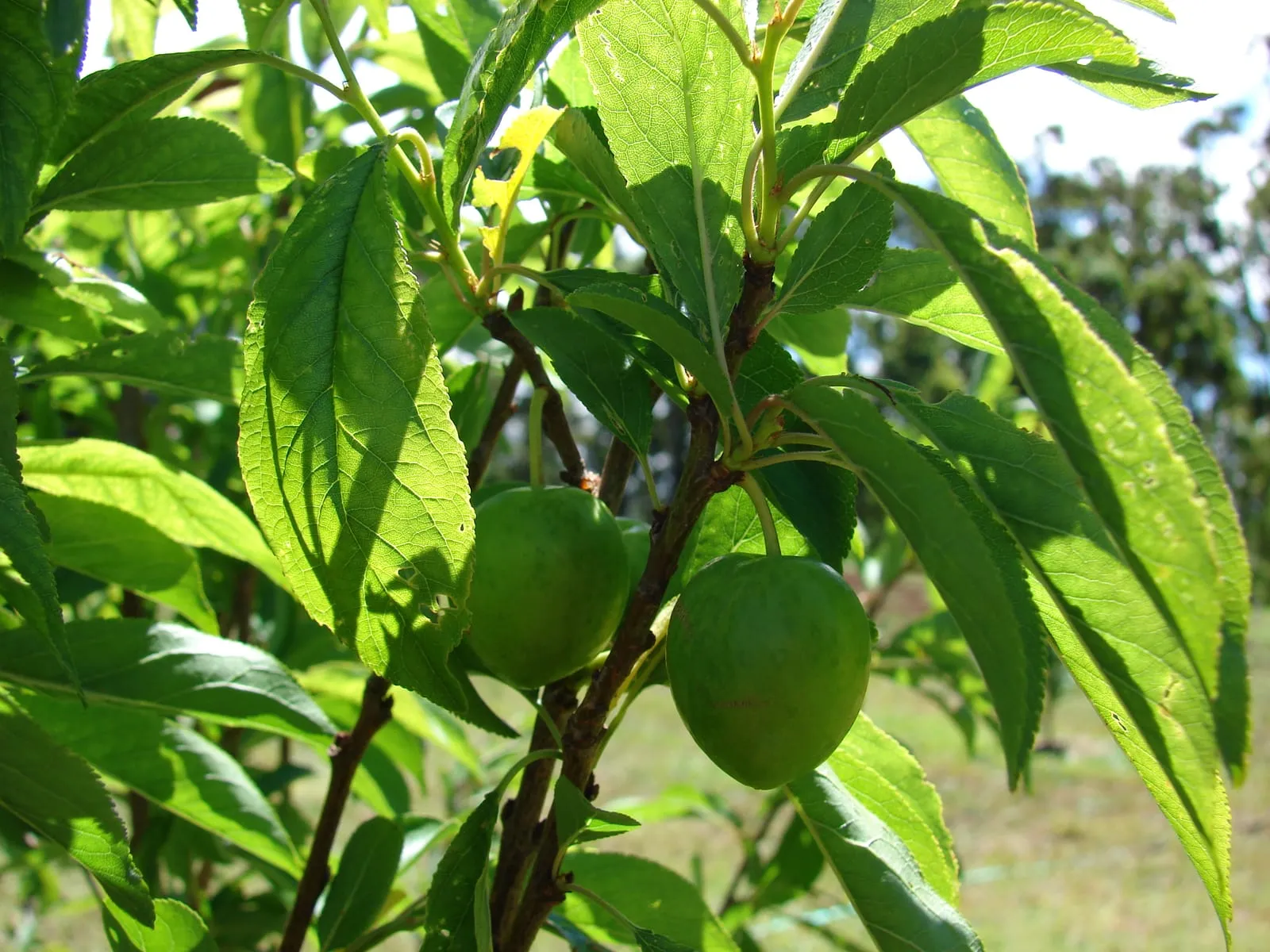
Image: "Starr 080405-3957 Prunus salicina", by Forest & Kim Starr, via Wikimedia Commons, licensed under CC-BY. Source.
