Grafting pair
excellent compatibilityBartlett
on Pyrus betulifolia rootstock
- Compatibility
- Excellent
- Tree size
- Standard
- Mature height
- 20–30 ft
- Crop
- Pear
Compatibility and disease notes
Pyrus betulifolia is vigorous, fire-blight tolerant, and tolerates poor soils. Standard for commercial pear in the eastern US.
Overview
Bartlett on Pyrus betulifolia is a standard, commercially proven pairing across the Northeast, Mid-Atlantic, and Southeast. The combination produces a standard-sized tree reaching 20 to 30 feet at maturity, making it appropriate for home orchards with sufficient space or commercial plantings where per-tree yield justifies the footprint.
The rootstock brings real advantages beyond size. Pyrus betulifolia tolerates poorly drained and clay-heavy soils that would stress other pear rootstocks, and its vigorous root system supports consistent cropping even on difficult sites. Fire blight tolerance at the rootstock level is a meaningful asset in eastern US growing regions, where blight pressure on pear is a recurring concern, though Bartlett scion wood itself remains susceptible and requires active canopy management. According to NC State Pear Production, betulifolia is the standard commercial pear rootstock in the eastern US for these reasons.
This is a combination for growers who have the space, are willing to prune annually to manage height, and are working in regions where soil adaptability and blight-resistant roots matter. Growers in tight quarters or on good soils have alternatives, but for difficult sites in the covered regions, this pairing has a long track record.
Best regions
Step-by-step grafting guide
Graft timing is the single most controllable success variable. For Bartlett on betulifolia, target late winter to early spring, typically February through mid-March in zones 6 through 8, after the harshest cold has passed but before the rootstock breaks dormancy. In zone 5 and colder, push the window two to three weeks later.
Scion collection and storage: Collect Bartlett scion wood in January when fully dormant. Select pencil-diameter growth from the previous season, 8 to 12 inches long with healthy buds. Bundle loosely in barely damp sphagnum moss, seal in a plastic bag, and refrigerate at 34 to 38°F until grafting day.
Technique: Whip-and-tongue is preferred when rootstock and scion diameters are closely matched (3/8 to 5/8 inch). Make the initial slanting cut at 30 to 45 degrees on both pieces, then add the interlocking tongue cut at the upper third of the slant. Fit the pieces together so cambium aligns on at least one side, ideally both. Wrap the entire union tightly with grafting tape, parafilm, or rubber budding strips.
After wrapping: For bench grafts on bare-root rootstock, pot in well-draining mix and keep at 60 to 70°F for three to four weeks to allow callus formation, then harden off before moving outside. For field grafts on established rootstock, cover the wrapped union with a small plastic bag for the first two to three weeks to retain humidity.
Success criteria: Bud swell on the scion within three to five weeks. Shriveled scion wood without bud movement indicates union failure; the rootstock can accept a second attempt if refrigerated scion wood is still viable.
Common failure modes
Three failure points account for most losses with this combination.
Cambium mismatch: Pyrus betulifolia seedlings are often grown from seed and show more diameter variation than clonal rootstock. If the rootstock significantly outdiameters the scion, one-sided cambium alignment is still workable, but growers who try to center the joint rather than align one edge typically miss both sides.
Desiccation before callus formation: Betulifolia breaks dormancy vigorously once temperatures rise. A poorly wrapped union loses moisture faster than the callus can bridge it, particularly in the Southeast and Mid-Atlantic where warm spells in March can push daytime temperatures high enough to dry out scion wood before union formation is complete. Parafilm and humidity covers reduce this risk significantly.
Rootstock suckering: Betulifolia is vigorous and produces root suckers that will outcompete the scion if not removed promptly. Check below the graft union monthly through the first full growing season and remove any growth originating from the rootstock before it establishes.
Sources
Frequently asked questions
- Is Bartlett compatible with Pyrus betulifolia rootstock?
Yes, compatibility is rated excellent. This is one of the most established pear grafting combinations in commercial use across the eastern United States, with decades of documented performance.
- How large will a Bartlett tree grow on Pyrus betulifolia?
Expect a standard-sized tree reaching 20 to 30 feet at maturity. Annual pruning can manage height and canopy spread, but this rootstock does not inherently limit tree size the way semi-dwarfing rootstocks do.
- Does Pyrus betulifolia provide fire blight protection?
Partially. The rootstock itself carries meaningful fire blight tolerance and is less likely to succumb to collar infections than some alternatives. The Bartlett scion remains susceptible, so canopy-level fire blight management is still necessary.
- When should I graft Bartlett onto Pyrus betulifolia?
Late winter to early spring, before the rootstock breaks dormancy. In zones 6 through 8, February through mid-March is the target window. Collect and refrigerate scion wood in January while it is fully dormant.
+−
+−
+−
+−
Related
Related grafts
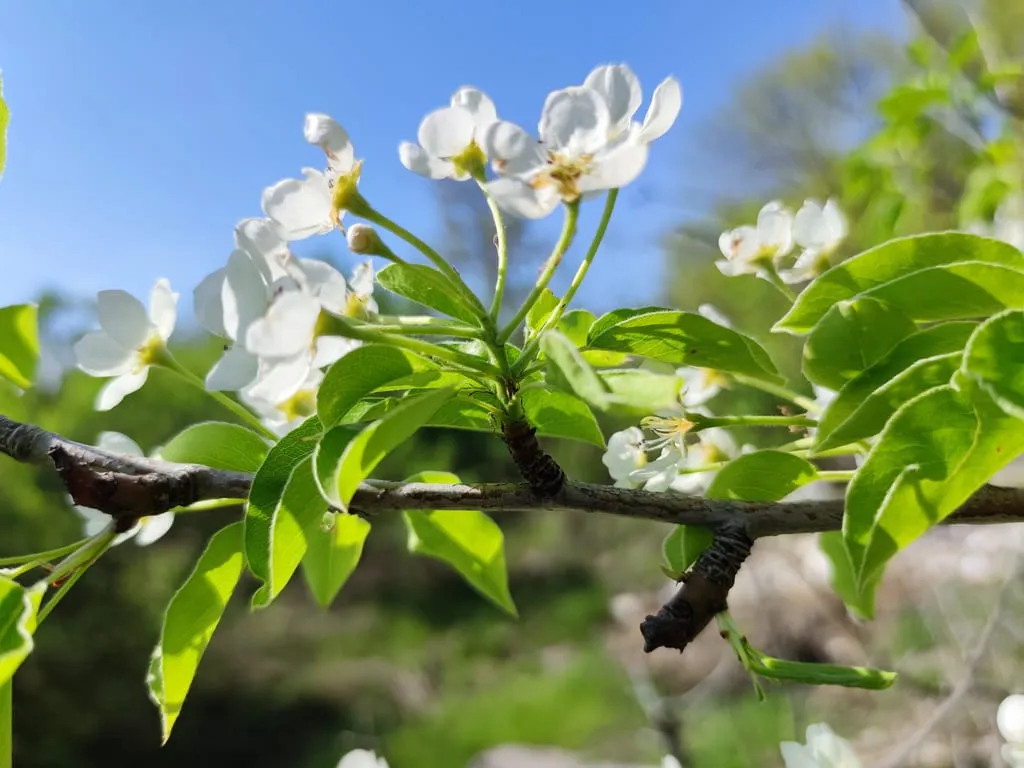
Image: "Груша обыкновенная", by Vasily Moryashkin, via iNaturalist, licensed under CC-BY. Source.