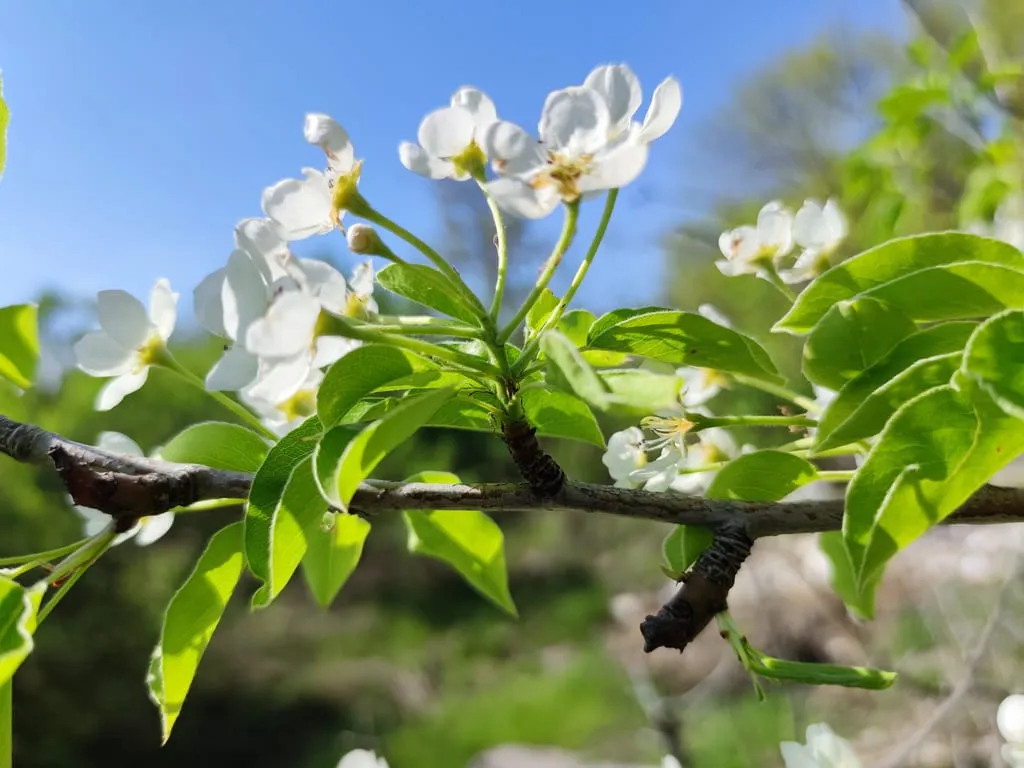
fruit tree in zone 7b
Growing pear in zone 7b
Pyrus communis
- Zone
- 7b 5°F to 10°F
- Growing season
- 220 days
- Chill needed
- 600 to 900 below 45°F
- Suitable varieties
- 3
- Days to harvest
- 115 to 165
The verdict
Zone 7b sits comfortably within the pear's preferred range. Most cultivated pears require 600 to 900 chill hours (hours below 45°F), and zone 7b locations typically accumulate 800 or more chill hours in an average winter, often reaching 900 in cooler inland sites. This is not a marginal zone for the crop. The 220-day growing season is more than sufficient to ripen both early and late-season varieties without forcing the fruit.
The real limiter is not cold but disease. Fire blight is aggressive in warm, wet springs, and zone 7b's spring weather reliably produces repeated infection cycles. Variety selection matters more here than in cooler, drier parts of the pear's range: susceptible standard varieties will struggle without intensive spray programs. Magness, Moonglow, and Kieffer are the practical choices for growers who want manageable disease pressure without weekly fungicide applications.
Recommended varieties for zone 7b
3 cultivars suited to this zone, with disease-resistance and zone-fit annotations.
| Variety | Notes | Zone fit | Disease resistance |
|---|---|---|---|
| Magness fits zone 7b | Very sweet, juicy, smooth melting flesh; an exceptional fresh-eating pear that rivals Bartlett in flavor with much better disease resistance. Self-unfruitful (needs pollinator). | |
|
| Moonglow fits zone 7b | Mild, sweet, soft and juicy when ripe; good fresh and for canning. Fire-blight resistant. Often planted as the pollinator for Magness. | |
|
| Kieffer fits zone 7b | Crisp, gritty, mildly sweet, yellow-skinned; a tough cooking and canning pear, not great fresh. Holds shape in preserves and pear butter. Productive in heat. | |
|
Critical timing for zone 7b
Pear bloom in zone 7b typically falls between late March and mid-April, depending on variety and microsite. The zone's average last frost ranges from late March in warmer piedmont locations to mid-April in cooler inland elevations, so early-blooming selections carry real frost risk in some years.
Moonglow, an early variety, ripens in August; Kieffer, a late-season type, holds on the tree into October. The 220-day growing season accommodates both without difficulty. In years with a prolonged warm spell in February followed by a hard freeze, bloom damage is possible, particularly in low-lying sites where cold air pools. Elevated or south-facing planting sites reduce exposure to late frost without eliminating it entirely.
Common challenges in zone 7b
- ▸ Cedar-apple rust pressure heavy in piedmont
- ▸ Japanese beetles
- ▸ Brown marmorated stink bug
- ▸ Late summer disease pressure
Disease pressure to watch for
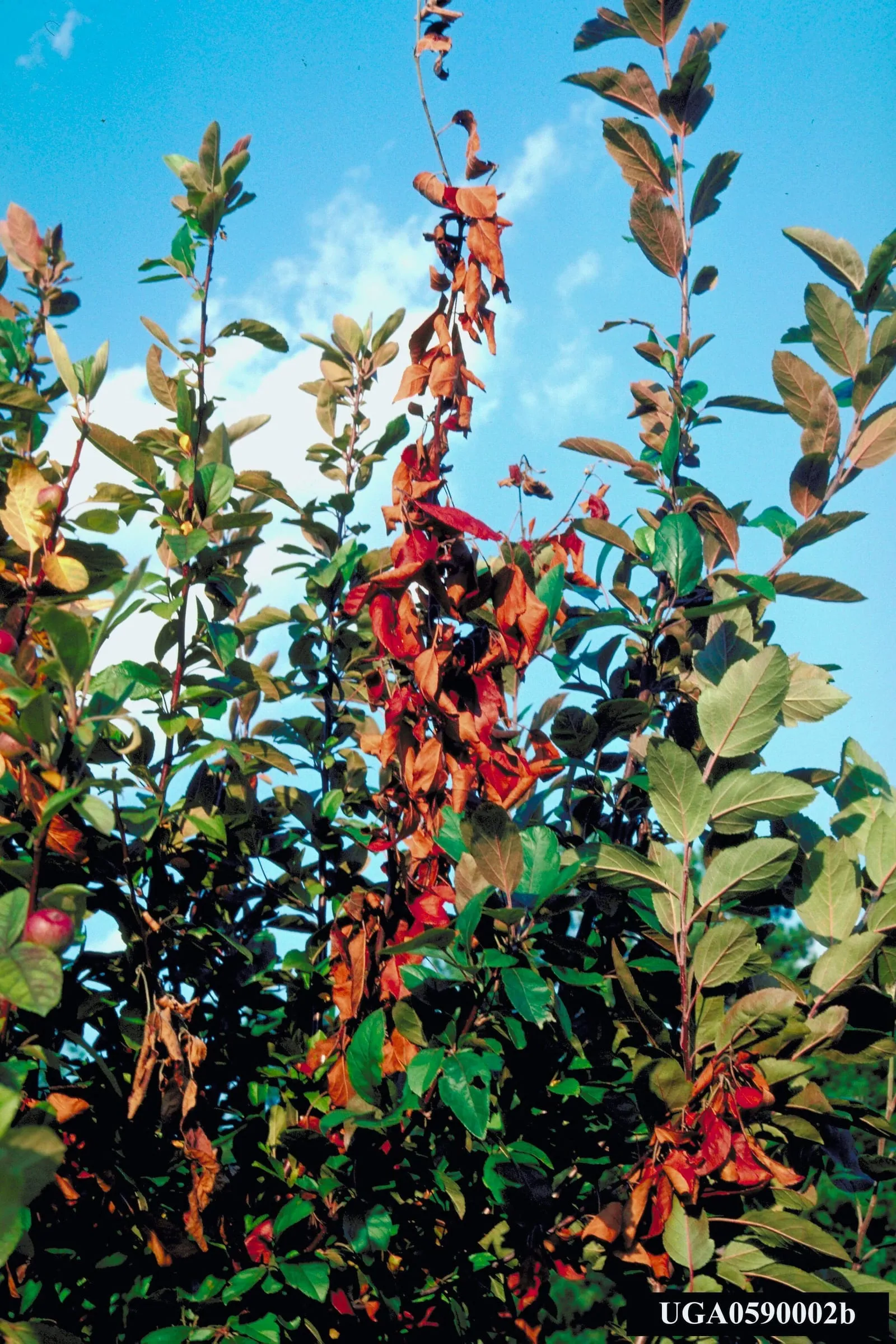
Erwinia amylovora
Devastating bacterial disease that can kill trees rapidly. Most severe in warm wet springs.
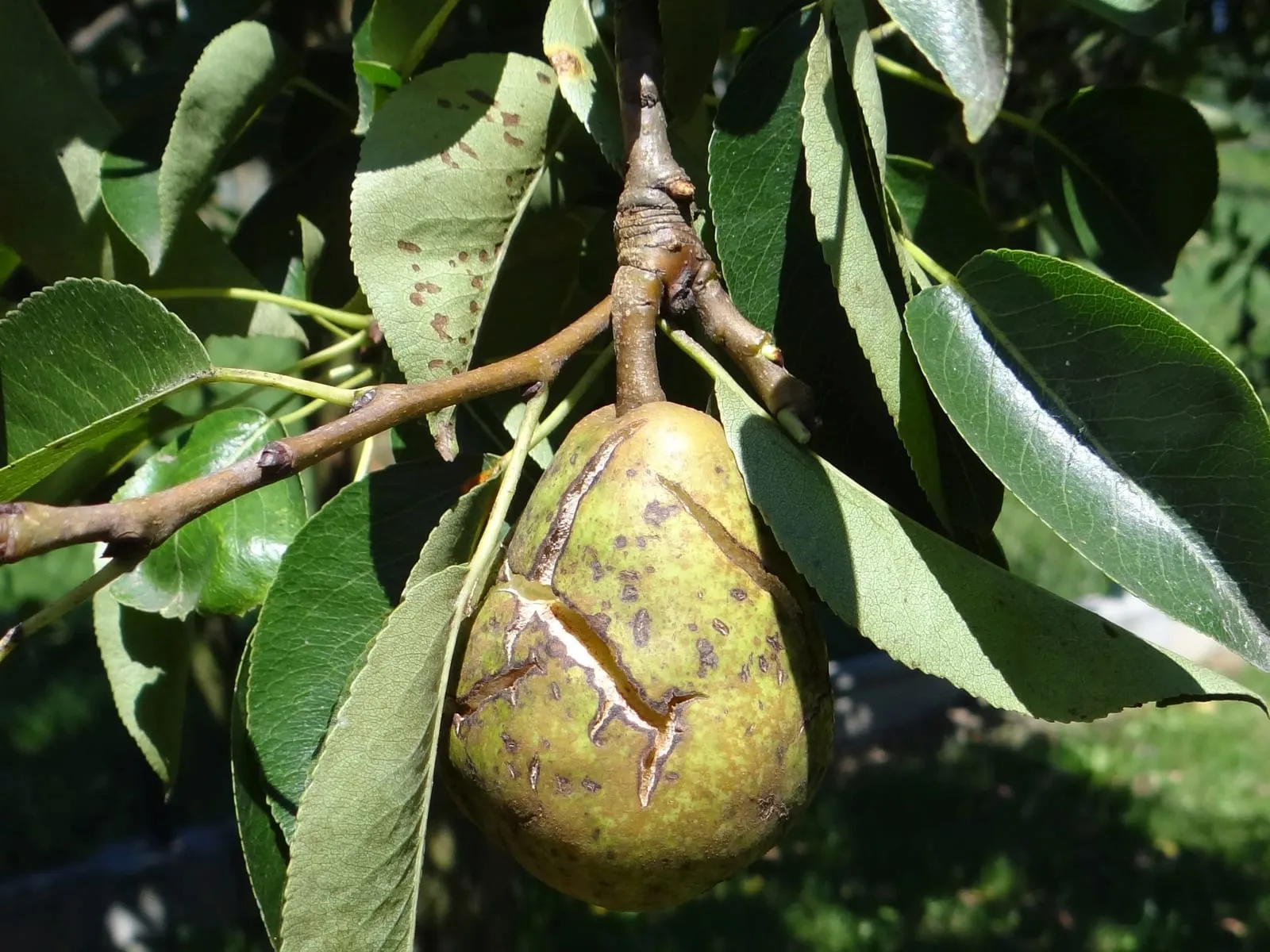
Venturia pyrina
Fungal disease similar to apple scab but specific to pear, causing leaf and fruit lesions.
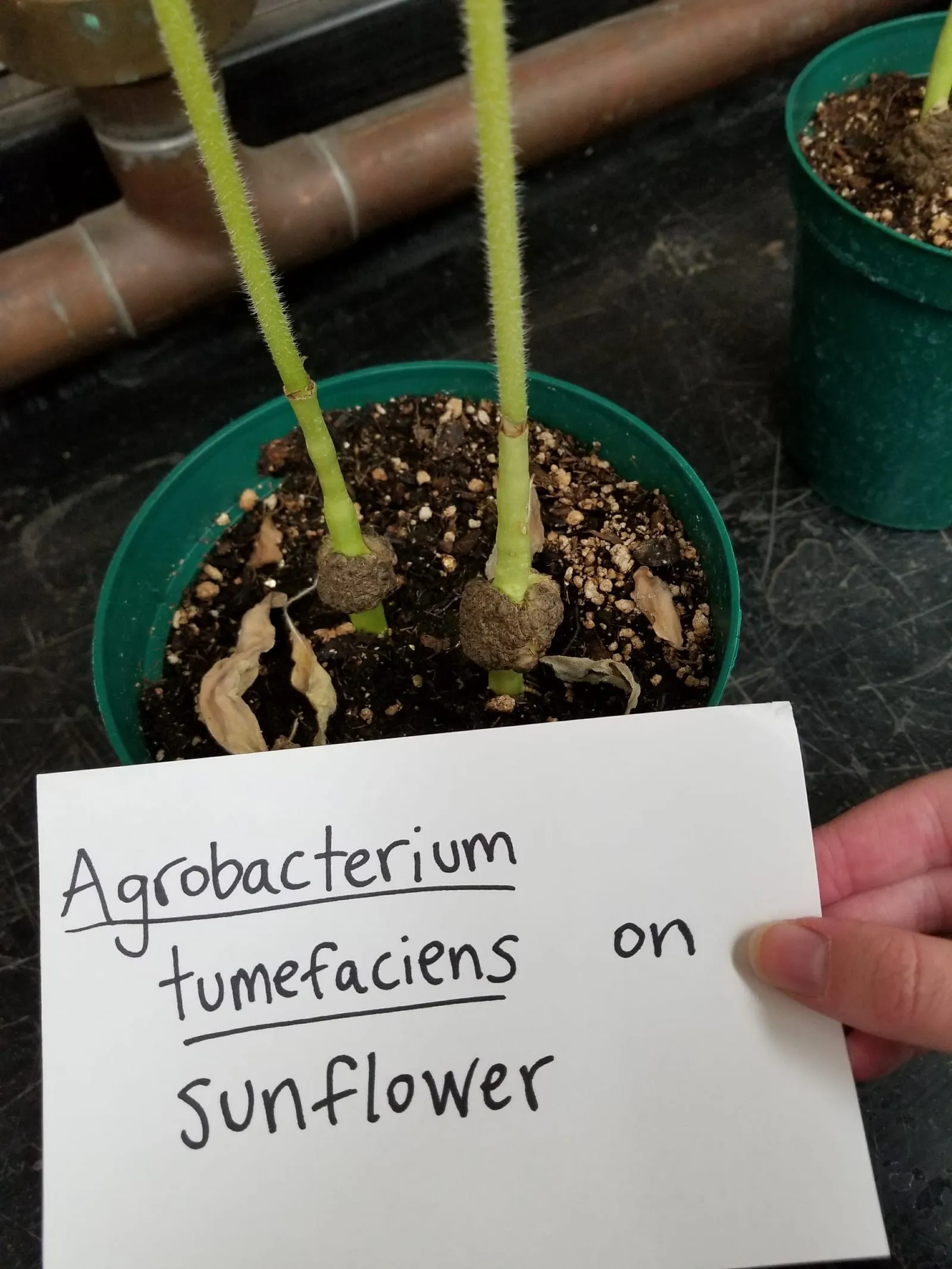
Agrobacterium tumefaciens
Soil-borne bacterium that enters plants through wounds and induces tumor-like galls on roots, crown, and lower stems. Galls reduce vigor and shorten plant lifespan; on Rubus the disease is often fatal.
Modified care for zone 7b
Fire blight management is the central adaptation in zone 7b. The warm, humid springs characteristic of the piedmont and mid-Atlantic create near-ideal conditions for Erwinia amylovora infection during bloom. Copper-based sprays timed to bloom and streptomycin applications (where permitted by local regulations) are standard practice. Pruning out infected wood promptly and sterilizing cutting tools between each cut is not optional in this zone.
Japanese beetle pressure peaks from late June through August and requires either physical removal or targeted insecticide applications to protect foliage. Brown marmorated stink bug has become a significant pest across zone 7b since establishing in the region in the 2010s; fruit-piercing damage reduces marketability and invites secondary infection. Exclusion netting is the most effective control but is labor-intensive. Most home plantings rely on physical removal and perimeter traps as a partial measure.
Pear in adjacent zones
Image: "Груша обыкновенная", by Vasily Moryashkin, via iNaturalist, licensed under CC-BY Source.
Related