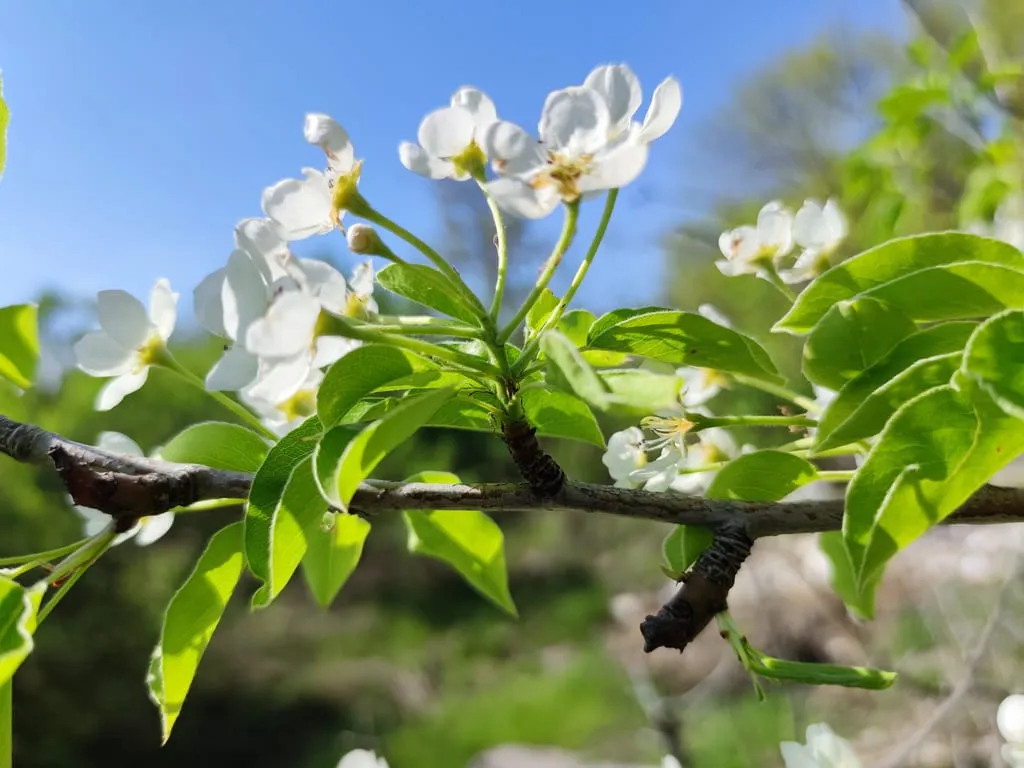
fruit tree in zone 5b
Growing pear in zone 5b
Pyrus communis
- Zone
- 5b -15°F to -10°F
- Growing season
- 165 days
- Chill needed
- 600 to 900 below 45°F
- Suitable varieties
- 4
- Days to harvest
- 115 to 165
The verdict
Zone 5b is a reliable zone for pear production, not a marginal one. Winter temperatures between -15 and -10°F are well within the cold hardiness limits of established pear trees, and the 165-day growing season is sufficient for nearly all common varieties to mature fruit.
The more relevant question is chill-hour accumulation. Pears require 600 to 900 hours below 45°F to break dormancy and bloom reliably. Zone 5b winters consistently deliver well above this threshold, often accumulating 1,200 or more hours in a typical winter. This is not a problem in itself, but it means growers should focus on variety selection for other traits (fire blight resistance, harvest timing, fruit quality) rather than worrying about whether the trees will break dormancy. Bartlett, Magness, Moonglow, and Kieffer are all cold-hardy enough for zone 5b and meet the chill requirement comfortably.
Recommended varieties for zone 5b
4 cultivars suited to this zone, with disease-resistance and zone-fit annotations.
| Variety | Notes | Zone fit | Disease resistance |
|---|---|---|---|
| Bartlett fits zone 5b | Sweet, juicy, classic dessert pear; ripens to a soft buttery melt-in-the-mouth texture. The standard for canning and fresh eating. Fire-blight susceptible. | | none noted |
| Magness fits zone 5b | Very sweet, juicy, smooth melting flesh; an exceptional fresh-eating pear that rivals Bartlett in flavor with much better disease resistance. Self-unfruitful (needs pollinator). | |
|
| Moonglow fits zone 5b | Mild, sweet, soft and juicy when ripe; good fresh and for canning. Fire-blight resistant. Often planted as the pollinator for Magness. | |
|
| Kieffer fits zone 5b | Crisp, gritty, mildly sweet, yellow-skinned; a tough cooking and canning pear, not great fresh. Holds shape in preserves and pear butter. Productive in heat. | |
|
Critical timing for zone 5b
Pear bloom in zone 5b typically falls between mid-April and early May, depending on the preceding winter's temperature patterns and spring warm-up pace. This overlap with the zone's last frost window is the primary frost risk: late frosts in late April or early May can damage open blossoms and reduce or eliminate the crop for that year.
Harvest timing varies by variety. Moonglow and Bartlett mature in August; Kieffer extends into October. Growers should factor this spread into planting decisions if reliable late-season harvest is a priority. The 165-day growing season gives adequate time for all four listed varieties to reach maturity before first fall frost.
Common challenges in zone 5b
- ▸ Plum curculio
- ▸ Codling moth
- ▸ Cedar-apple rust
Disease pressure to watch for
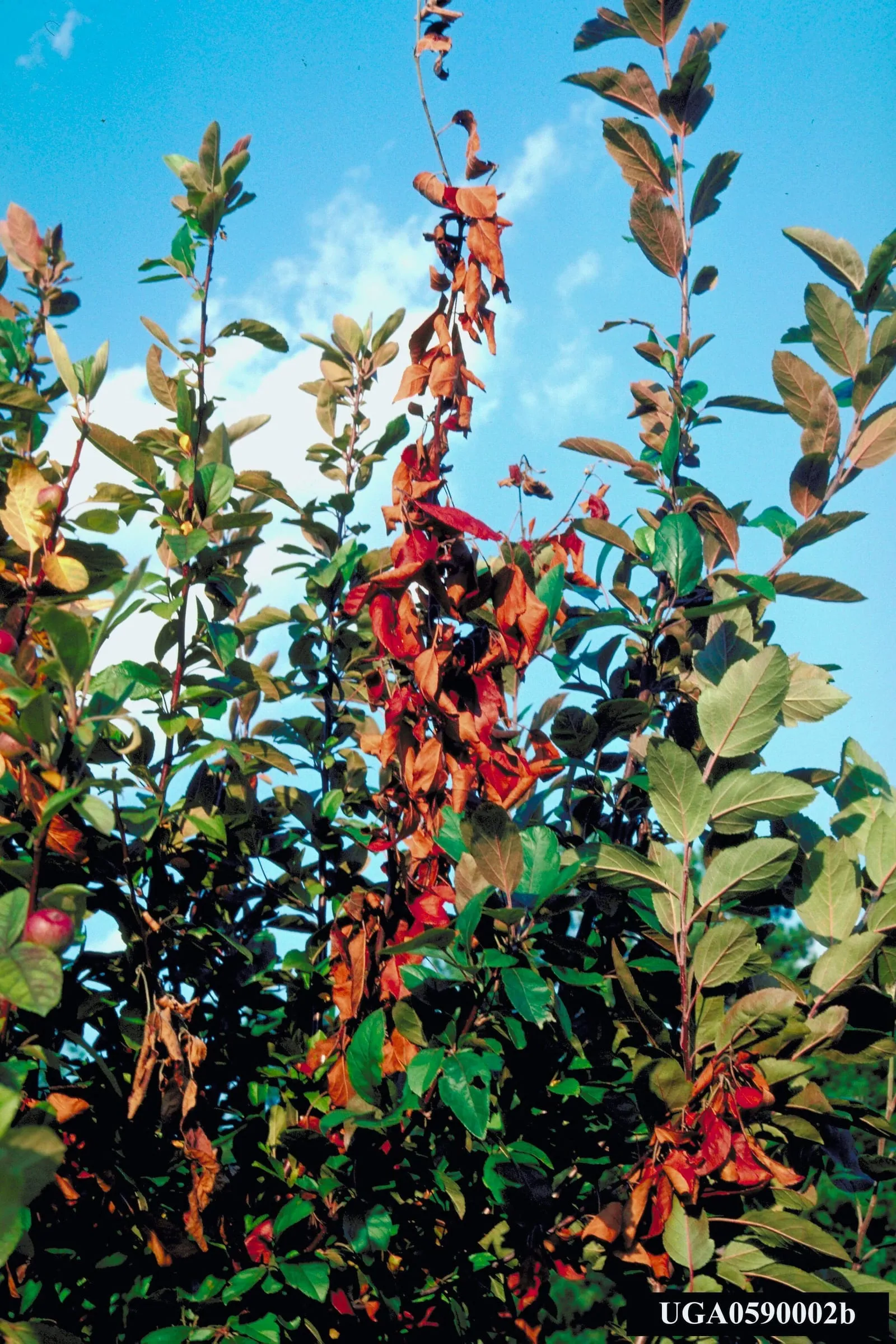
Erwinia amylovora
Devastating bacterial disease that can kill trees rapidly. Most severe in warm wet springs.
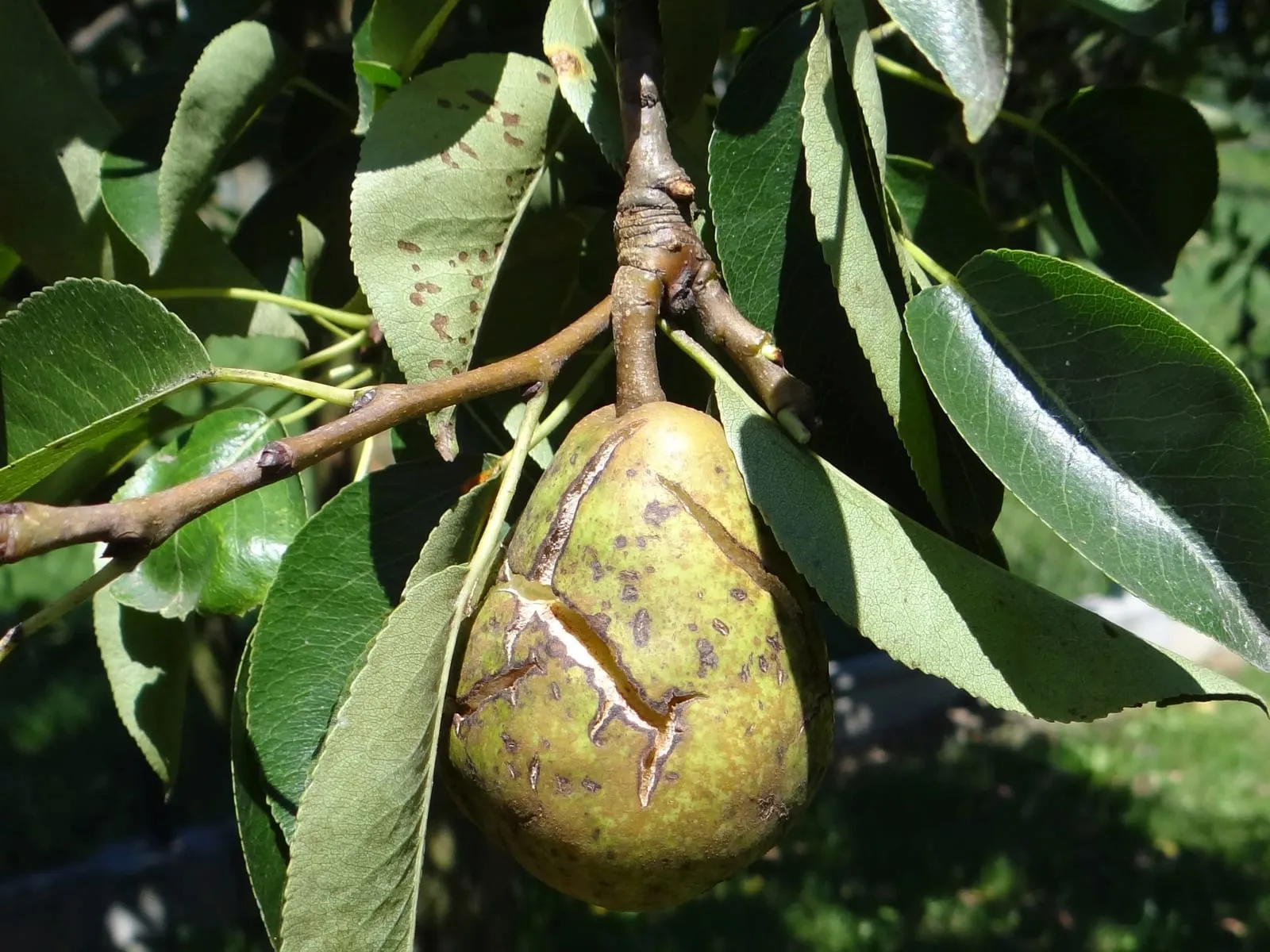
Venturia pyrina
Fungal disease similar to apple scab but specific to pear, causing leaf and fruit lesions.
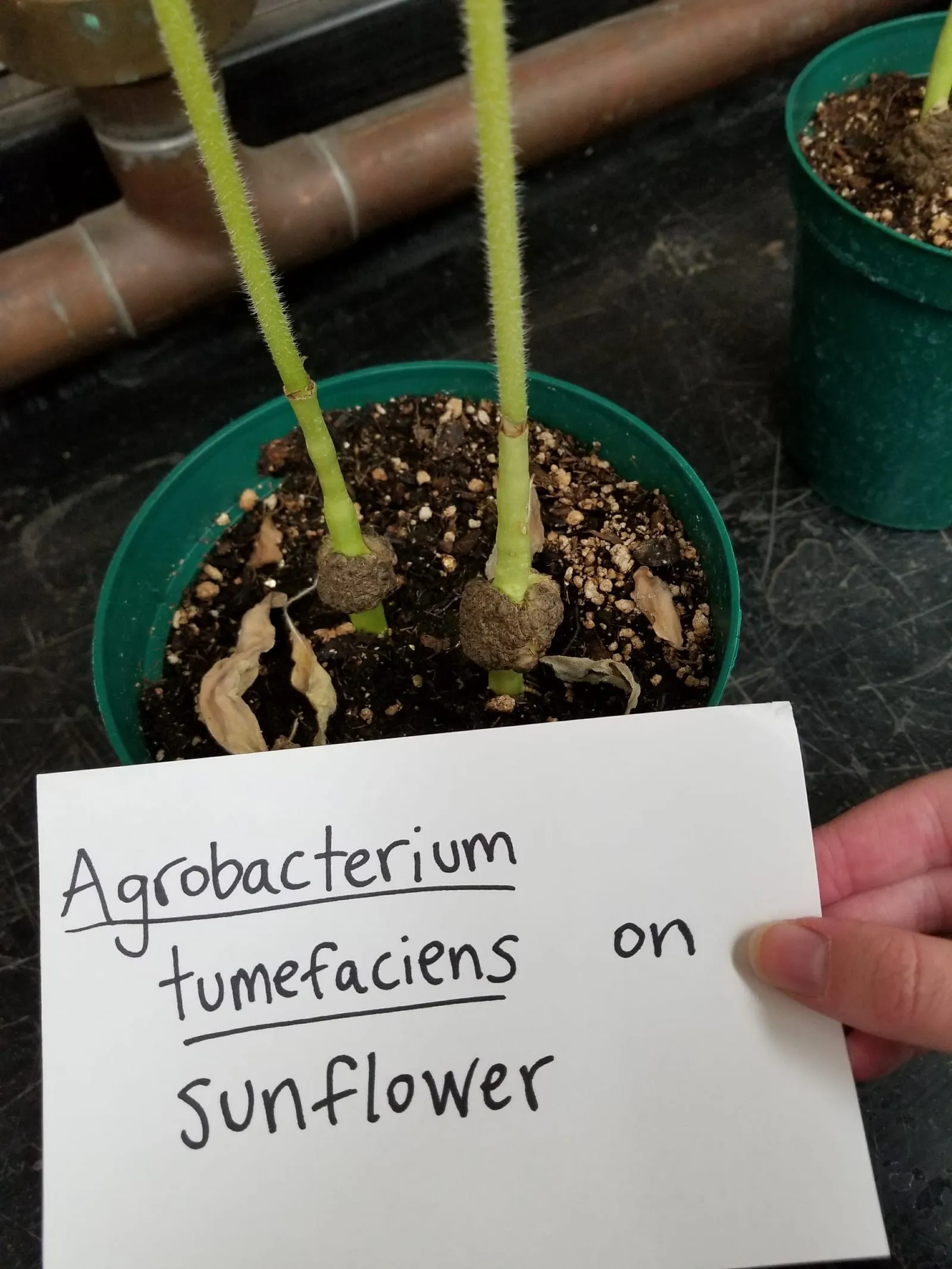
Agrobacterium tumefaciens
Soil-borne bacterium that enters plants through wounds and induces tumor-like galls on roots, crown, and lower stems. Galls reduce vigor and shorten plant lifespan; on Rubus the disease is often fatal.
Modified care for zone 5b
Zone 5b growers face more intense disease pressure from fire blight than counterparts in warmer zones, partly because cool, wet spring conditions favorable to Erwinia amylovora infection often coincide with bloom. Selecting resistant varieties (Magness and Moonglow carry meaningful resistance; Bartlett does not) and applying copper sprays at early bloom is advisable in most years.
Winter cold at the lower end of zone 5b (-15°F) can kill flower buds on branches exposed to full wind, even on otherwise hardy trees. Siting trees on slopes or elevated positions where cold air drains away from the planting reduces this risk. Plum curculio and codling moth pressure requires a spray program consistent with what apple growers in the same zone use; pears share these pests and the timing windows are similar.
Frequently asked questions
- Can Bartlett pears survive zone 5b winters?
Bartlett is cold-hardy to approximately -20°F, so established trees handle zone 5b winters without significant dieback. The greater risk is late spring frost damaging blossoms after the tree breaks dormancy, which can eliminate the crop in a given year without injuring the tree itself.
- Do pears need a pollinator in zone 5b?
Most pear varieties require cross-pollination. Bartlett and Moonglow will pollinate each other. Kieffer is partially self-fertile but sets heavier crops with a pollinator. Magness does not produce viable pollen and cannot serve as a pollinator, so it requires at least two other varieties nearby.
- Is fire blight a serious problem for pears in zone 5b?
Fire blight is the primary disease threat for pears throughout zone 5b. Cool, wet conditions during bloom create high infection risk most years. Variety selection is the most effective long-term management tool; Magness and Moonglow carry substantially better resistance than Bartlett or Kieffer.
+−
+−
+−
Pear in adjacent zones
Image: "Груша обыкновенная", by Vasily Moryashkin, via iNaturalist, licensed under CC-BY Source.
Related