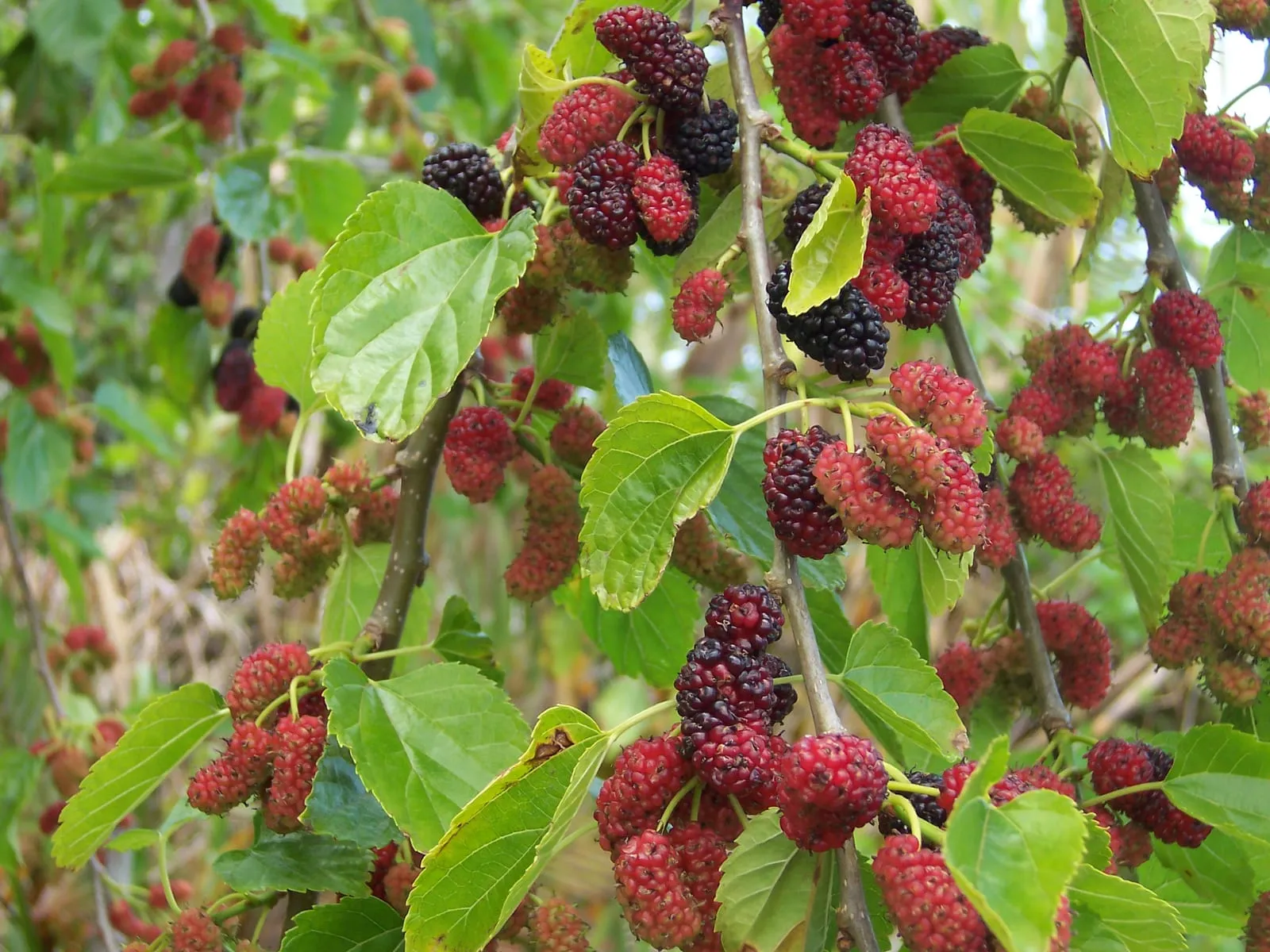
fruit tree in zone 8a
Growing mulberry in zone 8a
Morus species
- Zone
- 8a 10°F to 15°F
- Growing season
- 240 days
- Chill needed
- 400 to 600 below 45°F
- Suitable varieties
- 3
- Days to harvest
- 60 to 90
The verdict
Zone 8a is a reliable fit for mulberry, not a marginal one. The crop's chill-hour requirement of 400 to 600 hours falls squarely within what most zone 8a winters accumulate, and the 240-day growing season gives fruit adequate time to develop and ripen fully before fall.
All three recommended varieties perform well here. Illinois Everbearing is particularly well-suited, tolerating the warmer end of zone 8a winters without skipping a productive season. Pakistan and Black Beauty both fruit reliably in this zone, though Black Beauty benefits from a site with good afternoon shade in the hottest inland locations.
The primary chill-hour concern in zone 8a is inconsistency between years, not chronic deficit. A warm winter that falls short of 400 hours will reduce fruit set noticeably. In most zone 8a locations this happens occasionally, not routinely, so it is worth tracking chill accumulation rather than assuming every winter will be adequate.
Recommended varieties for zone 8a
3 cultivars suited to this zone, with disease-resistance and zone-fit annotations.
| Variety | Notes | Zone fit | Disease resistance |
|---|---|---|---|
| Illinois Everbearing fits zone 8a | Sweet with a hint of tart, dark purple-black; rich berry flavor. Fresh eating, jam, baking, smoothies. Long fruiting period (6-8 weeks). Productive hybrid. | | none noted |
| Pakistan fits zone 8a | Very sweet, mild, almost candy-like; long red-black fruit (2-3 inches). Fresh eating standout when ripe. Needs warmth. | | none noted |
| Black Beauty fits zone 8a | Sweet, classic dark mulberry flavor; smaller fruit but high quality. Fresh and dried. Compact tree (15 ft), manageable in small yards. | | none noted |
Critical timing for zone 8a
In zone 8a, mulberry typically breaks dormancy in late February to mid-March and blooms shortly after. The bloom window usually precedes the last frost date for the zone by a narrow margin, which means late cold snaps can damage flowers and reduce fruit set in some years.
Harvest runs from late May through July depending on variety. Pakistan tends to ripen later and over a longer window than Illinois Everbearing, which concentrates its crop in a shorter June peak. The long growing season means ripe fruit can hang on the tree for an extended period, but birds and insects move quickly, so monitoring from early June onward is practical.
Common challenges in zone 8a
- ▸ Insufficient chill hours for some apple varieties
- ▸ Pierce's disease in grapes
- ▸ Heat stress on cool-season crops
Modified care for zone 8a
Mulberry in zone 8a requires less active management than the same crop in zones 5 or 6, but the heat load of a 240-day season creates some considerations worth addressing.
Soil moisture matters more here than in cooler zones. During July and August, established trees in heavy soils can manage with infrequent deep watering, but trees in sandy or well-drained soils may show leaf scorch and fruit drop without supplemental irrigation.
Pakistan mulberry, which originates from a warmer climate, performs well without any winter protection in zone 8a. Illinois Everbearing needs nothing beyond a well-drained site. Fertilization timing should shift slightly later here than in colder zones: applying nitrogen after late April rather than early spring helps avoid pushing tender growth that coincides with the tail end of frost risk.
Frequently asked questions
- Does mulberry reliably accumulate enough chill hours in zone 8a?
Most zone 8a locations accumulate 400 to 700 chill hours in a typical winter, which matches the mulberry requirement of 400 to 600 hours. Warm outlier winters can fall short, reducing fruit set that year, but chronic chill-hour deficit is not a zone 8a problem the way it is in zones 9 and 10.
- Which mulberry variety performs best in zone 8a?
Illinois Everbearing is the most consistently productive in zone 8a, tolerating both the warm winters and hot summers without much variation year to year. Pakistan mulberry also thrives here and produces large fruit, though it benefits from afternoon shade in the hottest inland sites.
- When does mulberry fruit ripen in zone 8a?
Harvest typically runs from late May through July in zone 8a. Illinois Everbearing concentrates its crop in a roughly four-week window in June. Pakistan ripens later and over a longer period, extending harvest into mid-July in many locations.
- Is frost a significant risk to mulberry bloom in zone 8a?
It is a moderate risk, not a routine one. Mulberry breaks dormancy early in zone 8a, often before the last frost date. Late cold snaps in February or early March can damage open flowers and reduce that season's fruit set. The risk varies considerably by site and by year.
+−
+−
+−
+−
Mulberry in adjacent zones
Image: "Morus alba fruits", by B.navez, via Wikimedia Commons, licensed under CC-BY Source.

Related