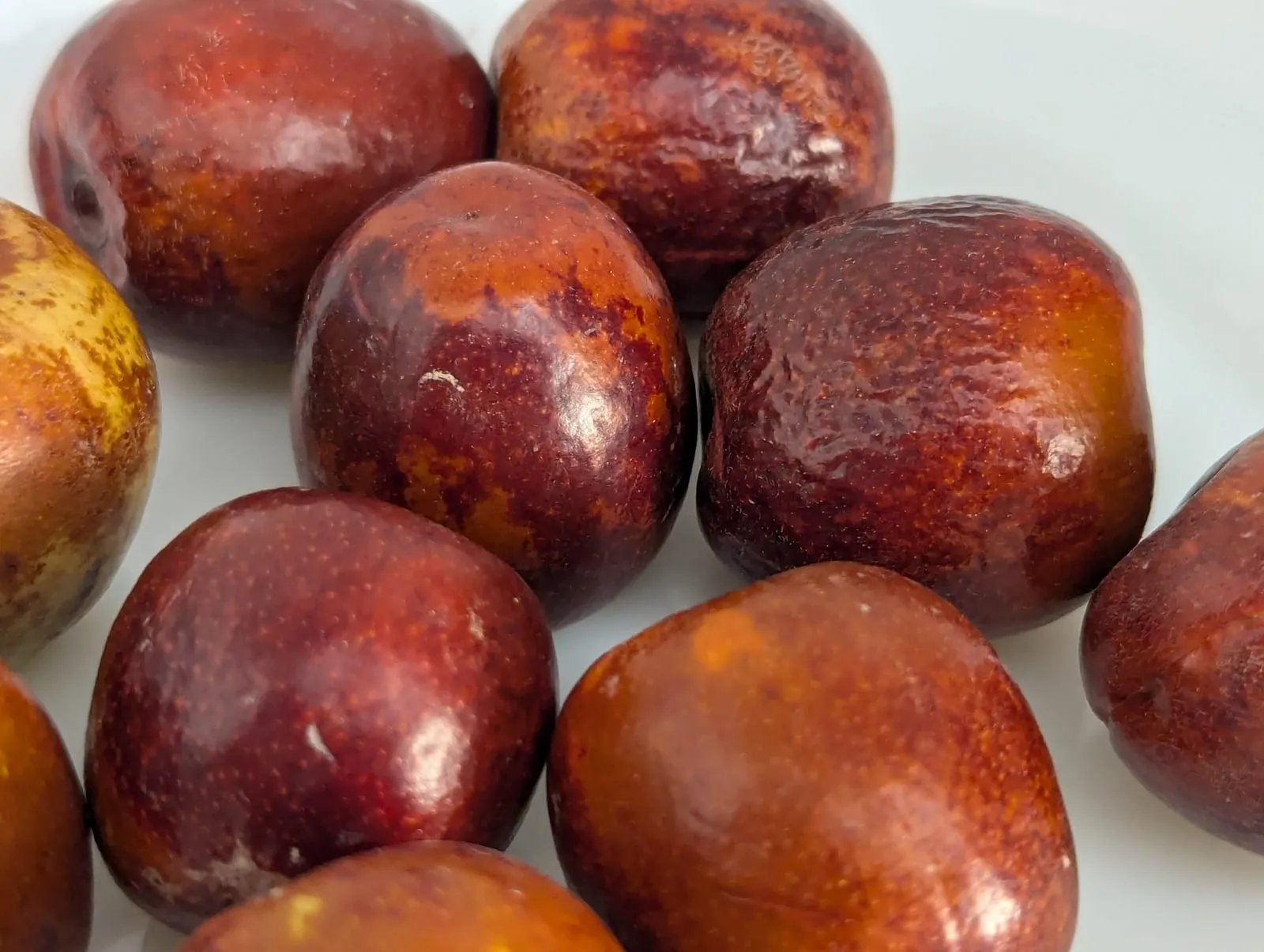
fruit tree in zone 6b
Growing jujube in zone 6b
Ziziphus jujuba
- Zone
- 6b -5°F to 0°F
- Growing season
- 190 days
- Chill needed
- 50 to 200 below 45°F
- Suitable varieties
- 4
- Days to harvest
- 150 to 200
The verdict
Zone 6b sits comfortably in the sweet spot of jujube's range. The crop's chill-hour requirement of 50 to 200 hours is easily satisfied in zone 6b winters, which typically deliver several hundred hours below 45°F, so underfulfillment is not a practical concern. Cold hardiness is likewise not a limiting factor: established jujube trees tolerate temperatures well below the zone 6b minimum of -5°F, with most cultivars reliably hardy to -20°F or colder when properly sited and given a few seasons to establish.
The 190-day growing season provides adequate heat accumulation for all four of the commonly recommended varieties, including the larger-fruited Li, which needs more time to develop than compact types like Honey Jar. The one caveat is that jujubes are heat-lovers, and zone 6b is at the cooler end of optimal. Plantings with southern exposure, reflected heat from masonry, or good air drainage consistently outperform open-field sites in terms of fruit size and sugar content.
Recommended varieties for zone 6b
4 cultivars suited to this zone, with disease-resistance and zone-fit annotations.
| Variety | Notes | Zone fit | Disease resistance |
|---|---|---|---|
| Li fits zone 6b | Sweet, crisp like an apple when fresh; large round fruit. Eats out of hand, dries to a date-like sweetness. Most popular fresh-eating jujube. | | none noted |
| Lang fits zone 6b | Sweet, crisp, apple-pear flavor when fresh; pear-shaped fruit. Productive, often the pollinator for Li. Excellent fresh and dried. | | none noted |
| Honey Jar fits zone 6b | Extremely sweet, crisp, intense honey flavor; small fruit (cherry-sized). The connoisseur's jujube, prized variety, eats fresh in handfuls. | | none noted |
| Sugar Cane fits zone 6b | Very sweet, crisp, large fruit; fresh eating champion with high sugar content. Heavy producer. | | none noted |
Critical timing for zone 6b
Jujube blooms exceptionally late relative to other fruit crops, typically from late May through June in zone 6b. This phenology is a practical advantage: by the time flowers open, the average last frost date for most of zone 6b (generally mid-April) has passed by four to six weeks, making blossom frost damage a rare event rather than a seasonal management concern.
Fruit develops through summer and ripens from August into October. Honey Jar tends to ripen earliest, often ready by mid-August in warm sites. Li and Sugar Cane follow in September. Lang generally holds on the tree into October and tolerates light frost on the skin, which can concentrate sugars. Zone 6b's first fall frost typically arrives in late October, leaving adequate time for all four varieties to ripen fully in most years.
Common challenges in zone 6b
- ▸ Cedar-apple rust
- ▸ Fire blight
- ▸ Stink bugs
Modified care for zone 6b
Established jujube trees in zone 6b require few modifications from standard practice. Young trees in their first winter benefit from a mulch layer over the root zone, not for cold protection per se, but to buffer freeze-thaw cycles that can heave shallow feeder roots in heavy soils.
Stink bugs are the pest pressure most worth monitoring in zone 6b's eastern range. They feed on ripening fruit and cause corky, off-flavor flesh. For small plantings, fine-mesh exclusion bags over developing fruit clusters provide effective control without sprays. Cedar-apple rust and fire blight are significant zone 6b challenges for apples and pears, but jujube has no meaningful susceptibility to either disease, so no spray program adjustments are needed on that front.
Drought stress in July and August has more impact on fruit quality in zone 6b than any winter concern. Deep, infrequent irrigation during dry spells supports consistent fruit sizing.
Frequently asked questions
- Is zone 6b too cold for jujube?
No. Most jujube cultivars are cold-hardy to at least -20°F, well below zone 6b's minimum of -5°F. Established trees handle zone 6b winters without special protection. Young trees in their first season benefit from mulch over the root zone to reduce freeze-thaw heaving.
- Which jujube varieties perform best in zone 6b?
Li, Lang, Honey Jar, and Sugar Cane are all viable in zone 6b. Honey Jar ripens earliest and is well-suited to the zone's shorter heat accumulation window. Li produces large fruit but needs a warm, sheltered site to size up fully. Lang tolerates light fall frost, extending its effective season.
- Do jujubes bloom early enough to get caught by late frosts in zone 6b?
No. Jujube blooms in late May through June in zone 6b, four to six weeks after the average last frost date. Late-frost blossom loss, a recurring problem with stone fruits and apples, is rarely a factor with jujube.
- When does jujube fruit ripen in zone 6b?
Expect harvest from August through October depending on variety. Honey Jar is typically first, ready by mid-August in warm years. Li and Sugar Cane follow in September. Lang can hold into October and tolerates light frost without significant quality loss.
+−
+−
+−
+−
Jujube in adjacent zones
Image: "Ziziphus jujuba (fruit)", by Ismael Olea, via Wikimedia Commons, licensed under CC-BY Source.
.jpg)
Related