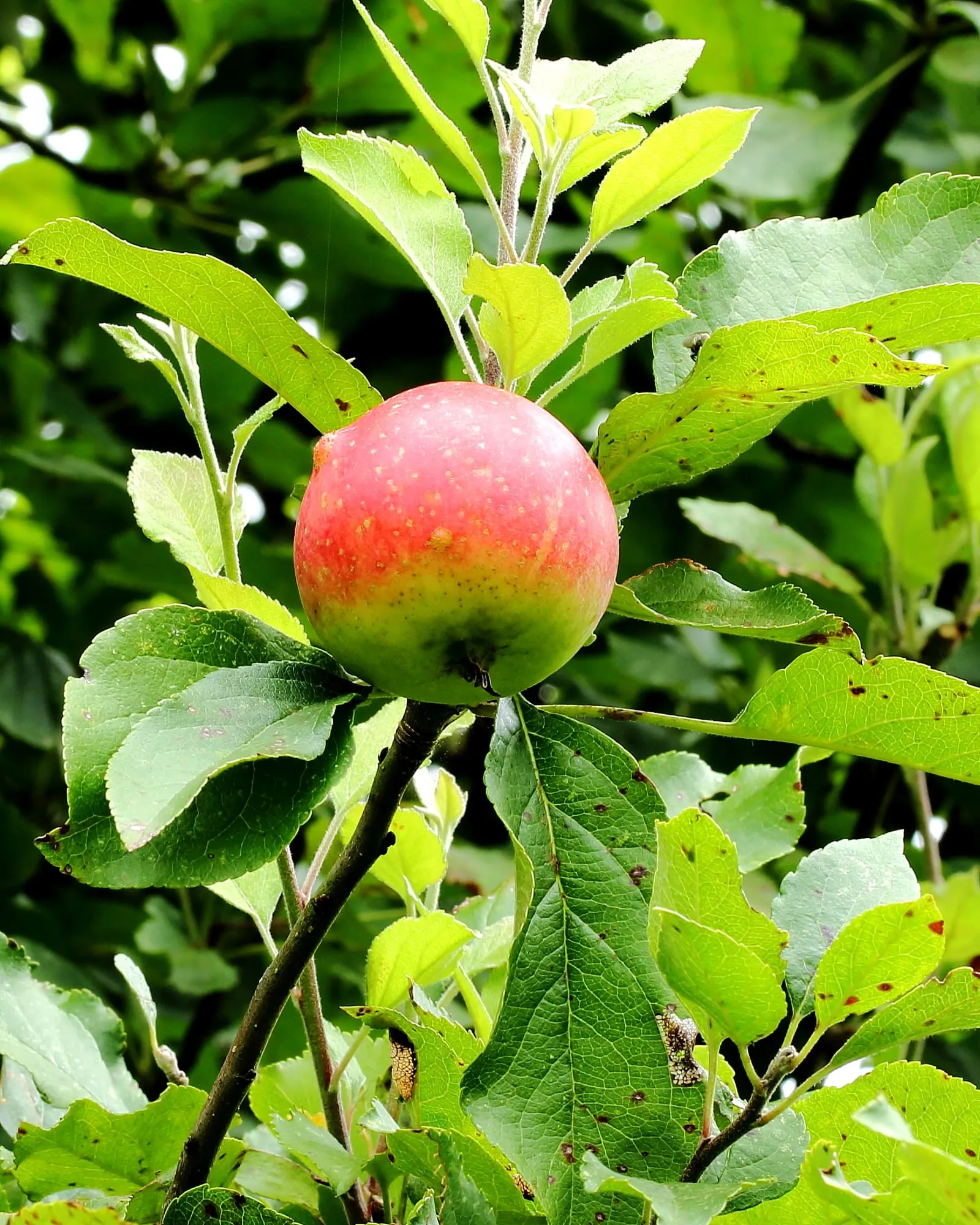
fruit tree in zone 5b
Growing apple in zone 5b
Malus domestica
- Zone
- 5b -15°F to -10°F
- Growing season
- 165 days
- Chill needed
- 400 to 1000 below 45°F
- Suitable varieties
- 6
- Days to harvest
- 120 to 200
The verdict
Zone 5b sits comfortably in apple's sweet spot. The crop's chill-hour requirement of 400 to 1,000 hours is easily met by zone 5b winters, which typically deliver 1,200 or more chilling hours at most locations. The 165-day frost-free season is adequate for early and mid-season varieties to ripen fully, though late-season keepers like Goldrush push the window and depend on a frost-free October.
Winter lows of -15 to -10°F can damage flower buds on tender varieties, but the compatible selections for this zone (Honeycrisp, Liberty, Enterprise, Williams Pride, Gala, Goldrush) are bred or selected for this hardiness range. Rootstock choice matters more in zone 5b than in milder zones: dwarfing rootstocks like M.9 have marginal cold hardiness at these temperatures, making semi-dwarfing options such as MM.111 or Geneva 41 a more reliable foundation for exposed sites.
Recommended varieties for zone 5b
6 cultivars suited to this zone, with disease-resistance and zone-fit annotations.
| Variety | Notes | Zone fit | Disease resistance |
|---|---|---|---|
| Honeycrisp fits zone 5b | Explosively crisp, juicy, sweet-tart with floral notes; the standout fresh-eating apple of the last 30 years. Excellent in lunch boxes, salads, and 6-month cold storage. Struggles in heat (bitter pit in zones 8+). | |
|
| Liberty fits zone 5b | Tart-sweet McIntosh-style flavor, juicy with crisp tender flesh; good fresh, excellent for sauce and pies. Top low-spray choice for the eastern US. | |
|
| Enterprise fits zone 5b | Sweet-tart, firm, complex flavor that improves in storage; late-season eating and cider apple, holds 5+ months in cold storage. Excellent low-spray choice. | |
|
| Goldrush fits zone 5b | Intensely flavored sweet-tart yellow apple with high sugar and high acid; mellows over 2-3 months in storage to become exceptional. Excellent fresh and for cider. | |
|
| Gala fits zone 5b | Sweet, mild, juicy with thin skin; the classic kid-friendly snacking apple. Good fresh and in salads, less acid than older varieties so it browns quickly when cut. | | none noted |
| Williams Pride fits zone 5b | Sweet, juicy, slightly tart with rich flavor; one of the best early-season apples (ripens July). Eats fresh, doesn't store long. | |
|
Critical timing for zone 5b
In zone 5b, apple bloom typically falls between late April and mid-May depending on variety and local topography. That window overlaps with the region's last frost date, which averages around April 30 to May 15 at many zone 5b locations. A late frost hitting open bloom can eliminate most of a season's crop, so site selection (elevated ground or slopes with good cold-air drainage) matters as much as variety selection.
Harvest spans from early August for Williams Pride through late October for Goldrush and Enterprise. The 165-day growing season leaves room for mid-season varieties without stress, but growers relying on late-harvest keepers should track their local first-fall-frost date carefully, as it frequently arrives before Goldrush reaches peak maturity in zone 5b.
Common challenges in zone 5b
- ▸ Plum curculio
- ▸ Codling moth
- ▸ Cedar-apple rust
Disease pressure to watch for
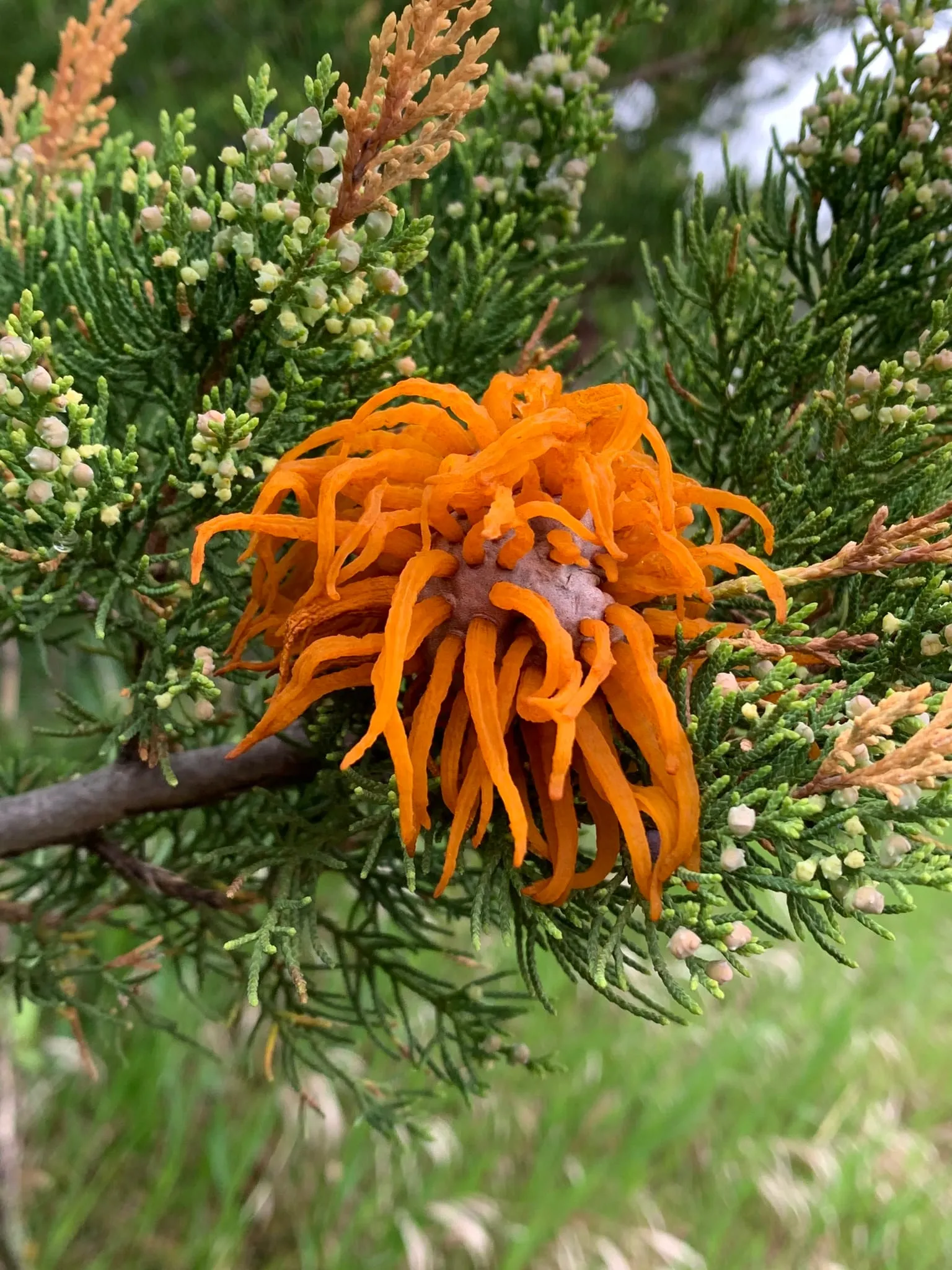
Gymnosporangium juniperi-virginianae
Two-host fungal disease alternating between apple and eastern red cedar. Severe pressure in regions with abundant cedar.
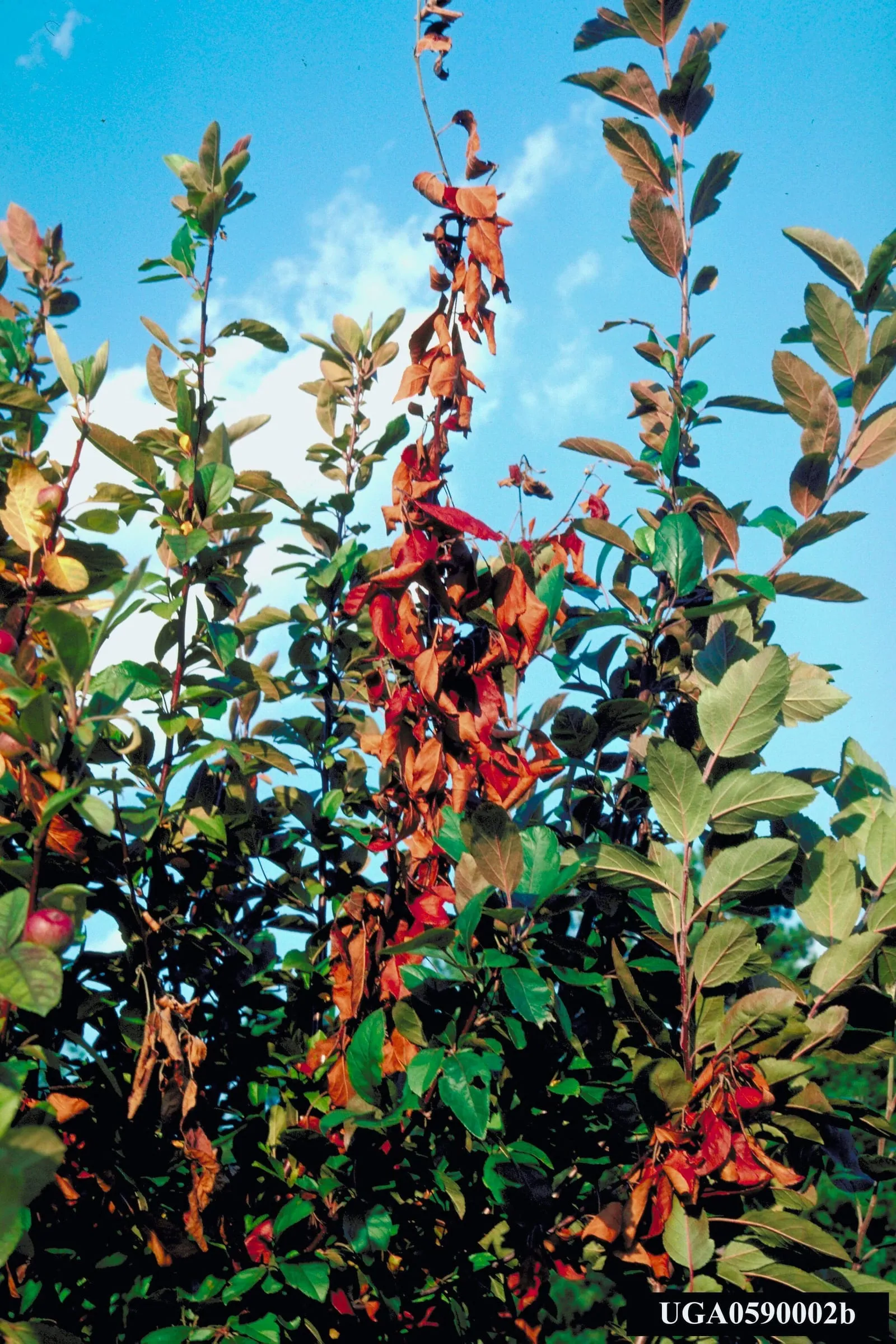
Erwinia amylovora
Devastating bacterial disease that can kill trees rapidly. Most severe in warm wet springs.
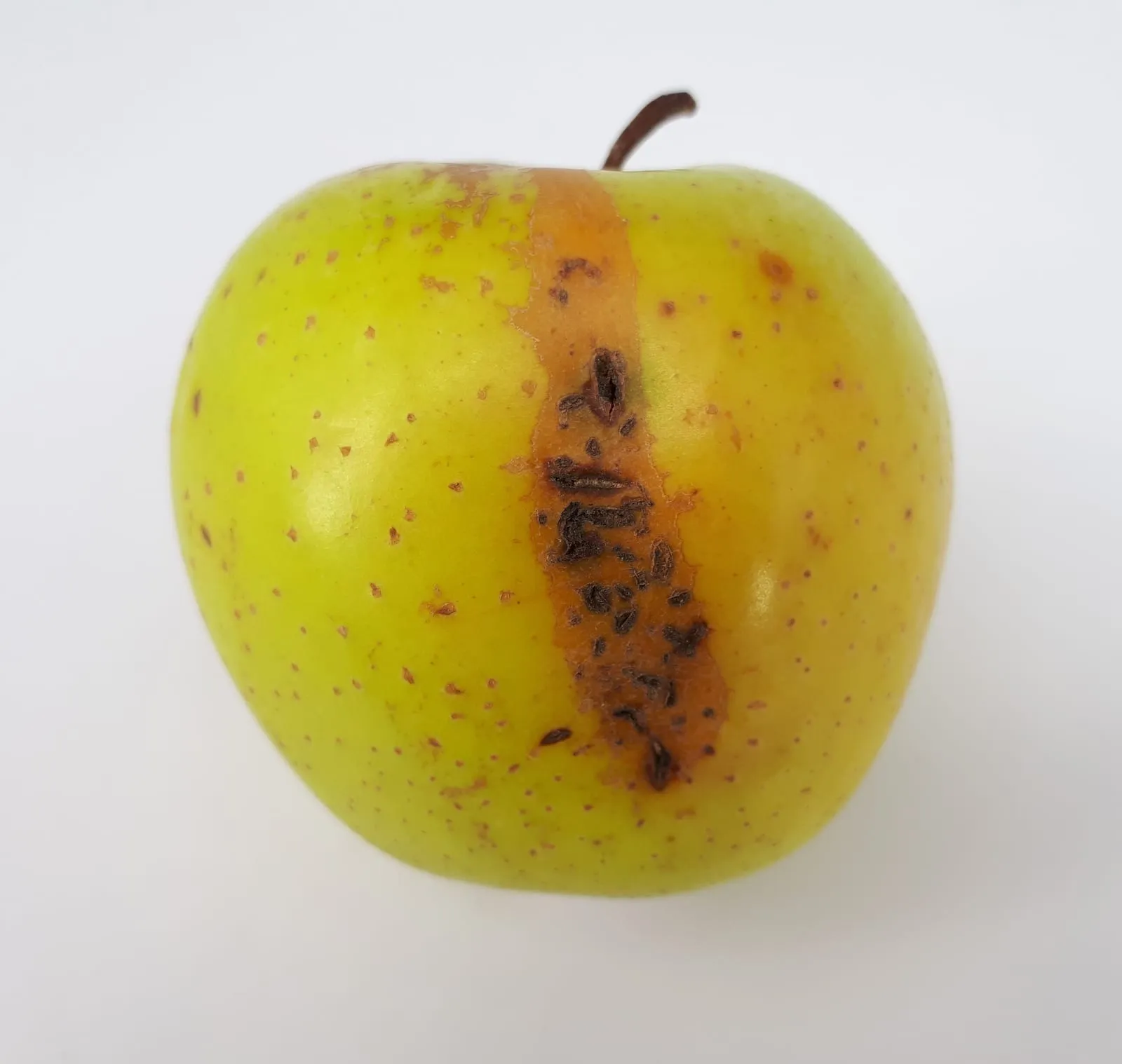
Venturia inaequalis
The most widespread apple disease in humid regions. Reduces fruit quality and defoliates trees.
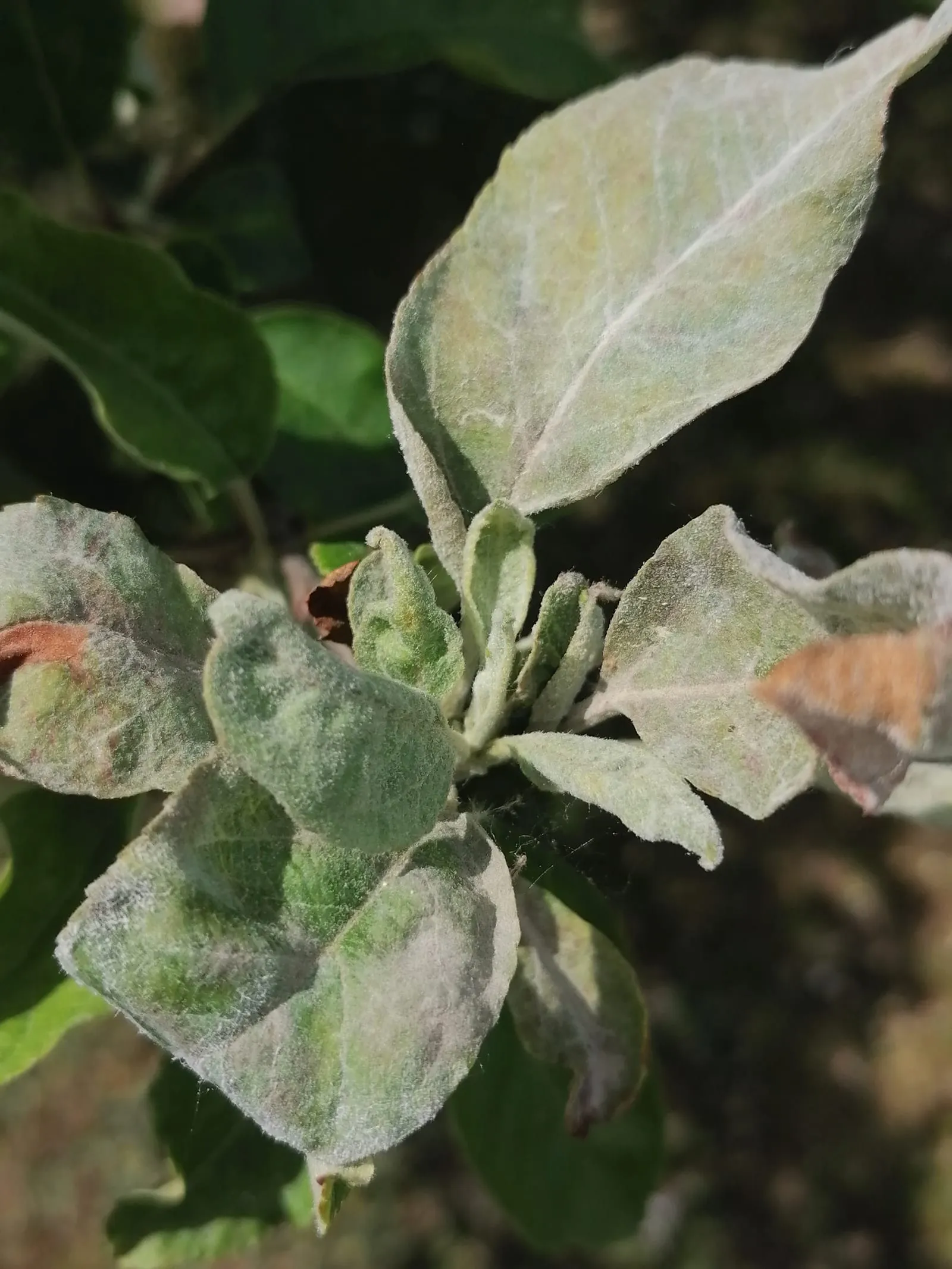
Podosphaera leucotricha
Surface-feeding fungal disease that distorts new growth and reduces yields.
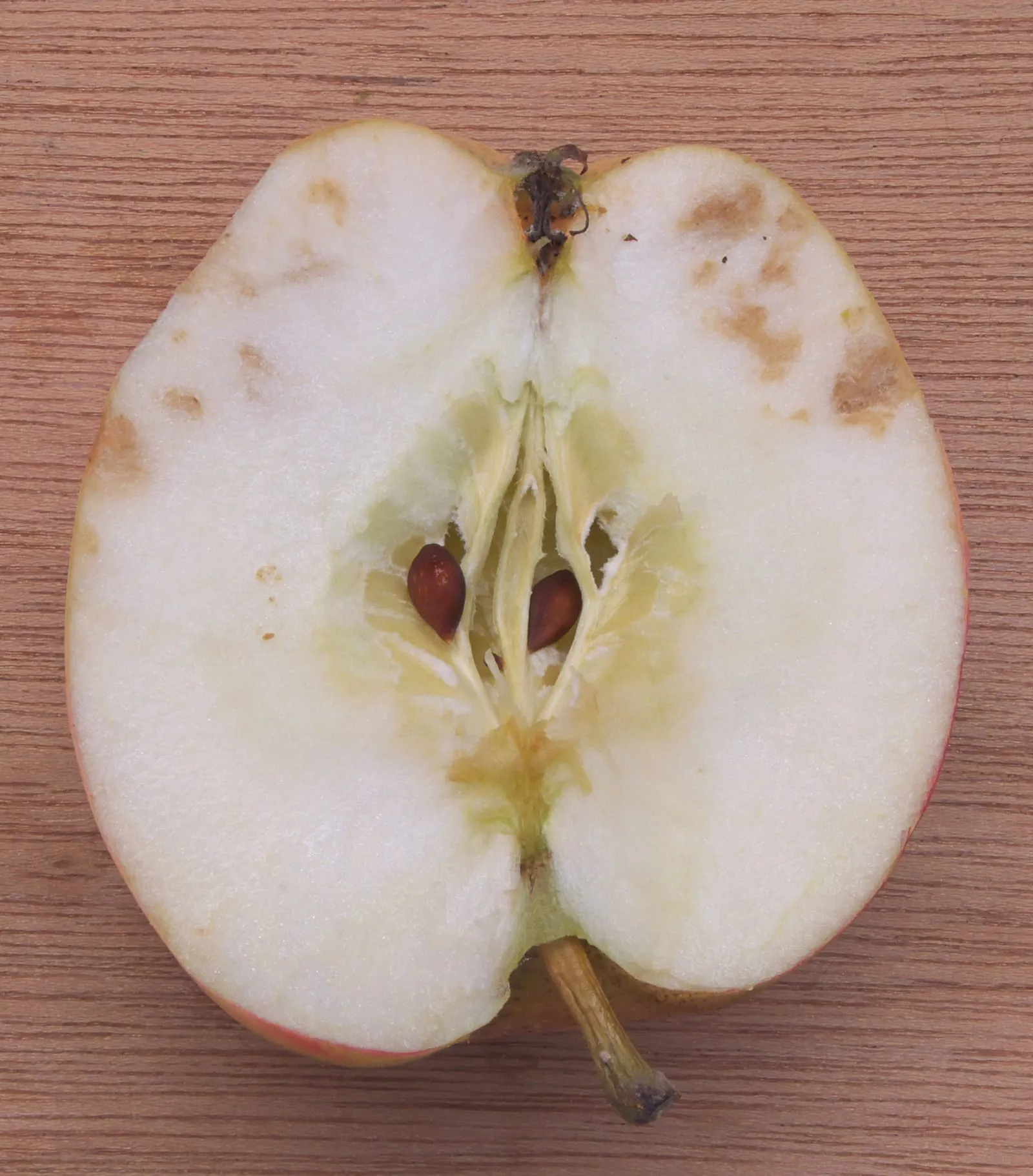
Physiological disorder
Damage from direct intense sun exposure on fruit or bark, particularly on plants suddenly exposed by pruning, defoliation, or hot weather. Distinct from sunburn (which is reversible).
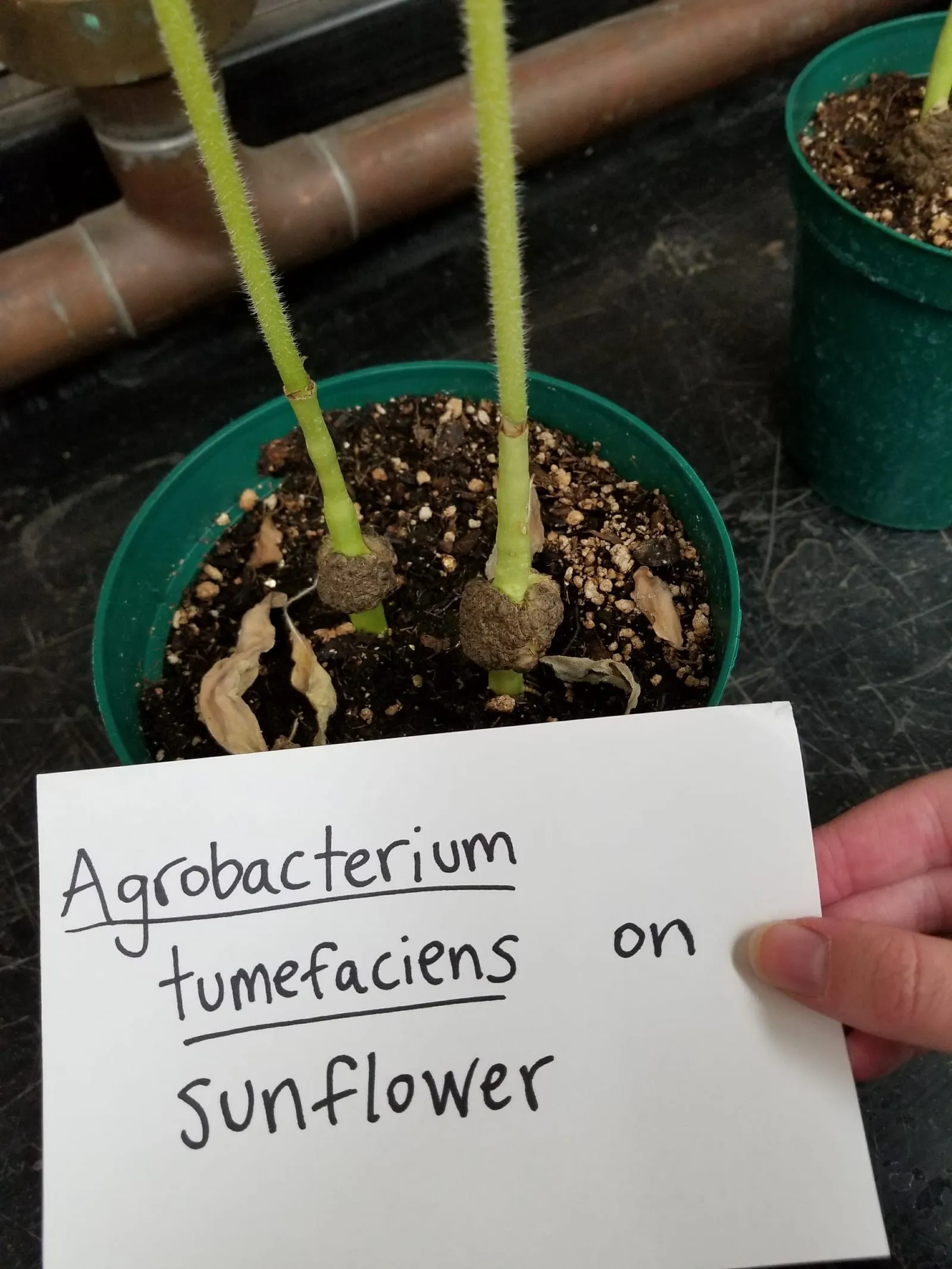
Agrobacterium tumefaciens
Soil-borne bacterium that enters plants through wounds and induces tumor-like galls on roots, crown, and lower stems. Galls reduce vigor and shorten plant lifespan; on Rubus the disease is often fatal.
Modified care for zone 5b
Cedar-apple rust is the primary disease pressure adjustment in zone 5b, particularly east of the Rockies where Eastern red cedar is common. Fungicide applications need to begin at half-inch green tip and continue through petal fall. Liberty and Enterprise carry rated resistance to cedar-apple rust, which meaningfully reduces spray load.
Plum curculio and codling moth both require timed spray coverage starting at petal fall. Zone 5b's cooler springs can shift pest emergence windows compared to warmer zones, so relying on local degree-day tracking rather than calendar dates gives more reliable results.
Winter protection is worth attention on young trees: trunk wraps guard against sunscald during freeze-thaw cycles, and mulching the root zone helps limit frost heave on dwarfing rootstocks. Established trees on zone-appropriate rootstocks generally need no supplemental winter protection.
Frequently asked questions
- Is Honeycrisp a reliable choice for zone 5b?
Honeycrisp was developed at the University of Minnesota and is reliably hardy through zone 4. Zone 5b winters present no unusual challenge to the variety itself, though rootstock cold hardiness should be confirmed for exposed or low-lying sites.
- Can late-season apples like Goldrush ripen before frost in zone 5b?
Goldrush is a late-ripening variety that typically requires 160 to 175 days to reach maturity, which aligns closely with zone 5b's growing season. In years with an early fall frost, fruit may be pulled slightly underripe. South-facing sites or urban locations with a few extra frost-free days improve the odds.
- Which rootstocks hold up best in zone 5b?
Geneva series rootstocks (G.41, G.11, G.935) developed at Cornell offer good cold hardiness combined with size control and resistance to fire blight and woolly apple aphid. MM.111 remains a solid semi-vigorous option for sites where winter lows are a concern. M.9 is viable in zone 5b but more exposed to damage at the cold end of the zone's temperature range.
+−
+−
+−
Apple in adjacent zones
Image: "Malus domestica 'Stark's Earliest'. Locatie De Kruidhof 02", by Dominicus Johannes Bergsma, via Wikimedia Commons, licensed under CC-BY Source.

Related