Pest
Spotted Wing Drosophila
Drosophila suzukii
Invasive vinegar fly that attacks ripening soft fruit, unlike native Drosophila species which target overripe fruit. Now the dominant berry-and-cherry pest across the US.
- Scientific name
- Drosophila suzukii
- Hosts
- 17
- Identification signs
- 3
- Controls
- 5
Biology and lifecycle
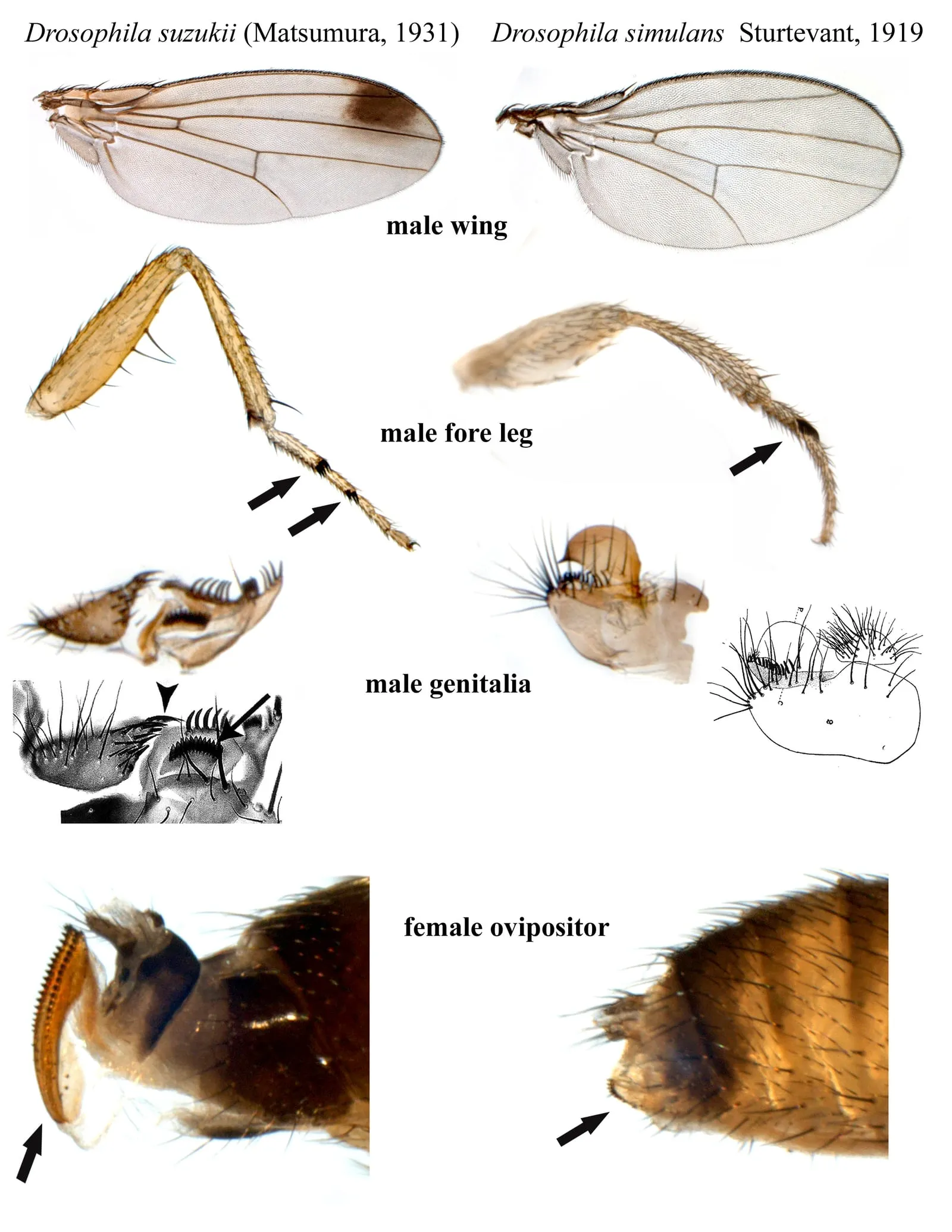
Spotted wing drosophila (Drosophila suzukii) arrived in the continental United States around 2008 and spread rapidly through most fruit-growing regions within a few years. What separates it from native vinegar flies is the female's serrated ovipositor, which can puncture the skin of firm, ripening fruit. Native Drosophila species lack this structure and are limited to fruit that is already overripe or damaged. That distinction is what makes SWD economically significant: it attacks fruit before harvest, not after.
Adults overwinter in sheltered woodland edges and become reproductively active as temperatures consistently exceed 50°F. A single generation takes roughly two to three weeks under warm conditions, allowing populations to compound through the summer. Peak pressure typically arrives in late summer when soft-fruited crops like sweet cherries, sour cherries, figs, and mulberries are ripening. Larvae develop inside the fruit within days of egg deposition, often leaving no visible external sign until the fruit begins to collapse.
The most cost-effective control window is the oviposition period, starting when fruit begins to color and continuing through harvest. Monitoring with vinegar and yeast traps helps growers identify when adults are present and populations are building, which sharpens spray timing considerably. Frequent harvest (every two to three days during peak ripeness) and prompt cold storage of picked fruit reduce the window for infestation and larval development. Where spray programs are warranted, spinosad-based products are widely used in organic systems; conventional programs often rotate contact insecticides to reduce resistance pressure. Canopy hygiene, including removal of overripe or fallen fruit, limits the population reservoir between spray intervals.
Signs to watch for
- ▸ Soft sunken spots on fruit
- ▸ Larvae in apparently sound fruit
- ▸ Rapid fruit collapse near harvest
IPM controls
- ✓ Vinegar/yeast traps for monitoring
- ✓ Cold storage of harvested fruit within hours of picking
- ✓ Frequent harvest (every 2-3 days)
- ✓ Targeted sprays during oviposition window
- ✓ Exclusion netting on small plantings
Affected crops
Image: "Drosophila suzukii smulans2", by Martin Hauser, via Wikimedia Commons, licensed under CC-BY Source.

Related