Pest
Pear Psylla
Cacopsylla pyricola
Pear's primary pest, sucking sap and producing honeydew that supports sooty mold.
- Scientific name
- Cacopsylla pyricola
- Hosts
- 1
- Identification signs
- 3
- Controls
- 4
Biology and lifecycle
Pear psylla (Cacopsylla pyricola) is the most economically significant pest in North American pear production, affecting commercial blocks and backyard trees alike. The adult stage overwinters in protected sites near the orchard - bark crevices, leaf litter, hedgerow debris - and becomes active at temperatures just above freezing, often before pear buds show visible green. Egg laying begins on bud scales during late dormancy and accelerates through green tip.
Nymphs cause the majority of damage. As sap feeders, they produce copious honeydew that coats foliage and fruit, providing a substrate for sooty mold. Heavy mold reduces photosynthesis, stunts shoot growth, and renders fruit unmarketable. The pest completes three to four generations per season in most growing regions, with populations compounding through summer unless managed at the right moment.
The most cost-effective intervention falls between delayed dormancy and tight cluster, when overwintering adults are concentrated and eggs have not yet hatched. A dormant or delayed-dormant horticultural oil application at this window suppresses adults and smothers early egg masses without leaving residue that would harm lacewings and anthocorid bugs - the key natural enemies later in the season. Kaolin clay applied through nymph emergence provides a physical barrier that deters both feeding and egg laying with minimal ecological disruption. If early-season management proves insufficient and first-generation nymph populations exceed local threshold guidelines, a targeted insecticide timed to hatch is more effective and less ecologically disruptive than calendar-based summer spray programs. Regional thresholds vary; consult your state extension IPM program for locally calibrated action levels.
Signs to watch for
- ▸ Sticky honeydew on leaves
- ▸ Sooty mold growth on fruit and foliage
- ▸ Leaf curling and yellowing
IPM controls
- ✓ Dormant oil applications
- ✓ Encouraging natural predators (lacewings, anthocorid bugs)
- ✓ Kaolin clay sprays
- ✓ Targeted insecticide at first generation
Affected crops
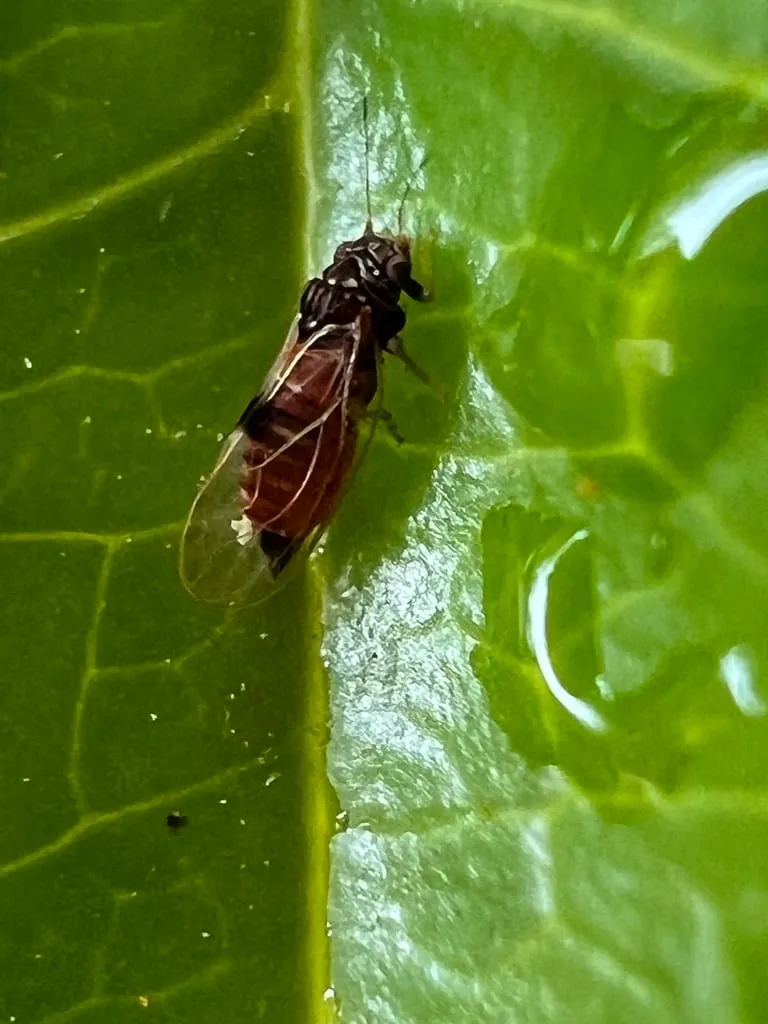
Image: "Pear Sucker", by Mark Richman, via iNaturalist, licensed under CC-BY Source.
Related