Pest
Oriental Fruit Moth
Grapholita molesta
Stone-fruit pest whose larvae tunnel into shoot tips and later into fruit.
- Scientific name
- Grapholita molesta
- Hosts
- 4
- Identification signs
- 3
- Controls
- 4
Biology and lifecycle
Oriental fruit moth (Grapholita molesta) is one of the most damaging stone-fruit pests in North American orchards. It overwinters as a mature larva in cocoons under bark or in debris at the tree base, pupates in early spring, and adults begin flying when accumulated heat units reach roughly 100 degree-days (base 45°F) after January 1, which typically falls between late February and early April depending on region.
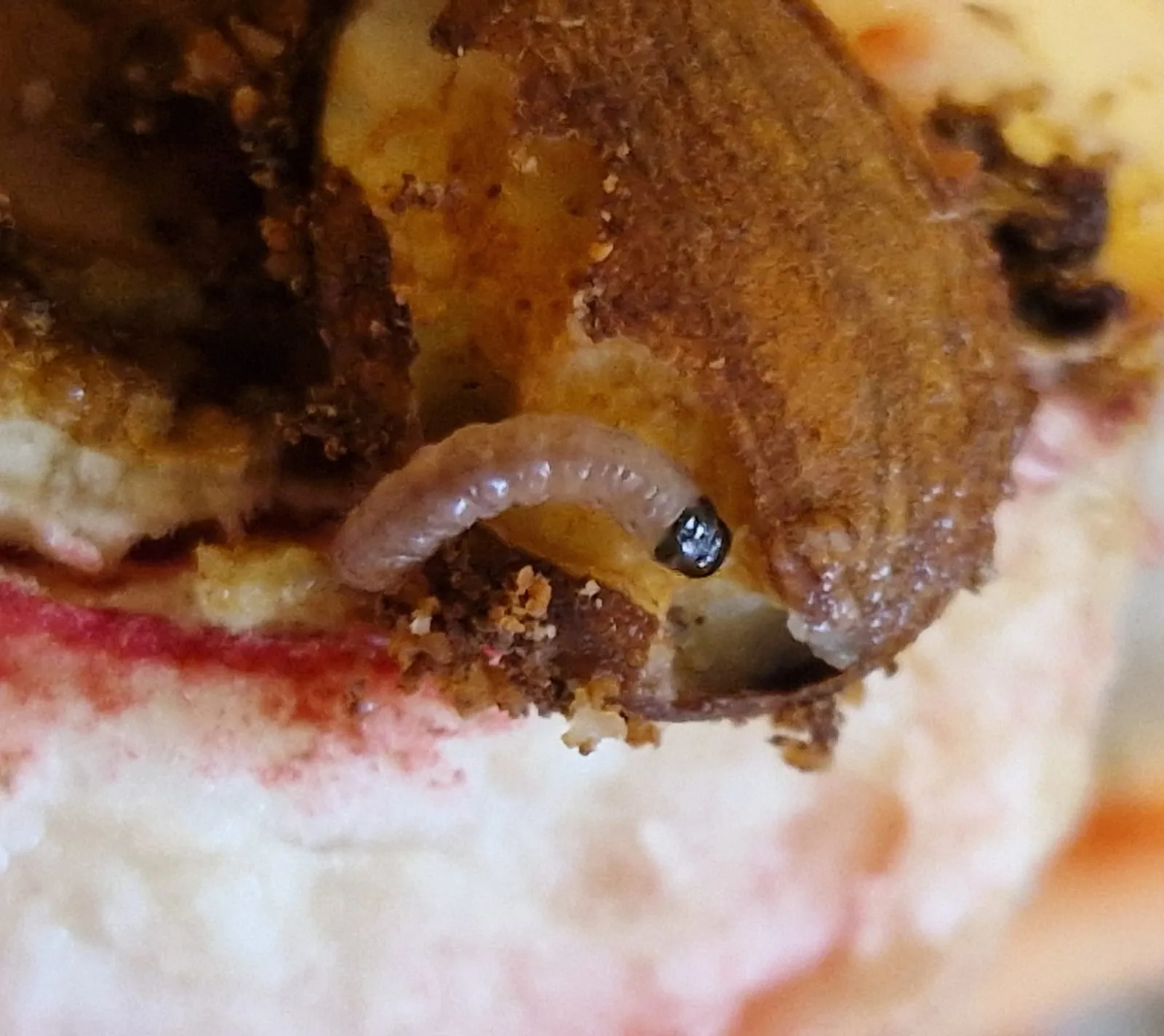
The pest produces three to five overlapping generations per season. First-generation larvae target elongating shoot tips, boring into the succulent tissue and causing the characteristic wilting known as flagging. By midsummer, with shoot tissue hardening, later generations shift focus to fruit, tunneling toward the pit and leaving frass-filled entry wounds. Fruit damage is the economically costly phase, but the first generation provides the most reliable control window.
Pheromone trap monitoring is the foundation of any effective program. Traps placed at bloom detect adult emergence and allow growers to target sprays precisely at egg hatch rather than applying calendar-based schedules. Mating disruption, delivered via pheromone-releasing ties distributed throughout the canopy at roughly 200 ties per acre, reduces adult mating success and is particularly effective in blocks of two acres or more. Research from multiple university extension programs shows mating disruption can reduce fruit infestation by 80 to 95 percent in blocks where the technique is applied consistently season to season.
For smaller plantings where mating disruption is less practical, removal of wilted shoot tips during the first generation reduces larval populations before fruit becomes vulnerable. Targeted insecticide applications timed to pheromone trap catches remain an option when pressure is high, but mating disruption and monitoring should be established first.
Signs to watch for
- ▸ Wilted shoot tips
- ▸ Frass at shoot entry points
- ▸ Larval tunnels in fruit
IPM controls
- ✓ Pheromone-disruption ties
- ✓ Pheromone trap monitoring
- ✓ Targeted spray at first generation
- ✓ Removal of damaged shoot tips
Affected crops
Image: "Pfirsich-Fruchtwickler (Cydia molesta), auch Orientalischer Fruchtwickler genannt", by Alfred Ruhfaß, via Wikimedia Commons, licensed under CC0 Source.
,_auch_Orientalischer_Fruchtwickler_genannt.jpg)
Related