Grafting pair
excellent compatibilityRedhaven
on Nemaguard rootstock
- Compatibility
- Excellent
- Tree size
- Standard
- Mature height
- 15–20 ft
- Crop
- Peach
Compatibility and disease notes
Nemaguard provides root-knot nematode resistance, essential in sandy southern soils. Less cold-hardy than Lovell, marginal in zone 5.
Overview
Redhaven peach on Nemaguard is a workhorse combination for growers in the Southeast, Gulf Coast, and California. The pairing earns an excellent compatibility rating: Nemaguard produces the vigorous, well-anchored root system that Redhaven's mid-season production demands, and the two are closely matched in growth habit. Mature trees reach 15 to 20 feet without size-controlling management, so adequate spacing (typically 18 to 20 feet between trees) is a planning requirement rather than a suggestion.
The defining attribute of this combination is nematode resistance. Sandy soils across the Southeast and coastal California harbor root-knot nematode populations that can destroy peach roots within a few seasons on susceptible rootstocks. Nemaguard's resistance to Meloidogyne incognita and related species is well documented and remains the primary reason it stays widely planted despite its cold-hardiness limitations. UF/IFAS Peach Rootstocks identifies it as the standard commercial rootstock for Florida and the Gulf states.
The key limitation is cold tolerance. Nemaguard is marginal in zone 5 and should not be planted where winter temperatures regularly drop below -10°F. Growers in the upper South or at elevation should use Lovell or a cold-hardier alternative instead.
Best regions
Step-by-step grafting guide
Dormant whip-and-tongue grafts performed in late winter are the most reliable approach for this combination. The timing window runs roughly late January through early March depending on latitude; the rootstock should show the first signs of bud swell, but scion wood must remain fully dormant. Collect scion wood in December or January before any warming trend breaks dormancy, wrap the cuttings in slightly moist paper towels, seal in a plastic bag, and refrigerate at 34 to 38°F until grafting day.
Tools needed: a sharp grafting knife (dull blades tear cambium and reduce take rates sharply), Parafilm or grafting tape, and optionally grafting wax for exposed cut ends in dry climates.
The whip-and-tongue technique works best when scion and rootstock diameters are within about 20% of each other. Make a smooth, angled cut at roughly 45 degrees on both pieces, then cut the interlocking tongue on each. The tongue provides mechanical stability during wrapping. Align at least one side of the cambium layers precisely; cambium contact on a single side is sufficient for callus formation, but full circumferential contact shortens the time to a strong union.
Wrap firmly with Parafilm from below the union to above it, covering the entire cut surface. Move grafted trees to a sheltered area at 55 to 65°F for the first two to three weeks to encourage callus formation before outdoor hardening.
Success criterion: new shoot growth from the scion bud within four to six weeks. No growth by week eight almost always means graft failure.
Common failure modes
The most common failure outside this combination's intended range is cold damage to Nemaguard roots. In zone 5 or at elevation, roots can suffer lethal injury in hard winters even when top growth appears to survive. A tree that rallies in spring may decline over the following two to three seasons as the root system fails to regenerate fully.
Suckering from below the graft union is a persistent management task. Nemaguard suckers grow vigorously and, if left unchecked, can eventually dominate the canopy and revert the planting to seedling-type growth. Inspect the base of the trunk several times each season during the first three to four years and remove suckers flush with the rootstock before they lignify.
Graft failure at the union most often traces to one of two causes: scion wood that partially broke dormancy before grafting, or misaligned cambium during the union. Peach cambium is narrow and the cuts need to be precise. Cuts that appear aligned visually can miss contact by enough to produce poor callus formation; a hand lens during the interlocking step is not excessive.
Sources
Related
Related grafts
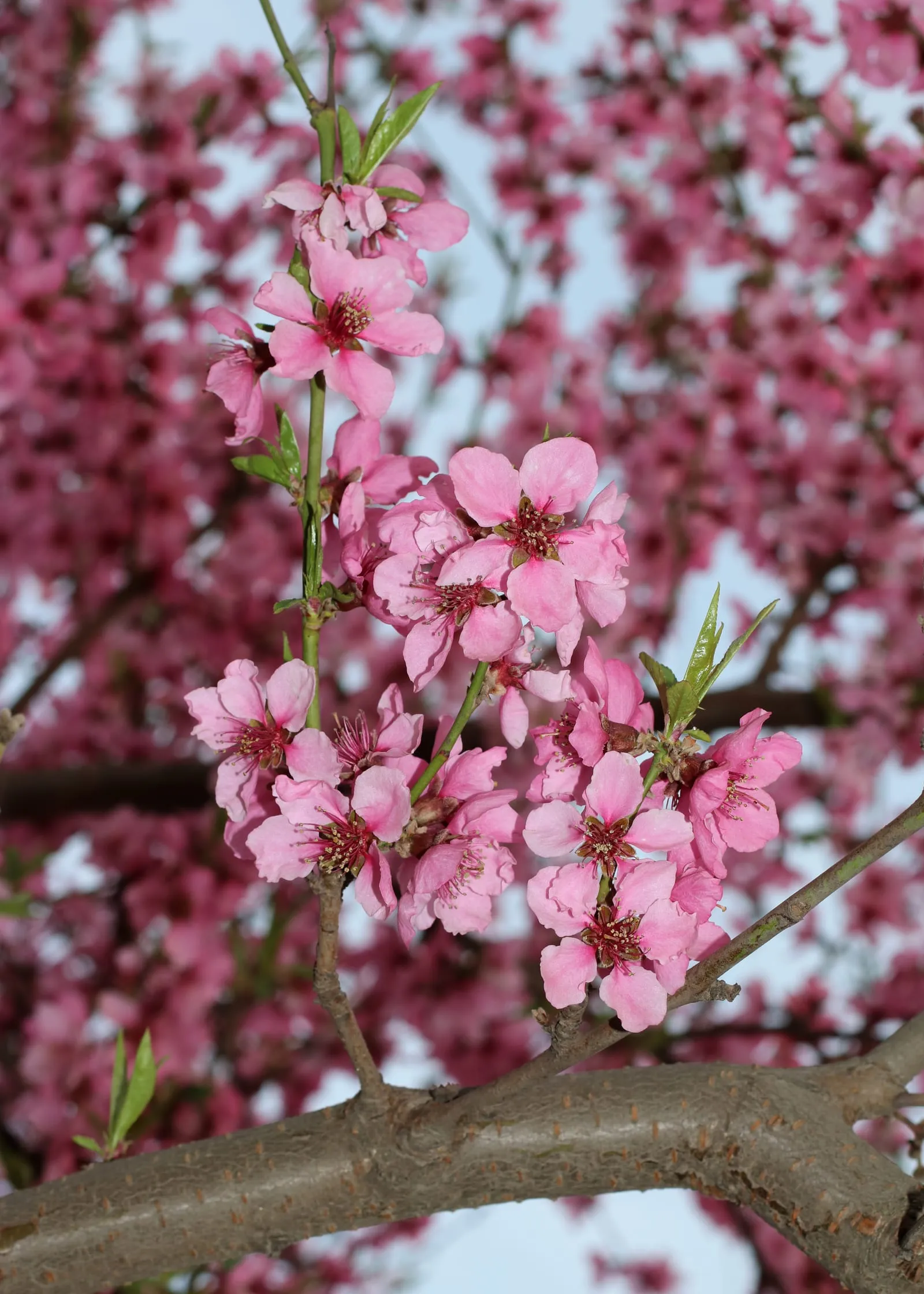
Image: "Peach flowers 2020 G1", by George Chernilevsky, via Wikimedia Commons, licensed under CC-BY. Source.
