Grafting pair
excellent compatibilityNorth Star
on Mahaleb rootstock
- Compatibility
- Excellent
- Tree size
- Dwarf
- Mature height
- 8–12 ft
- Crop
- Sour Cherry
Compatibility and disease notes
North Star is naturally compact; on Mahaleb it stays manageable for backyard orchards. Self-fertile, no pollinator required.
Overview
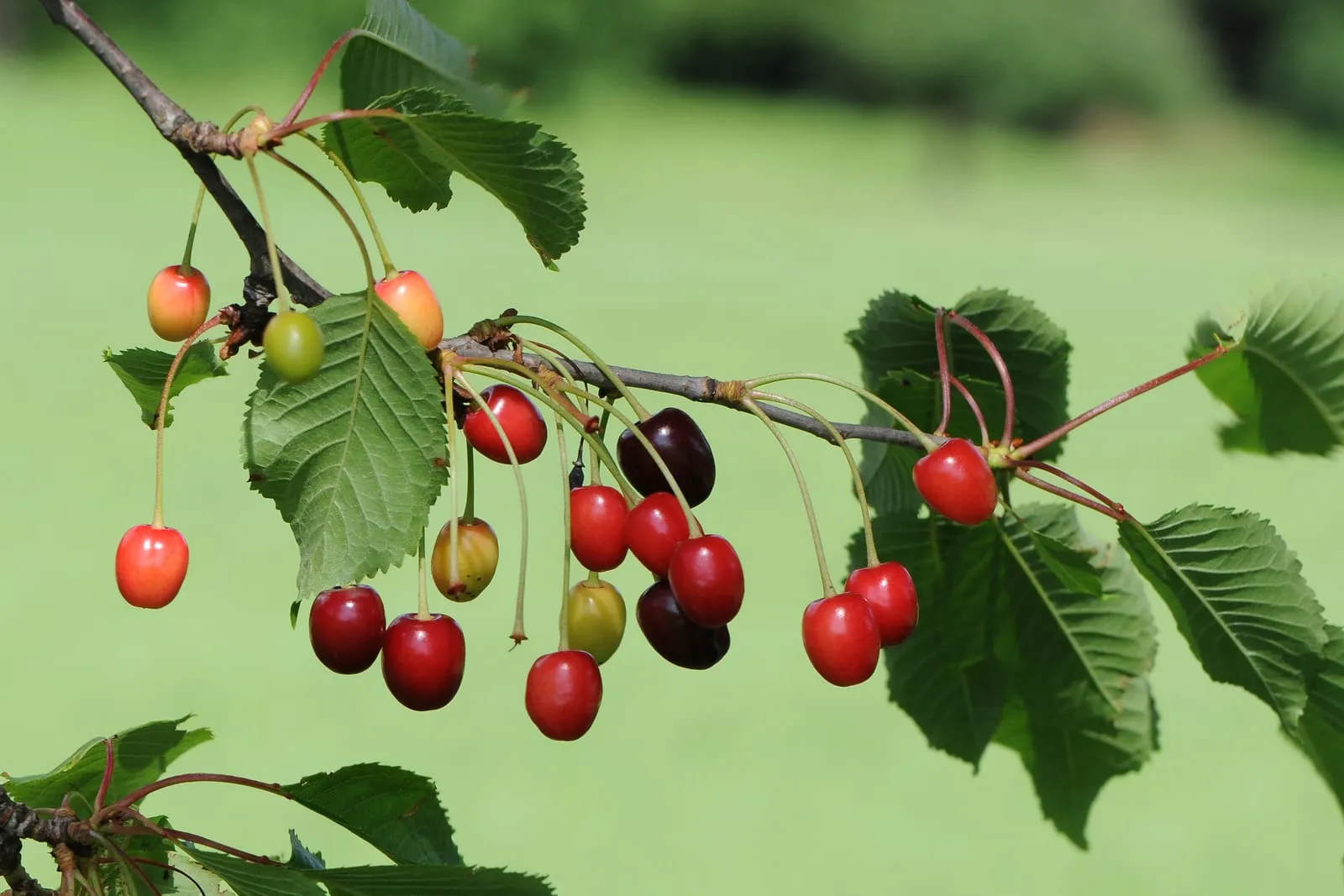
North Star on Mahaleb is a well-established combination for backyard sour cherry production in colder climates. Mahaleb (Prunus mahaleb) rootstock imparts a dwarfing effect, holding the tree to 8 to 12 feet at maturity, a size that home orchardists can manage without ladders or heavy annual containment pruning. North Star's naturally compact growth habit reinforces this tendency, making the combination one of the more predictable in the sour cherry category.
The pairing suits growers who want reliable annual production from a single tree. North Star is self-fertile, so no second tree is required for fruit set. Michigan State Tart Cherry Production documents North Star as one of the more cold-tolerant processing cherries, with consistent performance across zones 4 through 6. Performance is strongest in the Upper Midwest, Northeast, and Mountain West, where cool summers reduce fungal pressure and the winter dormancy requirements of both scion and rootstock are reliably met.
Mahaleb adapts well to well-drained, slightly alkaline soils common in limestone-influenced areas of the Midwest and parts of the Mountain West. It is not a good choice for heavy clay or persistently wet sites, where Mazzard or a Gisela series rootstock would be the better starting point.
Best regions
Step-by-step grafting guide
Bench grafting in late winter, just before bud swell, gives consistently better results than field budding for this combination. The target window is when both rootstock and scion are dormant but the rootstock shows early root activity, roughly late February through mid-March in zones 5 to 6 and a week or two later in zone 4.
Collect scion wood in midwinter while fully dormant. Choose pencil-diameter shoots from the previous season's growth with plump, well-developed buds. Wrap in a damp paper towel, seal in a plastic bag, and refrigerate at 34 to 38°F. Graft within 6 to 8 weeks of collection.
Whip-and-tongue is the standard technique for wood in the 3/8 to 5/8 inch diameter range. Match rootstock and scion to similar caliper before cutting. Make a smooth, slanting cut 1.5 to 2 inches long on each piece, then a single interlocking tongue cut into each slanting face at roughly one-third depth. Seat the pieces so the tongue locks and the cambium aligns on at least one side. On small-diameter wood, two-sided cambium contact is rarely achievable; one-sided alignment is sufficient.
Wrap the union firmly with grafting tape or Parafilm from below the cut to above it, overlapping each pass. Apply grafting wax over the tape if working in dry conditions outdoors.
Pot grafts in a free-draining mix (50/50 perlite and peat works well) and hold at 55 to 65°F in indirect light for two to three weeks. Bud push on the scion is the primary success indicator. Keep the medium barely moist during callus formation; the small root system on potted Mahaleb seedlings is vulnerable to anaerobic conditions.
Common failure modes
The most consistent failure point is caliper mismatch. Mahaleb seedling rootstocks vary considerably in diameter, and pairing a thin scion with a substantially thicker rootstock produces a large cambium offset that sharply reduces union success. Sort scion wood and rootstocks into matched diameter lots before grafting rather than working through the material in whatever order it comes to hand.
Mahaleb is susceptible to bacterial canker (Pseudomonas syringae), which can girdle the rootstock at or near the graft union in cool, wet spring conditions. This is a higher-risk issue in the Northeast and Pacific Northwest than in drier Mountain West sites. Before writing off a graft as a union failure, check for weeping or discolored bark at the union the following spring.
Suckering from below the union is an ongoing maintenance obligation with Mahaleb, not a one-time problem. The rootstock suckers freely when roots are disturbed by cultivation or stressed by drought. Remove suckers at their point of origin rather than cutting at soil level; surface cutting without removing the origin stimulates denser regrowth.
Sources
Frequently asked questions
- Does North Star on Mahaleb require a second tree for pollination?
No. North Star is self-fertile and will set a full crop without a second tree nearby. This makes it practical for small yards where space allows only one cherry tree.
- How cold-hardy is Mahaleb rootstock?
Mahaleb is reliably hardy to zone 4 and handles winter temperatures well. Its weakness is soil drainage: it performs best in well-drained, slightly alkaline soils and struggles in heavy clay or sites with seasonal waterlogging, where Mazzard rootstock is a more appropriate choice.
- When will a North Star on Mahaleb begin bearing fruit?
Expect the first meaningful crop in year 3 to 4 from a successful graft, with full production by years 5 to 7. Trees pushed with heavy nitrogen early may delay fruiting; moderate fertility management is preferable.
- Can this combination be field-budded instead of bench-grafted?
T-budding in midsummer (July to early August) is an alternative, but bench whip-and-tongue grafting in late winter typically yields higher success rates for home growers and allows better inspection of the union before the tree is committed to a permanent site.
+−
+−
+−
+−
Related
Related grafts
Image: "Sauerkirschenfrucht Prunus cerasus 2", by böhringer friedrich, via Wikimedia Commons, licensed under CC-BY. Source.
