Grafting pair
excellent compatibilityLapins
on Gisela 5 rootstock
- Compatibility
- Excellent
- Tree size
- Dwarf
- Mature height
- 10–12 ft
- Crop
- Sweet Cherry
Compatibility and disease notes
Gisela 5 produces a precocious dwarf tree, ideal for backyard orchards and high-density commercial plantings. Requires support and pruning to manage crop load.
Overview
Lapins is a self-fertile sweet cherry variety, which makes it particularly practical for home orchards where managing pollinator pairs is a constraint. Grafted onto Gisela 5, the combination produces a dwarf tree in the 10 to 12 foot range that enters bearing far earlier than full-size cherry plantings on Mazzard or seedling rootstocks. The pairing is well-documented as reliable across the Pacific Northwest, Northeast, and Great Lakes regions, the three areas where sweet cherry culture is most established in North America. The WSU Cherry Rootstock Guide covers Gisela 5 performance data across multiple scion varieties, including self-fertile types like Lapins.
Gisela 5 precocity typically puts fruit in years 2 to 3 after grafting. The tradeoff is a root system that cannot anchor the tree under a full crop load without help. Permanent staking or a trellis system is required from planting onward, not as a temporary measure. Pruning discipline also matters more on Gisela 5 than on larger rootstocks; the tree responds poorly to overcropping, which depletes root reserves quickly. For high-density commercial blocks and space-constrained backyard orchards, the combination delivers high productivity per square foot when crop load and support are managed consistently.
Best regions
Step-by-step grafting guide
Chip budding in late summer (late July through mid-August) is the standard commercial approach for sweet cherry onto Gisela 5. For home orchardists working with bench-grafted nursery stock or their own liners, a whip-and-tongue graft in late winter (late February through early March, while both scion and rootstock are fully dormant but buds are just beginning to swell) is practical and effective.
Collect scion wood in mid-winter while Lapins is fully dormant. Target current-season growth, pencil-thickness (6 to 8mm diameter). Wrap immediately in damp paper towels inside a sealed plastic bag and refrigerate at 34 to 38°F until grafting time.
Match diameters carefully. Gisela 5 liners are typically 6 to 10mm at the intended graft point. Choose scion segments where the diameter matches the rootstock within 2mm. Cambium alignment is the single greatest predictor of success.
Make the cuts. A single long, smooth sloping cut on each piece, 30 to 40mm in length, then a short interlocking tongue cut roughly one-third of the way down each sloped face. The grafting knife must be razor-sharp; a dragging blade produces textured cut faces that prevent full cambium contact.
Join and wrap immediately. Lock the tongue joints, align at least one side's cambium layer precisely, and wrap with parafilm or grafting tape. Budding rubber bands are not recommended for cherry; they tend to constrict the union before callus forms.
Callusing environment. Hold at 60 to 70°F with high humidity. A simple callusing box works. Visible callus typically forms in 3 to 4 weeks. Scion buds that swell and push by week 5 to 6 indicate a successful union. A scion still green but not pushing by week 8 has almost certainly failed.
Common failure modes
Graft failure from poor cambium contact is the most common problem, and it is a technique issue rather than a compatibility issue. Lapins and Gisela 5 are fully compatible. What goes wrong is a dull knife, a rushed cut, or mismatched diameters that prevent the cambium layers from registering. One clean slice with a sharp blade matters more than any other single variable.
Overcropping in years 2 and 3 is the second consistent failure mode. Gisela 5 precocity pushes trees into heavy fruit set before root reserves and scaffold structure are mature enough to sustain it. Growers who do not thin aggressively in early years, or who skip thinning entirely, see rapid decline in tree vigor. Removing all fruit in year 1 is common practice among experienced growers with this rootstock.
Rootstock suckering is a persistent maintenance issue across the life of the tree. Suckers arising below the graft union must be removed flush to the root, not cut at soil level. Cutting at the surface stimulates regrowth; removing the sucker at its point of origin slows it.
Sources
Frequently asked questions
- Is Lapins self-fertile on Gisela 5, or does it need a pollinator?
Lapins is self-fertile and will set fruit without a second variety present. Planting a compatible pollinator nearby can increase yield, but it is not required for the tree to produce.
- Does Gisela 5 require staking for the entire life of the tree?
Yes. Gisela 5 produces a shallow, fibrous root system that cannot support a fully cropping tree without structural support. A stake, post, or trellis wire should be in place at planting and maintained permanently.
- How soon after grafting will a Lapins/Gisela 5 tree bear fruit?
Most trees produce their first meaningful crop in years 2 to 3. Year 1 fruit should be removed entirely to direct the tree's energy into root and scaffold development.
- Which regions are best suited to this combination?
The Pacific Northwest, Northeast, and Great Lakes regions have the most established sweet cherry production and the most data on Lapins/Gisela 5 performance. The combination requires adequate winter chilling and is not well-suited to zones 8b and warmer.
- What is the expected mature tree height for Lapins on Gisela 5?
Mature trees typically reach 10 to 12 feet with normal pruning. Unpruned trees can grow somewhat taller, but crop load management on Gisela 5 requires regular pruning regardless of size goals.
+−
+−
+−
+−
+−
Related
Related grafts
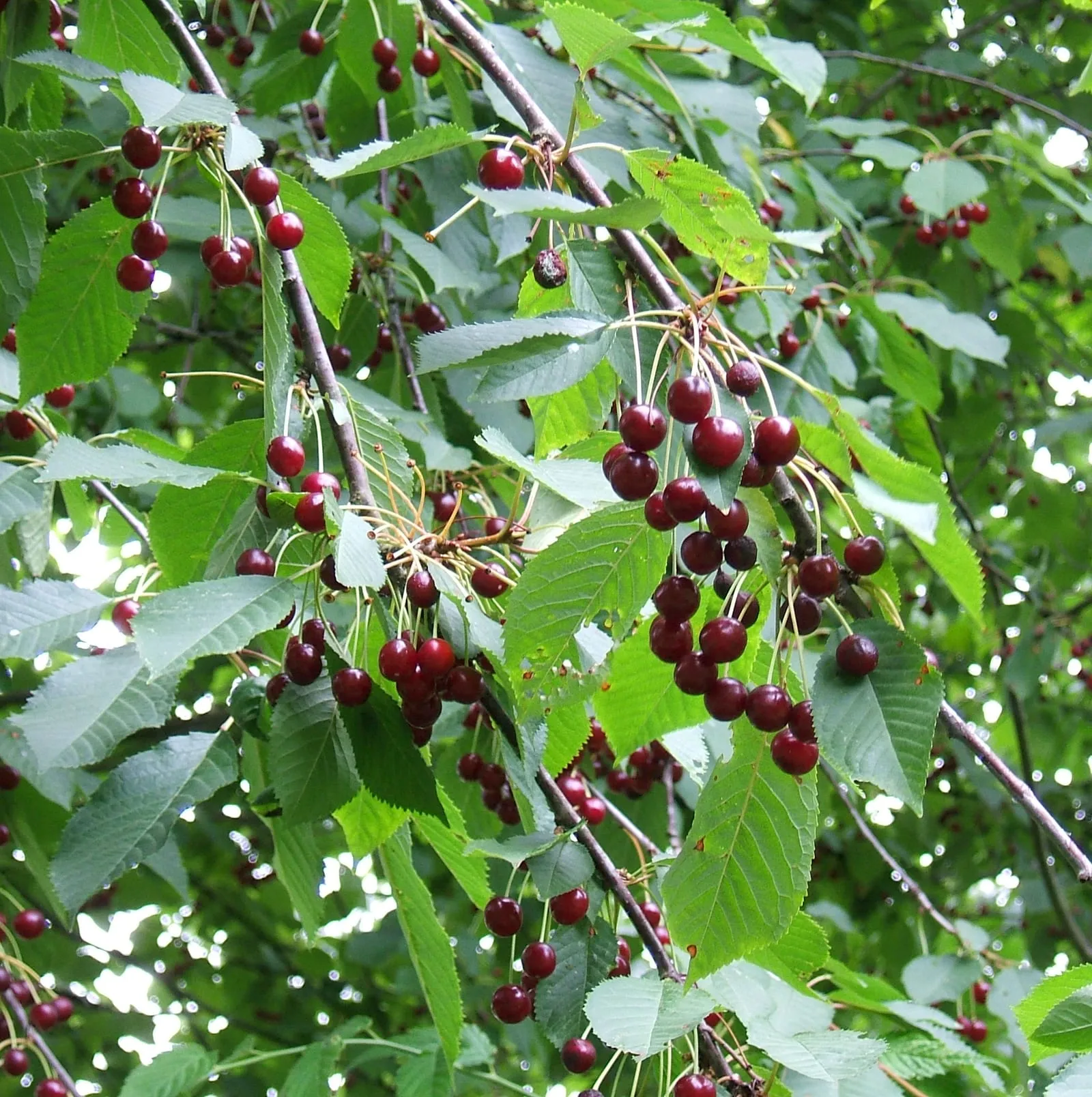
Image: "Prunus avium fruit", by MPF, via Wikimedia Commons, licensed under CC-BY. Source.
