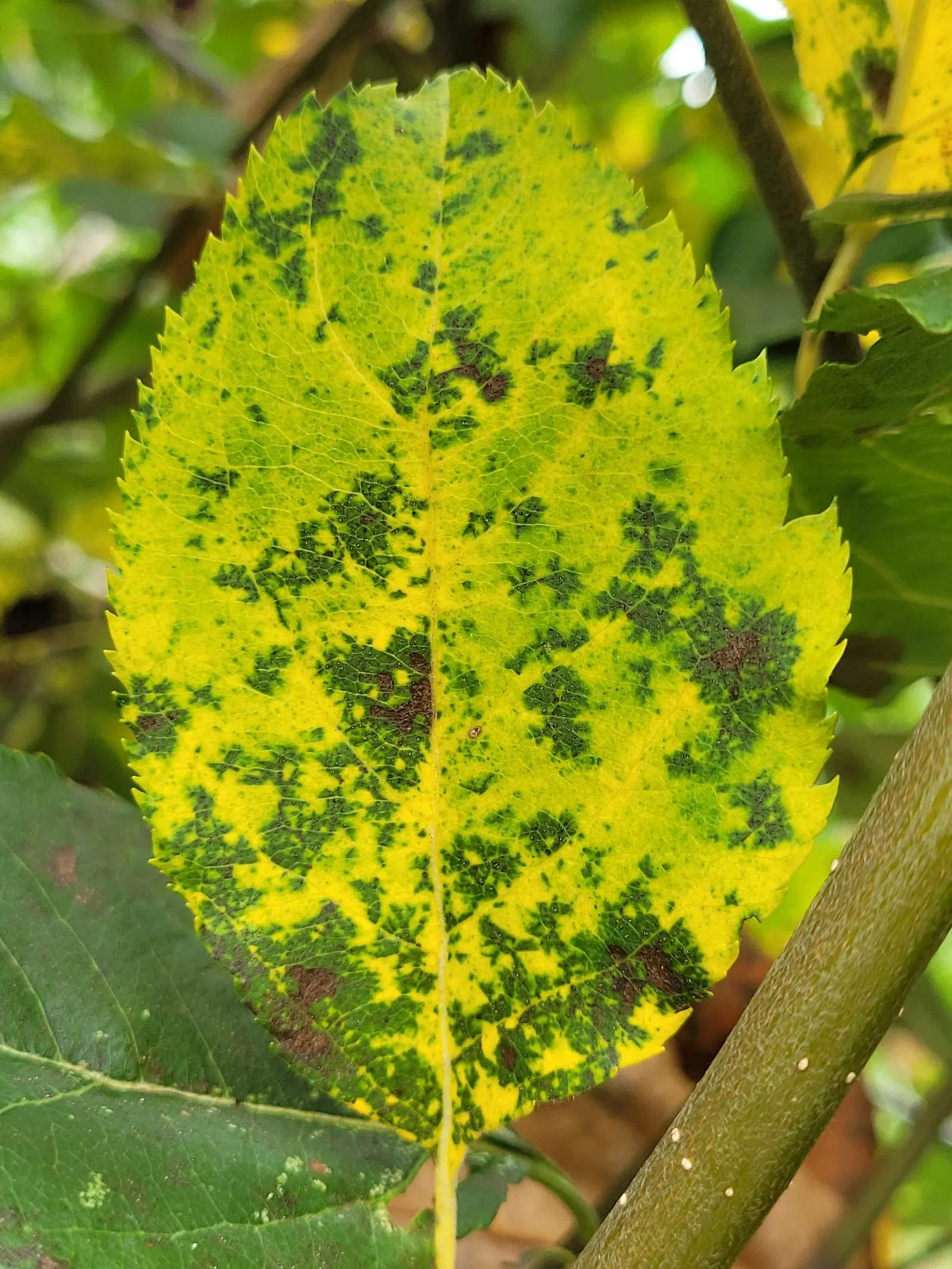
Disease
fungalPomegranate Leaf Blotch
Pseudocercospora punicae
Fungal disease causing leaf and fruit blotches in humid pomegranate-growing regions.
- Pathogen type
- Fungal
- Hosts
- 1
- Symptoms
- 3
- Scientific name
- Pseudocercospora punicae
- Resistant varieties
- 0
Biology and conditions
Pomegranate leaf blotch is caused by Pseudocercospora punicae, a fungal pathogen in the Mycosphaerellaceae family. The disease is most prevalent in humid pomegranate-growing regions, where warm temperatures and extended leaf wetness periods create conditions that favor spore germination and infection. Infection typically begins in mid to late summer when humidity is highest, progressing from scattered brown spots on leaf surfaces to larger coalescing blotches. Heavily infected foliage drops prematurely, reducing the tree's photosynthetic capacity and weakening fruit development going into harvest.
Fruit infection follows a similar pattern: surface blotches reduce cosmetic quality and, in severe cases, allow secondary pathogens to establish. The fungus overwinters in infected leaf litter and mummified fruit, releasing spores at the start of the following growing season. Orchards with poor air circulation and overhead irrigation are consistently harder hit than sites with good drainage and canopy openness.
Sanitation is the most cost-effective first line of management. Removing fallen leaves and infected fruit breaks the primary inoculum cycle and reduces disease pressure the following year without any chemical input. Where sanitation alone is insufficient, copper-based fungicides applied at early leaf emergence can limit early-season infection. Pruning to open the canopy improves airflow, reducing the leaf wetness duration that the pathogen depends on.
No pomegranate varieties with documented resistance to Pseudocercospora punicae are widely available in the US market. Disease severity varies considerably by site; drier inland climates rarely see economically significant outbreaks, while coastal and humid subtropical growing areas require more consistent management attention.
Symptoms
- ▸ Brown spots on leaves and fruit
- ▸ Premature defoliation
- ▸ Reduced fruit quality
IPM controls
- ✓ Sanitation of fallen leaves and fruit
- ✓ Copper sprays where warranted
- ✓ Improve airflow through pruning
Affected crops
Image: "Marssonina blotch on a 'Rome' apple leaf", by Jimhue, via Wikimedia Commons, licensed under CC0 Source.

Related