Disease
bacterialFire Blight
Erwinia amylovora
Devastating bacterial disease that can kill trees rapidly. Most severe in warm wet springs.
- Pathogen type
- Bacterial
- Hosts
- 2
- Symptoms
- 3
- Scientific name
- Erwinia amylovora
- Resistant varieties
- 5
Biology and conditions
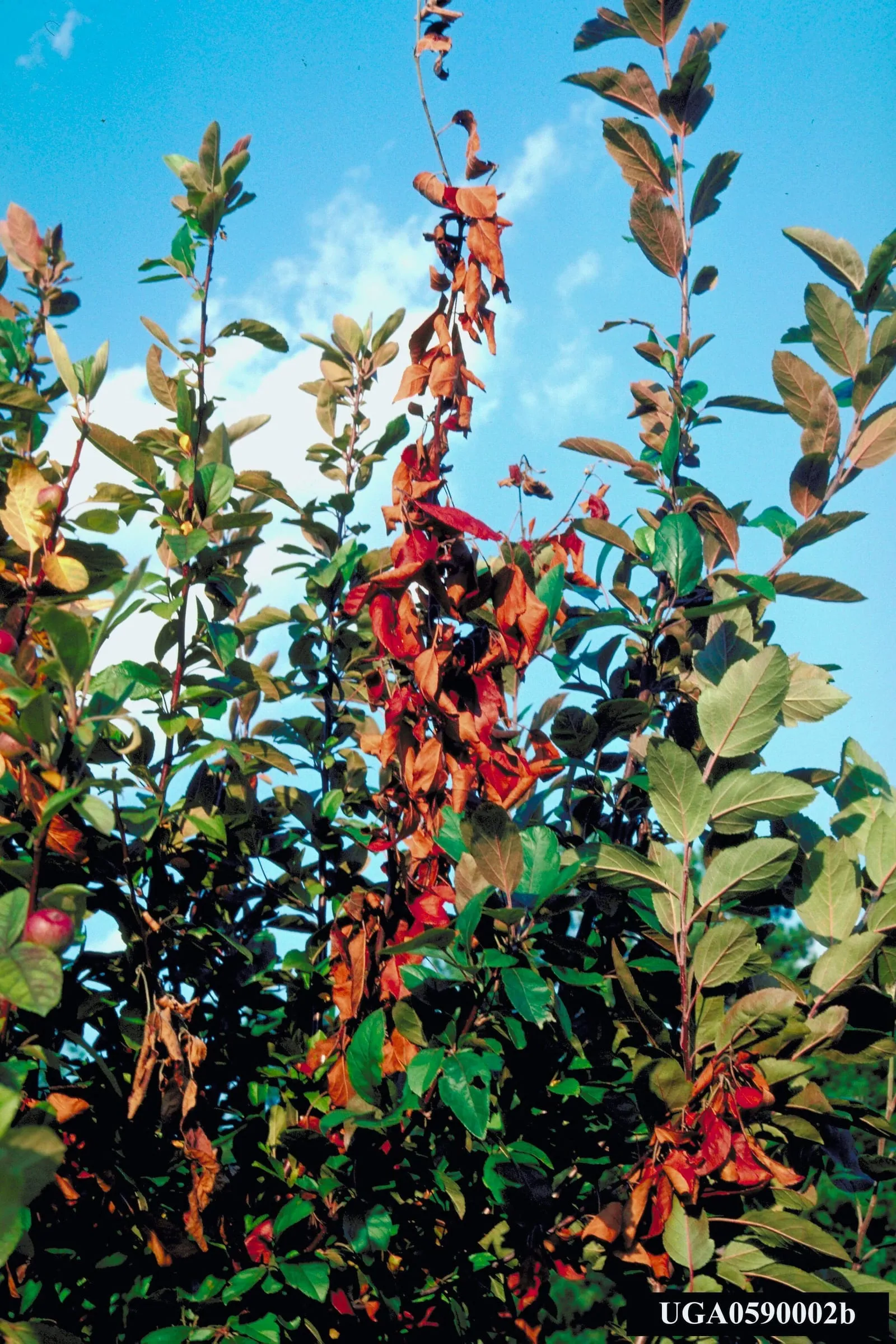
Fire blight (Erwinia amylovora) is among the most destructive bacterial diseases affecting apple and pear. The pathogen overwinters in cankers on infected wood, then releases bacterial ooze during warm, moist spring conditions. Bees, rain, and wind carry the bacteria to open blossoms, where primary infection begins. Shoot infections follow, typically driven by temperatures above 65°F (18°C) combined with rain or heavy dew. Tissue death is rapid: blossoms collapse, new shoots wilt into the characteristic shepherd's crook, and bark develops water-soaked lesions that darken into orange-brown cankers with visible bacterial ooze.
The disease spreads fastest during bloom, when open flowers provide easy entry points and spring weather aligns with bacterial reproduction. A single warm, wet bloom period can drive explosive spread. Severe infections can kill entire scaffold limbs or young trees within a season, making early detection and prompt response critical.
Management is most effective when layered. Resistant variety selection is the single most cost-effective long-term strategy: Liberty and Enterprise carry meaningful resistance among apple varieties; Magness, Moonglow, and Kieffer offer comparable resistance for pear. In established orchards with susceptible varieties, streptomycin applications during bloom (available to commercial growers under label restrictions) reduce primary infection when timed to actual infection events. Pruning out strikes promptly, cutting 8 to 12 inches below visible symptoms into healthy wood, removes active inoculum. Tools must be disinfected between every cut. No single practice eliminates fire blight risk in susceptible varieties; the combination of timing, pruning discipline, and variety choice determines outcome.
Symptoms
- ▸ Wilted shoots with characteristic shepherd's crook
- ▸ Blackened blossoms and twigs
- ▸ Cankers on branches with bacterial ooze
IPM controls
- ✓ Plant resistant varieties (Liberty, Enterprise for apple; Magness, Moonglow for pear)
- ✓ Streptomycin during bloom (commercial only)
- ✓ Prompt pruning of strikes back to healthy wood
- ✓ Disinfect tools between cuts
Resistant varieties
Selecting a variety with documented resistance is the most effective single decision for low-input management of fire blight.
Affected crops
Image: "Erwinia amylovora (01)", by Robert L. Anderson, USDA Forest Service, Bugwood.org, via Wikimedia Commons, licensed under CC-BY Source.
.jpg)
Related