Disease
fungalCherry Leaf Spot
Blumeriella jaapii
Defoliating fungal disease that weakens trees over consecutive seasons.
- Pathogen type
- Fungal
- Hosts
- 1
- Symptoms
- 3
- Scientific name
- Blumeriella jaapii
- Resistant varieties
- 0
Biology and conditions
Cherry leaf spot, caused by the fungus Blumeriella jaapii, is the most damaging foliar disease of sour cherry in humid growing regions. The pathogen overwinters in infected leaves on the orchard floor. In spring, as temperatures rise above 50°F and leaf tissue expands, spores are discharged during rain events and land on young leaves. Infection requires a wet period of roughly 5 to 12 hours depending on temperature, with the disease progressing fastest between 60°F and 70°F. Secondary spores produced within leaf lesions extend the infection window through the entire growing season.
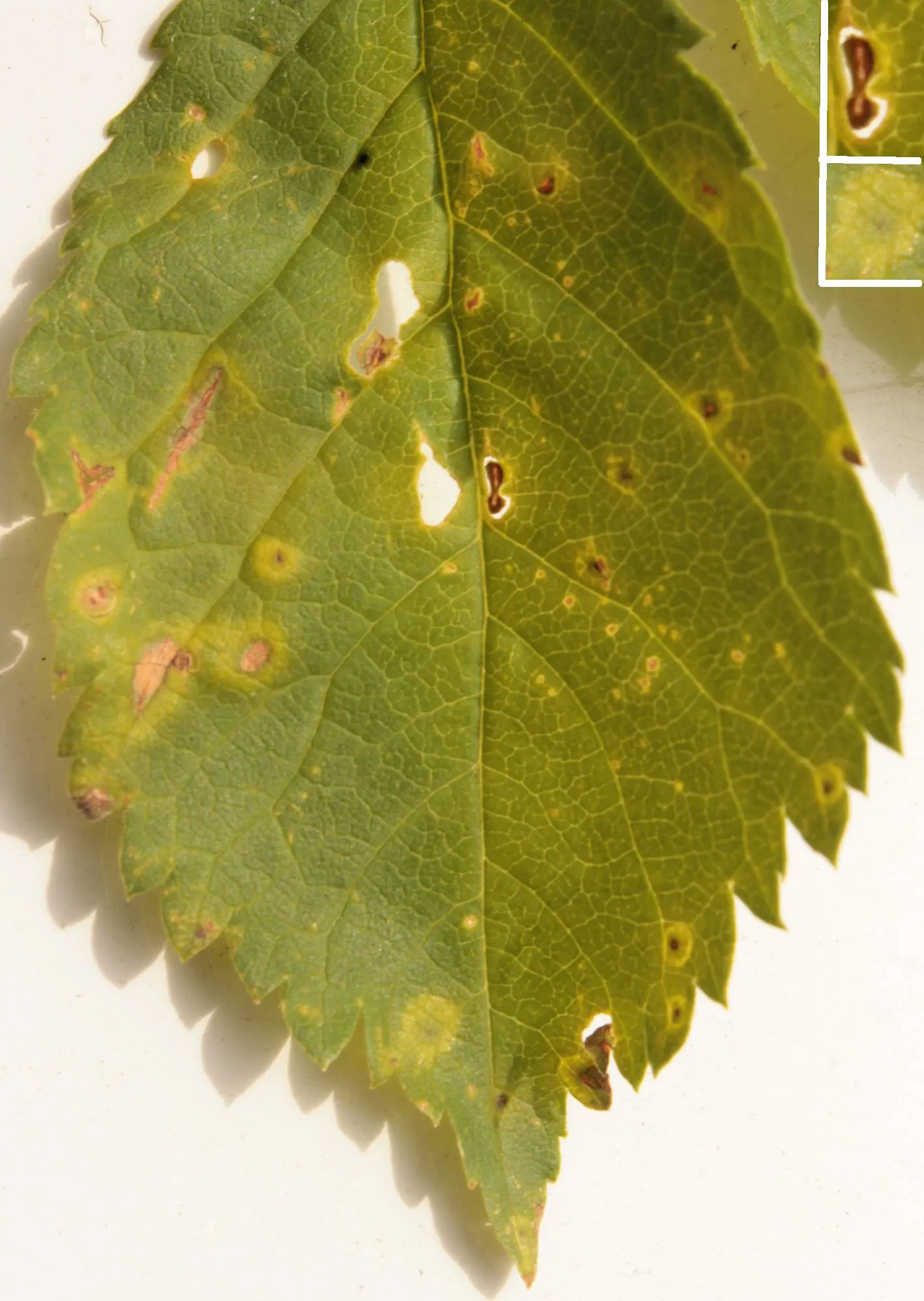
The visible progression begins as small purple spots, which expand and develop a shothole appearance as infected tissue dies and drops out. Yellowing spreads outward from lesions, and heavily infected trees can lose most of their foliage by midsummer. Repeated early defoliation over consecutive seasons reduces carbohydrate reserves, weakens fruit set, and lowers cold hardiness going into winter. This cumulative effect, rather than a single bad year, is what brings trees into decline.
The most cost-effective management approach combines a consistent fungicide program starting at petal fall and continuing through harvest with thorough sanitation of fallen leaves in autumn. Removing the overwintering inoculum from the orchard floor meaningfully reduces primary infection pressure the following spring. Improving canopy airflow through pruning helps leaves dry faster after rain and shortens the leaf-wetness periods that favor infection. No specific resistant varieties are identified in current input data for this pathogen; variety selection should be guided by regional extension recommendations where available.
Symptoms
- ▸ Small purple spots on leaves
- ▸ Yellowing and shothole appearance
- ▸ Premature defoliation by midsummer
IPM controls
- ✓ Fungicide from petal fall through harvest
- ✓ Sanitation of fallen leaves
- ✓ Resistant varieties where available
- ✓ Improve airflow
Affected crops
Image: "2013 04 30 11884u", by I.Sáček, senior, via Wikimedia Commons, licensed under CC0 Source.

Related