Disease
fungalBlack Knot
Apiosporina morbosa
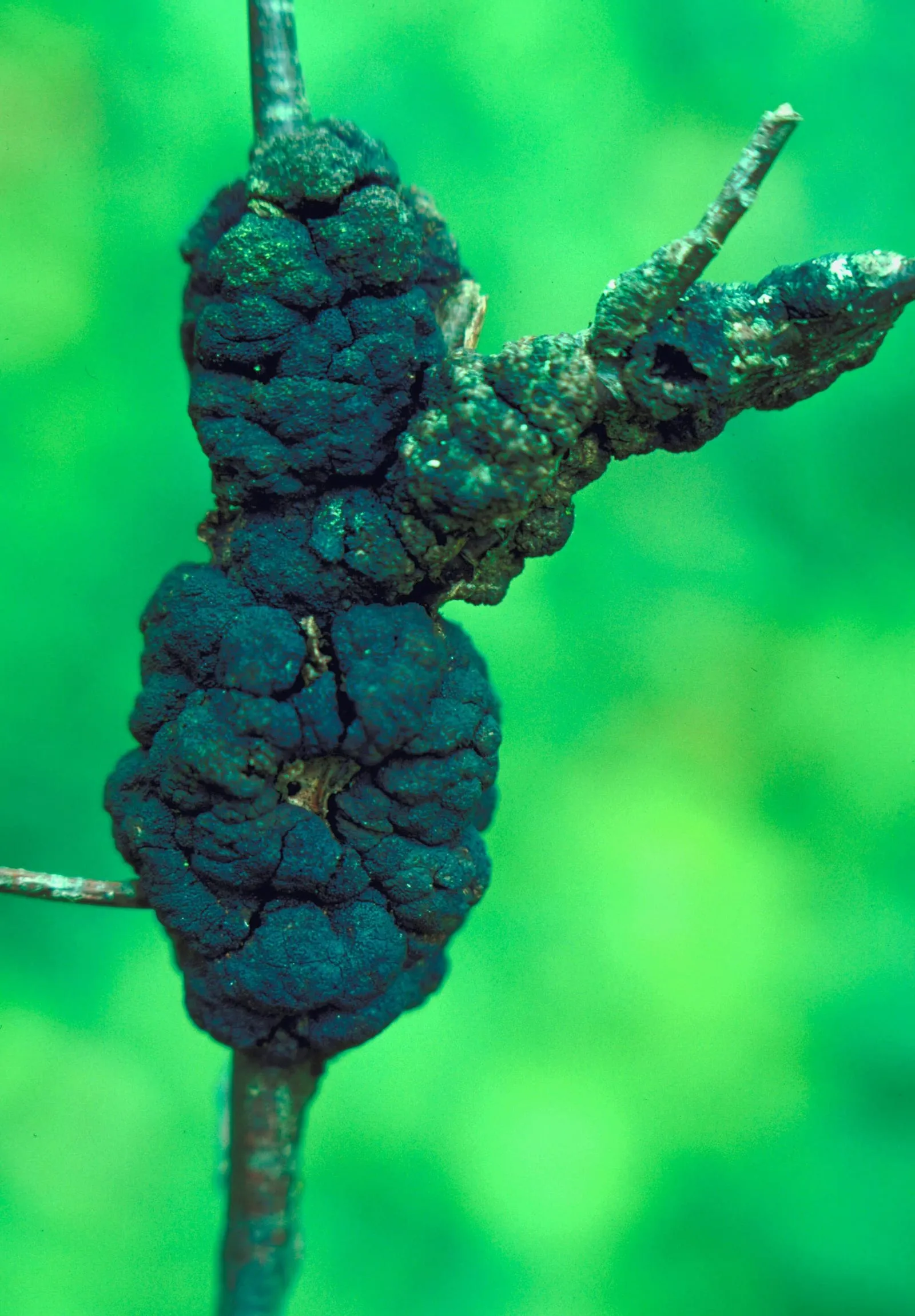
Fungal disease producing characteristic black warty galls on plum and cherry branches.
- Pathogen type
- Fungal
- Hosts
- 3
- Symptoms
- 3
- Scientific name
- Apiosporina morbosa
- Resistant varieties
- 0
Biology and conditions
Black knot is caused by Apiosporina morbosa, a fungal pathogen that infects members of the Prunus genus. The disease is most damaging on European plum, Japanese plum, and sour cherry. Wild plum and cherry trees growing nearby serve as persistent spore reservoirs that reinfect managed trees each season, making site context as important as any spray program.
The infection cycle begins in spring. Ascospores and conidia are released from existing galls during wet weather, typically when temperatures fall between 55°F and 77°F, and infect young green shoots during the same window. Symptoms do not appear immediately. Infected tissue usually shows as a small, olive-green swelling the following season before hardening into the characteristic black, warty gall by year two. Galls expand each year and can girdle branches entirely, causing dieback above the point of infection. High spring humidity and frequent rain events significantly increase spore dispersal and infection success.
The most cost-effective management combines dormant-season pruning with elimination of nearby wild hosts. Galls should be removed at least 4 inches below the visible margin of infection, since the fungal mycelium extends further into the wood than surface appearance indicates. Removed material must be burned or buried immediately, not left at the orchard perimeter where spores remain viable. Fungicide applications at bud break add a meaningful layer of protection in high-pressure sites but are not a substitute for sanitation. No resistant varieties are identified in current reference data for affected crops. Growers in regions with dense wild plum or cherry populations should weigh that pressure when selecting planting sites.
Symptoms
- ▸ Black hard warty galls on branches
- ▸ Branch dieback above galls
- ▸ Increasing gall size over years
IPM controls
- ✓ Prune galls 4 inches below visible margin in dormant season
- ✓ Burn or bury removed material
- ✓ Fungicide at bud break
- ✓ Remove wild plum and cherry hosts nearby
Affected crops
Image: "Black Knot", by Robert L. Anderson, via Wikimedia Commons, licensed under CC-BY Source.

Related