Disease
fungalApple Scab
Venturia inaequalis
The most widespread apple disease in humid regions. Reduces fruit quality and defoliates trees.
- Pathogen type
- Fungal
- Hosts
- 1
- Symptoms
- 3
- Scientific name
- Venturia inaequalis
- Resistant varieties
- 5
Biology and conditions
Apple scab (Venturia inaequalis) overwinters as pseudothecia in infected leaf litter on the orchard floor. In spring, ascospores are discharged during rain events beginning at green tip and continuing through petal fall. This primary infection window, typically 6 to 8 weeks depending on the season, sets the disease burden for the rest of the year. Secondary infections follow via conidia produced on lesions, but controlling the primary window has the largest impact on outcome.
The pathogen requires sustained leaf wetness combined with moderate temperatures to infect. Wet hours above 55°F are the key variable. The Mills infection table, a standard reference developed in the 1940s, correlates temperature and continuous wetness duration to infection severity and remains widely used for timing spray programs. Wet springs reliably produce high-pressure seasons regardless of management inputs.
Sanitation is the most cost-effective starting point. Mowing or removing fallen leaves in autumn destroys the overwintering spore source before discharge the following spring. Pruning to open canopy structure reduces the leaf wetness duration that enables infection. These measures reduce pressure before any fungicide is considered.
For orchards carrying susceptible varieties, a fungicide program from green tip through summer is standard practice. Protectant materials (captan, sulfur) require application before infection; some systemic options provide a post-infection window of 48 to 96 hours. Resistance to some fungicide classes has been documented in intensively managed blocks.
The most durable long-term approach is variety selection. Liberty, Enterprise, Williams Pride, Goldrush, and Pristine carry resistance derived from crabapple breeding programs and typically require far fewer sprays than susceptible cultivars, sometimes none in low-pressure years.
Symptoms
- ▸ Olive-green to brown spots on leaves
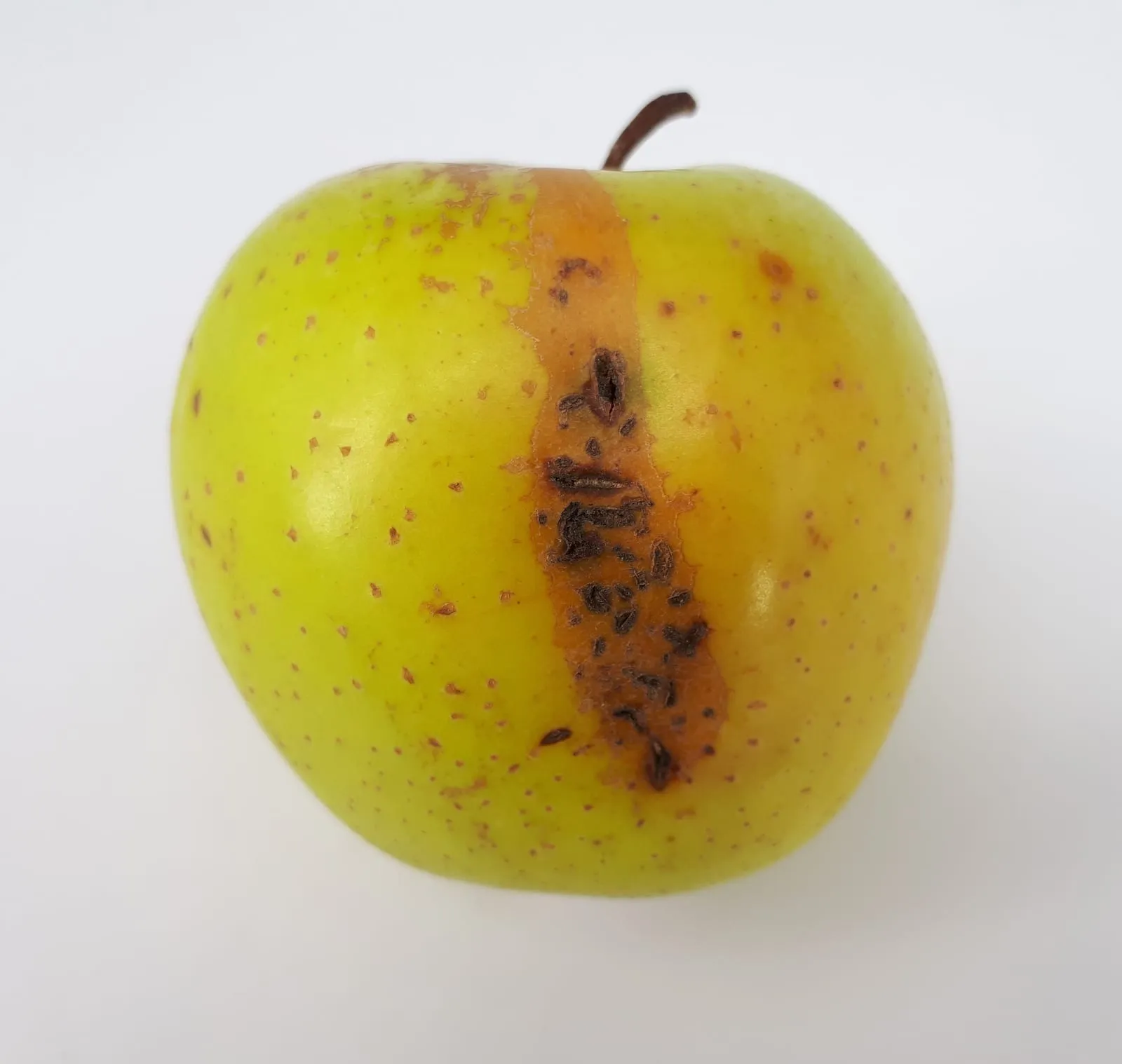
- ▸ Scabby corky lesions on fruit
- ▸ Premature defoliation
IPM controls
- ✓ Plant resistant varieties
- ✓ Sanitation of fallen leaves (mowing, leaf vacuuming)
- ✓ Fungicide program from green tip through summer
- ✓ Improve airflow through pruning
Resistant varieties
Selecting a variety with documented resistance is the most effective single decision for low-input management of apple scab.
Affected crops
Image: "Apple scab 2017 A", by Fructibus, via Wikimedia Commons, licensed under CC0 Source.

Related