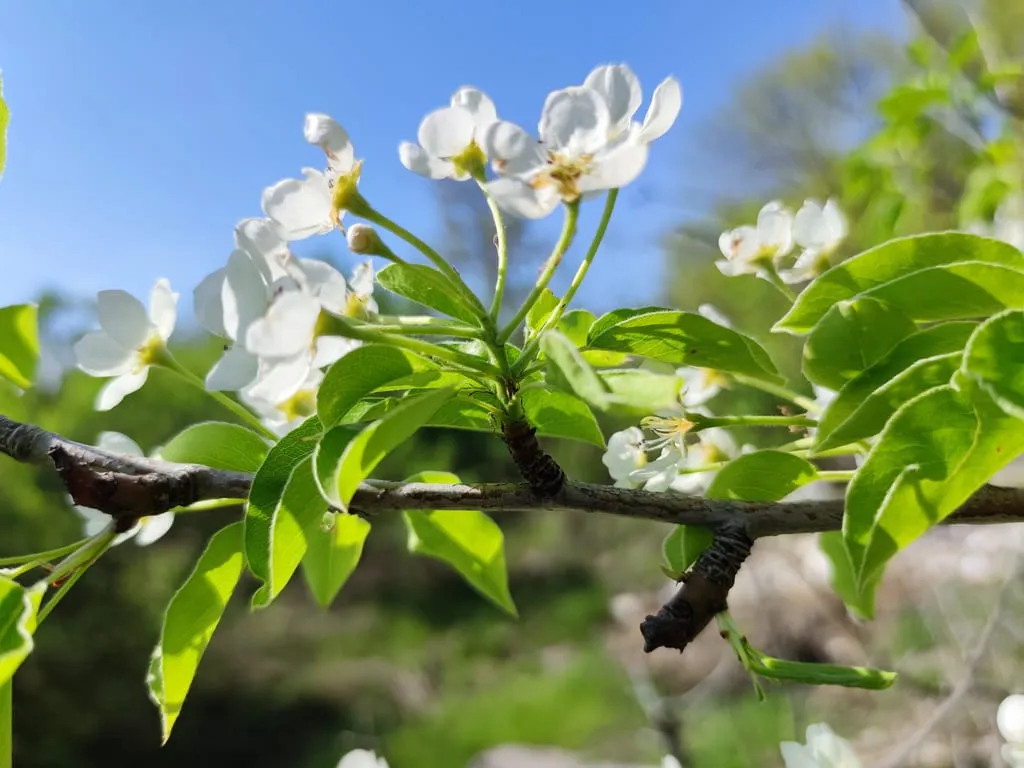
fruit tree in zone 4a
Growing pear in zone 4a
Pyrus communis
- Zone
- 4a -30°F to -25°F
- Growing season
- 120 days
- Chill needed
- 600 to 900 below 45°F
- Suitable varieties
- 0
- Days to harvest
- 115 to 165
The verdict
Pear is a reasonable fit for zone 4a, though it sits near the cold edge of the crop's practical range. The chill-hour requirement of 600 to 900 hours is comfortably met by zone 4a winters, so dormancy completion is not the limiting factor here. The binding constraints are the 120-day growing season and winter lows that regularly reach -30 to -25°F.
Standard pear varieties developed for warmer zones may not ripen fruit before the first hard fall frost. Selecting varieties bred or proven in short-season climates is not optional here. Trunk and graft-union damage from sudden temperature drops is also a real risk, particularly on young trees or in low-lying frost pockets. Zone 4a is not a sweet spot for pear, but it is not an outright exclusion either. Growers who choose cold-hardy, early-ripening selections and site trees carefully on elevated, well-drained ground can expect productive trees.
Critical timing for zone 4a
Pear bloom in zone 4a typically falls in late April through early May, depending on the specific site and how rapidly spring temperatures climb after dormancy breaks. Last frost dates in zone 4a commonly extend into early to mid-May, which places open flowers at direct risk. A single late frost during full bloom can eliminate most or all of a crop for the season.
Harvest timing for early-ripening selections runs from late August into September within the 120-day window. Later-maturing varieties will not reach harvest quality before fall frosts arrive. This hard ceiling on growing season length is the primary driver of variety selection in this zone.
Common challenges in zone 4a
- ▸ Late frosts damage early bloomers
- ▸ Limited peach varieties
Disease pressure to watch for
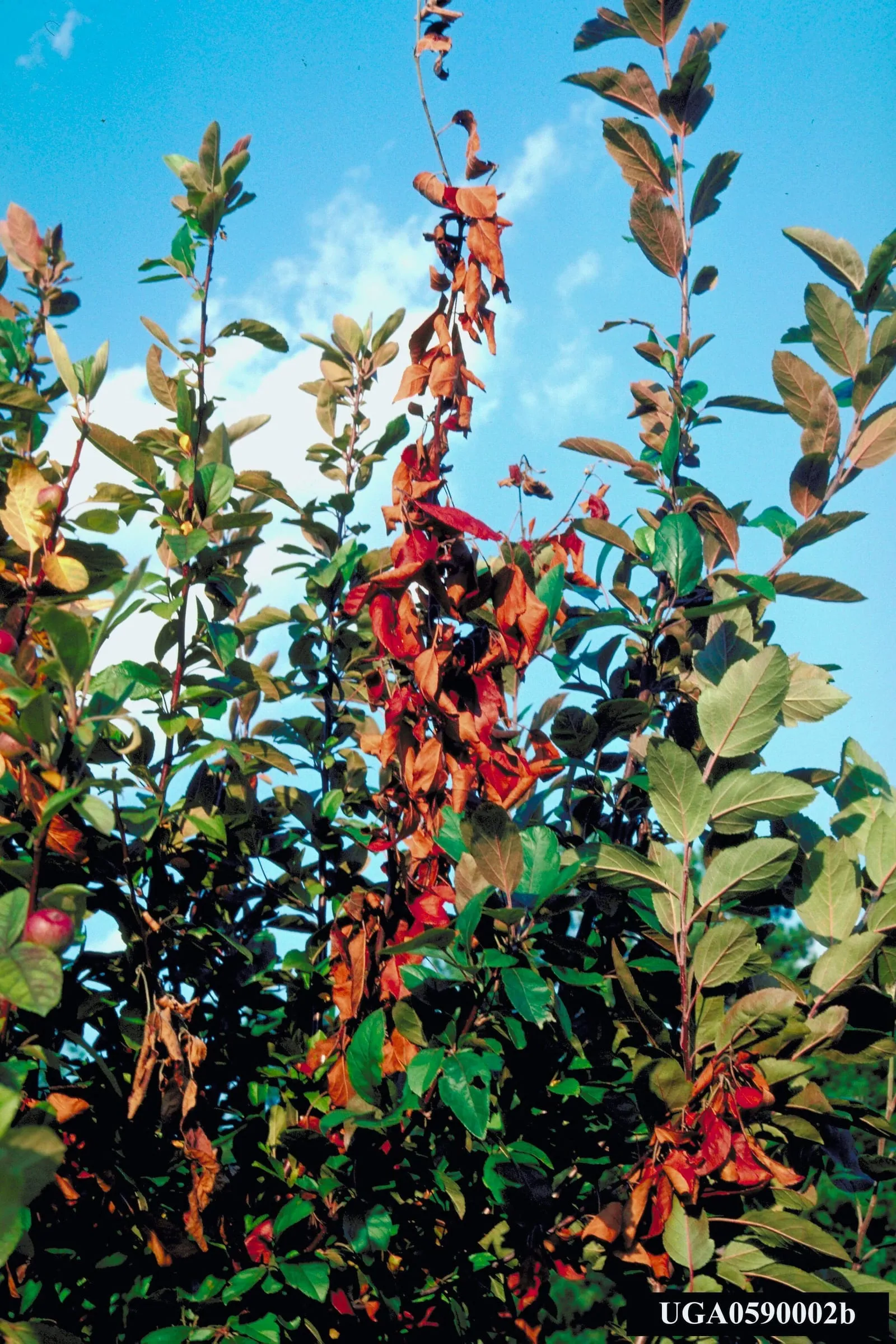
Erwinia amylovora
Devastating bacterial disease that can kill trees rapidly. Most severe in warm wet springs.
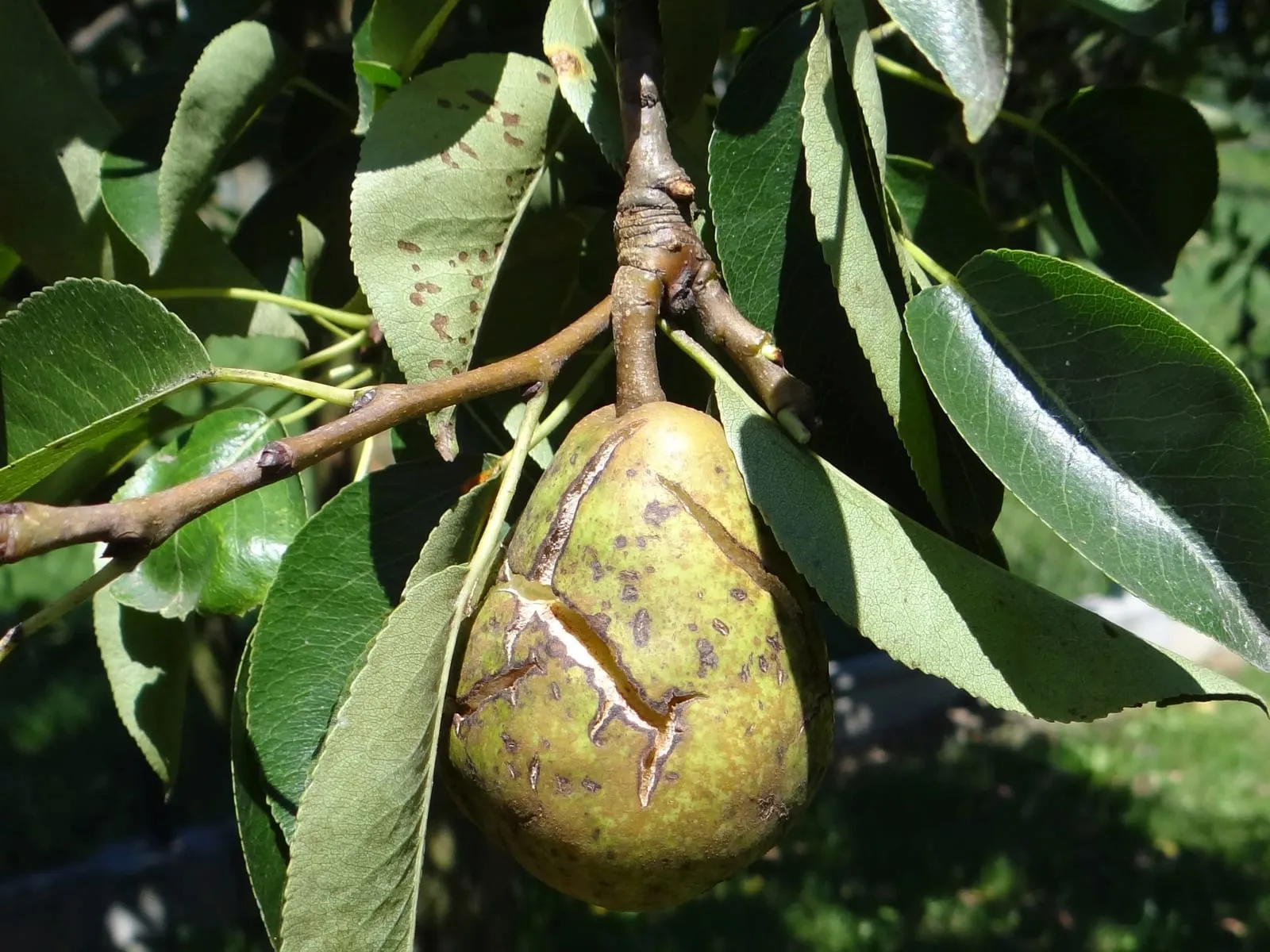
Venturia pyrina
Fungal disease similar to apple scab but specific to pear, causing leaf and fruit lesions.
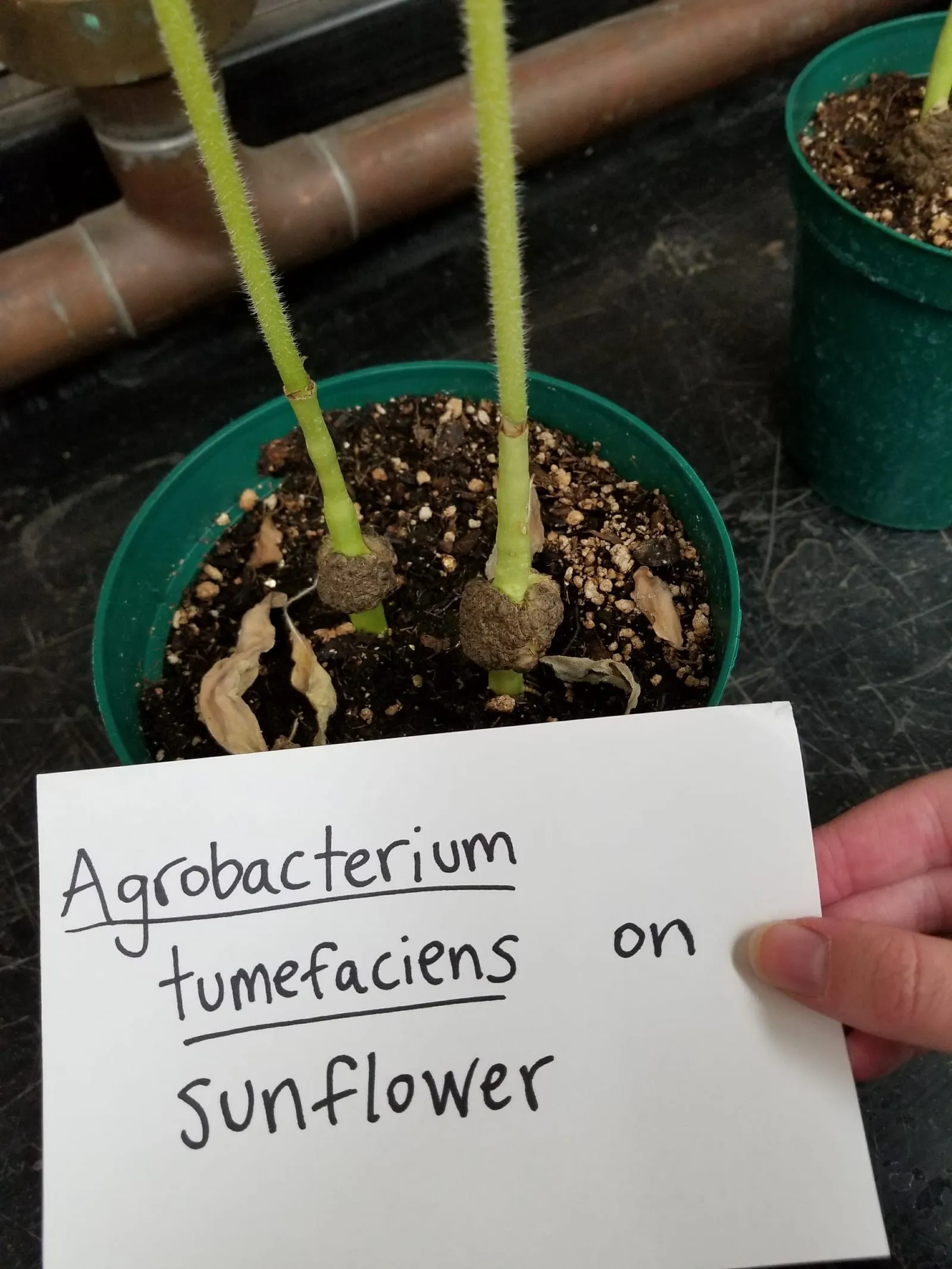
Agrobacterium tumefaciens
Soil-borne bacterium that enters plants through wounds and induces tumor-like galls on roots, crown, and lower stems. Galls reduce vigor and shorten plant lifespan; on Rubus the disease is often fatal.
Modified care for zone 4a
In zone 4a, winter cold rather than summer heat becomes the primary management concern. Young trees benefit from trunk wraps or tree guards during their first two or three winters to protect the graft union from freeze-thaw cracking and sunscald. Avoid fertilizing after midsummer, as late-season growth that doesn't harden before freeze-up is vulnerable to dieback.
Fire blight pressure exists across most of the pear's range, and zone 4a is no exception. Copper-based dormant sprays and sanitation pruning of blighted wood during dry conditions are the standard response. Pear scab management requires fungicide applications timed to wet periods in spring, which in this zone means monitoring from early May onward. Because the growing season is short, any significant disease defoliation or fruit infection narrows an already tight harvest window.
Frequently asked questions
- Does zone 4a get enough chill hours for pear?
Yes. Pear requires 600 to 900 chill hours depending on variety, and zone 4a winters reliably deliver that and more. Chill-hour accumulation is not the limiting factor in this zone. Short growing seasons and late spring frosts are the primary challenges instead.
- What is the biggest risk to pear bloom in zone 4a?
Late frosts. Bloom in zone 4a typically falls in late April to early May, and last frost dates in this zone can extend into mid-May. A frost during full bloom will destroy the year's crop. Site selection on elevated ground with good cold-air drainage reduces but does not eliminate this risk.
- Can pear fruit fully ripen in zone 4a's 120-day growing season?
Only early-ripening varieties can reliably ripen before fall frosts arrive. Late-maturing varieties that require 150 or more days to harvest are not suited to zone 4a. Choosing selections bred for short-season performance is the central variety decision for this zone.
+−
+−
+−
Pear in adjacent zones
Image: "Груша обыкновенная", by Vasily Moryashkin, via iNaturalist, licensed under CC-BY Source.
Related