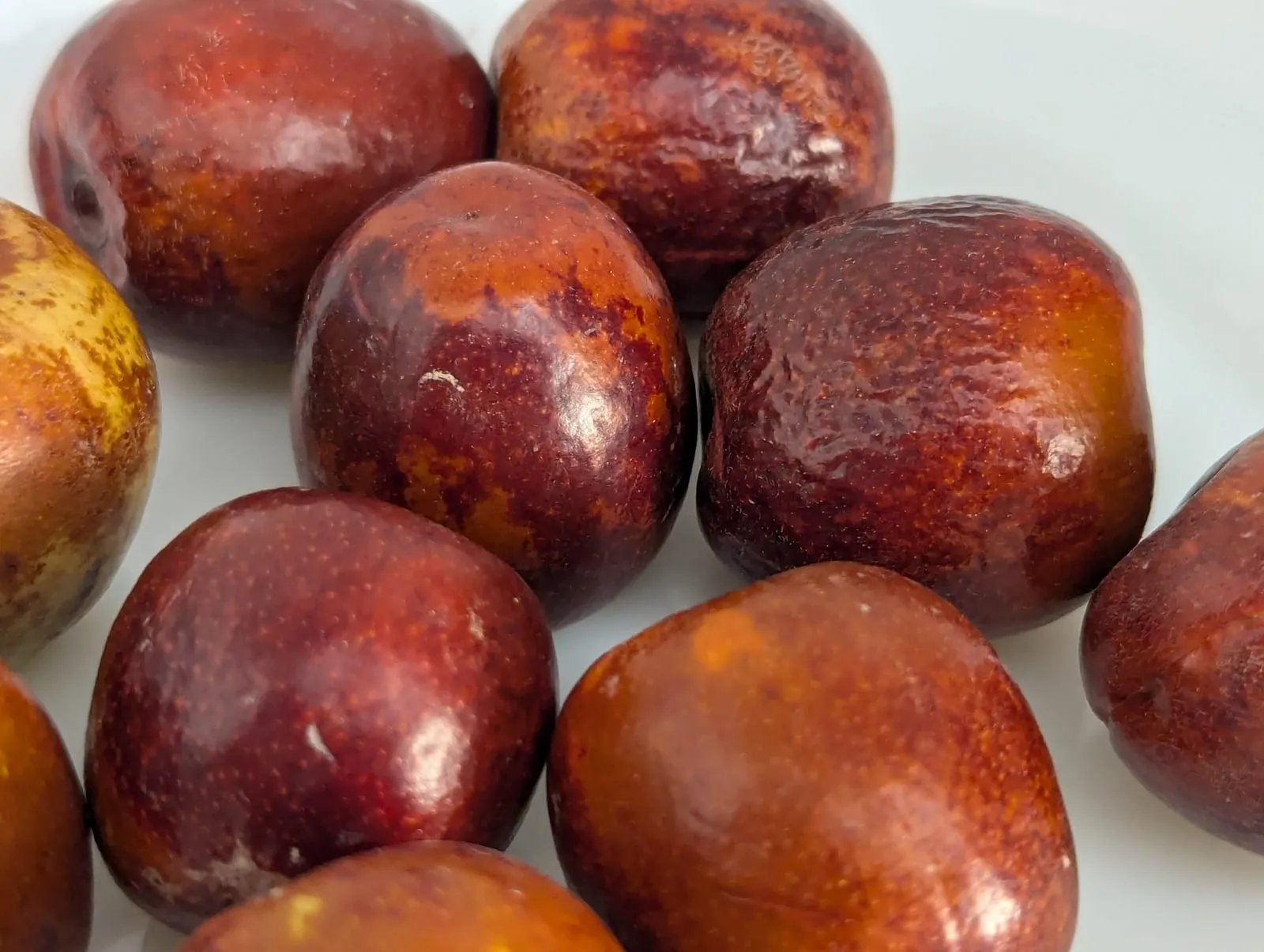
fruit tree in zone 7b
Growing jujube in zone 7b
Ziziphus jujuba
- Zone
- 7b 5°F to 10°F
- Growing season
- 220 days
- Chill needed
- 50 to 200 below 45°F
- Suitable varieties
- 4
- Days to harvest
- 150 to 200
The verdict
Zone 7b is a sweet spot for jujube, not a marginal zone. The crop's chill-hour requirement of 50 to 200 hours is easily satisfied across most of zone 7b without the risk of insufficient winter dormancy that can affect the crop further south. Minimum temperatures of 5 to 10°F are well within jujube's cold-hardiness range, which extends to roughly -20°F for established trees, so winter damage is rarely a concern.
The 220-day growing season in zone 7b gives late-ripening varieties ample time to develop full sweetness before first fall frost. Varieties like Li and Sugar Cane, which produce large fruit that needs adequate hang time, perform reliably here. Honey Jar, a smaller-fruited variety that ripens earlier, is similarly well-matched. Growers who have struggled with stone fruits or apples in this zone due to disease pressure or unpredictable chill accumulation often find jujube refreshingly forgiving.
Recommended varieties for zone 7b
4 cultivars suited to this zone, with disease-resistance and zone-fit annotations.
| Variety | Notes | Zone fit | Disease resistance |
|---|---|---|---|
| Li fits zone 7b | Sweet, crisp like an apple when fresh; large round fruit. Eats out of hand, dries to a date-like sweetness. Most popular fresh-eating jujube. | | none noted |
| Lang fits zone 7b | Sweet, crisp, apple-pear flavor when fresh; pear-shaped fruit. Productive, often the pollinator for Li. Excellent fresh and dried. | | none noted |
| Honey Jar fits zone 7b | Extremely sweet, crisp, intense honey flavor; small fruit (cherry-sized). The connoisseur's jujube, prized variety, eats fresh in handfuls. | | none noted |
| Sugar Cane fits zone 7b | Very sweet, crisp, large fruit; fresh eating champion with high sugar content. Heavy producer. | | none noted |
Critical timing for zone 7b
Jujube blooms unusually late for a fruit tree, typically opening in late May through June in zone 7b, well after the last average spring frost. This means late-frost events that damage peach or cherry blossoms pose essentially no risk to jujube crops. The tree leafs out late as well, so impatient growers sometimes mistake slow spring emergence for winter kill.
Harvest in zone 7b generally runs from late August through October depending on variety. Li tends to ripen in September; Lang follows in late September to early October. The 220-day growing season provides sufficient heat accumulation for most varieties to reach full sugar development. First fall frost in zone 7b typically arrives in mid-to-late October, leaving adequate margin before fruit needs to come off the tree.
Common challenges in zone 7b
- ▸ Cedar-apple rust pressure heavy in piedmont
- ▸ Japanese beetles
- ▸ Brown marmorated stink bug
- ▸ Late summer disease pressure
Modified care for zone 7b
Jujube requires less zone-specific adjustment in 7b than almost any other tree fruit. The main management concerns are pest-related rather than climate-related. Japanese beetles feed heavily on jujube foliage during their July peak and can cause significant defoliation in piedmont locations. Kaolin clay or row cover is impractical at tree scale; most growers tolerate moderate defoliation or use targeted pyrethroid applications during peak beetle emergence.
Brown marmorated stink bugs become a serious issue as fruit ripens in late summer. Damage shows as corky, discolored spots beneath the skin. Netting is effective but logistically demanding. Late summer disease pressure in the region is real, though jujube itself has strong resistance to most fungal pathogens that plague other fruit crops here. Irrigation management matters more than fungicide timing: avoid overhead watering during the August-September period to keep fruit skin dry.
Frequently asked questions
- Does jujube need a pollinator in zone 7b?
Most jujube varieties are self-fertile and will produce fruit without a second tree. Planting two different varieties, such as Li and Lang together, can improve fruit set and size, but a single tree will still crop reliably.
- How long does it take a jujube tree to bear fruit in zone 7b?
Grafted trees typically begin fruiting in their second or third year. Seedling trees take considerably longer, often five to seven years, and produce fruit of variable quality. Grafted Li or Honey Jar trees are the standard recommendation for growers who want predictable results.
- Can jujube handle the clay soils common in zone 7b's piedmont?
Jujube tolerates a wide range of soils but is sensitive to poor drainage. In heavy piedmont clay, raised planting beds or hillside sites with natural runoff improve long-term establishment. The tree is drought-tolerant once established but struggles with waterlogged roots through the growing season.
+−
+−
+−
Jujube in adjacent zones
Image: "Ziziphus jujuba (fruit)", by Ismael Olea, via Wikimedia Commons, licensed under CC-BY Source.
.jpg)
Related